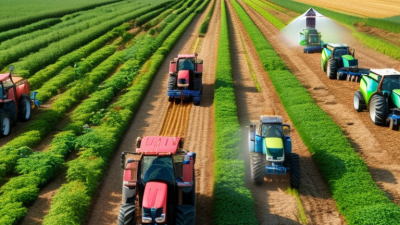
Agriculture automation is changing how farms plant, monitor, harvest, and manage resources. From autonomous tractors to robotic weeders, these tools connect machinery, sensors, software, and human judgment. A camera-guided sprayer can identify uneven crop growth, while soil sensors can reveal dry zones beneath healthy-looking leaves. The technology feels practical when it solves a visible problem.
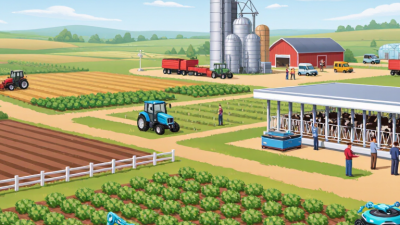
The strongest solutions usually combine reliable hardware with clear farm data. Drones can map fields after storms, and robotic harvesters can reduce repetitive work in suitable crops. Automated milking systems may improve scheduling and animal monitoring when staff understand the equipment. However, automation is not a universal shortcut. A machine designed for flat cornfields may perform poorly in vineyards, muddy ground, or mixed-crop farms.
Real experience matters.
This overview examines leading agriculture automation solutions through performance, safety, maintenance, scalability, and return on investment. It also considers how easily each system integrates with existing tractors, irrigation networks, and farm-management platforms. Independent testing, transparent maintenance records, and responsive technical support can strengthen confidence in a purchase. Still, even accurate systems make mistakes. Dust can confuse cameras, weak connectivity can interrupt operations, and poor data can produce poor decisions. Farmers must review results in the field, not trust a dashboard blindly. The best approach often combines automation with trained workers who understand local soil, weather, crops, and seasonal risks. Careful trials may be slower, but they reveal whether a solution genuinely improves productivity, resource efficiency, and long-term farm resilience.
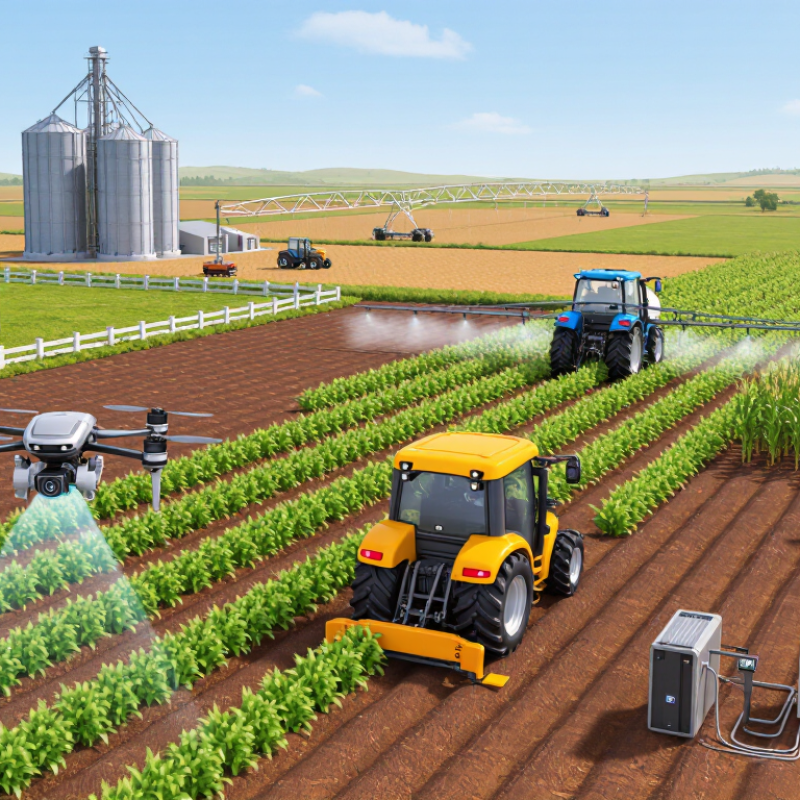
FAO AQUASTAT estimates that agriculture accounts for about 70% of global freshwater withdrawals. This baseline changes how automation should be evaluated. A fast machine is not enough. The stronger question is whether it produces more food with less water and fewer losses.
Precision irrigation uses soil-moisture sensors, weather data, and automated valves. These systems can deliver water near the crop root zone instead of flooding entire fields. FAO’s State of Food and Agriculture reports that improved water management can raise productivity, but results depend on local soil, climate, and maintenance.
Small errors matter. A blocked emitter can quietly stress plants for days.
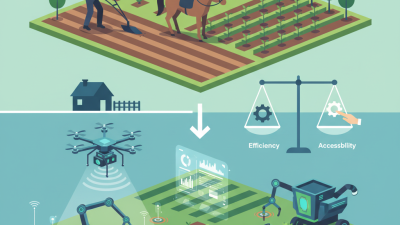
Field robots and machine vision can target weeds, monitor crop health, and support selective harvesting. Unmanned aerial systems can identify dry patches before visible damage spreads. The International Federation of Robotics has identified agriculture as an expanding service-robot application area, although adoption remains uneven.
Controlled-environment farms also automate lighting, nutrient delivery, and climate control. Their water recycling can be substantial, but electricity demand may offset part of the environmental gain.
That trade-off deserves honest measurement.
The best solution combines automation with verified water accounting. Farmers should compare litres used per kilogram of marketable produce, not only hectares covered. FAO data provides a useful global reference, yet the 70% figure hides regional differences. Automation can reduce waste. It cannot replace sound agronomy, trained workers, or regular equipment checks. According to the World Bank, digital agriculture can improve resource efficiency, but weak connectivity and high upfront costs still limit access. Progress is real, but not automatic.
What Are the Top Agriculture Automation Solutions?
USDA estimates place U.S. farmland near 880 million acres, but these acres are far from uniform. Soil texture, rainfall, slope, and crop demand can change within one field. Precision farming maps these differences with satellite imagery, soil sensors, yield monitors, and GPS-guided machinery. The goal is practical: apply seed, water, and nutrients where they create measurable value. Data quality matters.
Automation can also support targeted spraying, robotic weeding, irrigation control, and equipment monitoring. A field map may reveal a dry zone beside a healthy crop row. That detail can guide variable-rate irrigation instead of treating the entire field equally. Yet automation is not effortless. Weak cellular coverage, poor calibration, and outdated maps can produce confident but flawed decisions. Farmers still need local knowledge and regular field checks. Machines assist judgment; they do not replace it.
Tips: Start with one measurable problem, such as uneven irrigation. Compare automated recommendations with soil samples and yield records. Keep human review in the workflow. Smaller pilots often expose expensive errors before wider adoption. Also, review data ownership, maintenance costs, and worker training before scaling. A perfectly mapped field can still underperform when timing, weather, or basic equipment condition is ignored.
Autonomous tractors are strongest in repetitive, ground-based work. They can follow planned routes for planting, cultivation, and material transport. Their sensors help maintain steady spacing across long rows. This reduces operator fatigue and limits unnecessary soil passes. However, performance drops on uneven fields, muddy ground, or poorly mapped boundaries. Practical trials should begin with supervised operation. Timing matters.
Drones serve a different task. They scan fields quickly, revealing dry patches, pest pressure, blocked irrigation lines, or uneven crop growth. A drone can inspect several hectares before a worker reaches the first row. Yet aerial images need careful interpretation. Shadows, wind, and dense leaves can create misleading signals. A farm still needs trained staff to verify problems at ground level. Not always obvious.
Robotic harvesters offer the most delicate form of automation. Cameras and grippers can identify ripe fruit, cut produce, and reduce bruising during collection. They work best in uniform crops with consistent spacing and predictable light. Mixed ripeness remains difficult, especially when leaves hide fruit. Harvest speed may also disappoint during peak seasons. A human picker can judge texture faster than a machine in many cases. That limitation deserves honest budgeting.
The best solution depends on the task, not the novelty of the equipment. Tractors suit field movement, drones suit rapid monitoring, and harvesters suit selective picking. Reliable deployment requires maintenance logs, worker training, clear safety zones, and repeated performance checks. A small pilot can expose weak assumptions before a full-scale investment.
What Are the Top Agriculture Automation Solutions?
Evaluating AI platforms through the USDA’s 2022 farm-technology benchmark requires more than comparing feature lists. The benchmark highlights practical conditions, including computer access, internet availability, and digital tool adoption across farms. These conditions shape whether automation can work beyond a demonstration field.
A useful platform should connect with existing equipment, field sensors, and farm records. It should also function when rural connectivity becomes slow or unstable. During a field inspection, a grower may need a clear irrigation alert beside a muddy access road. Complex dashboards create friction. Simple warnings can support faster decisions. Data security and transparent permissions matter too, especially when platforms process yield maps, weather records, or financial information.
The strongest solutions may combine crop monitoring, machine guidance, targeted spraying, and livestock observation. Yet the USDA benchmark does not prove that one system delivers superior returns. It mainly offers context for judging readiness and access. That distinction matters. A farm with limited broadband may gain more from offline tools than from a sophisticated cloud model. Smaller operations also need pricing that reflects seasonal income and limited technical staff. Testing should include one full production cycle, not only a polished trial week. Results can disappoint. Sensors may drift, predictions may miss local disease pressure, and workers may ignore alerts that arrive too often. Those weaknesses deserve measurement, not concealment.
A practical, brand-neutral comparison of automation categories using farm connectivity, precision-technology adoption, scalability, and operational value.
| Automation Solution | Primary Agricultural Function | USDA 2022 Benchmark Reference | Benchmark Value | AI Platform Evaluation Criteria | Overall Priority |
|---|---|---|---|---|---|
| AI Crop Scouting and Field Imaging | Detects crop stress, weeds, nutrient deficiency, disease symptoms, and stand gaps from images or sensor feeds. | Farm internet access | 82% | Image accuracy, detection latency, offline operation, field-level geotagging, explainable alerts, and integration with farm records. | Very High |
| Precision Guidance and Autonomous Steering | Automates route guidance, pass-to-pass accuracy, headland turns, and machine positioning during field operations. | Farms using GPS guidance systems | 27% | Positioning accuracy, correction-signal compatibility, terrain handling, safety overrides, and compatibility with mixed equipment fleets. | Very High |
| Yield Monitoring and Predictive Mapping | Combines harvest data, historical records, weather, and soil information to forecast yield variation and identify underperforming zones. | Farms using yield monitors | 22% | Sensor calibration, map resolution, data continuity, forecast accuracy, anomaly detection, and exportable agronomic reports. | High |
| Variable-Rate Application | Adjusts seed, fertilizer, chemical, or irrigation rates according to soil, crop, weather, and yield-zone conditions. | Precision-application adoption indicator | 15% | Prescription-map quality, rate-control precision, agronomic safeguards, input traceability, and measurable reduction in over-application. | Very High |
| AI Irrigation Optimization | Forecasts crop water demand and coordinates irrigation timing using soil moisture, weather, crop stage, and field variability. | Farm connectivity requirement | Internet-enabled | Water-use accuracy, sensor reliability, weather-model quality, automated scheduling, drought-response logic, and manual override controls. | High |
| Autonomous Field Robots | Performs targeted tasks such as mechanical weeding, spot treatment, crop counting, and repetitive field inspection. | USDA 2022 Census reporting status | Not separately reported | Obstacle detection, emergency stopping, navigation reliability, labor-hour reduction, weather tolerance, and regulatory compliance. | Emerging |
| Livestock Monitoring and Health Analytics | Tracks animal activity, feeding behavior, location, temperature, and health-risk indicators for earlier intervention. | USDA 2022 Census reporting status | Not separately reported | False-alarm rate, animal identification accuracy, continuous monitoring, welfare safeguards, data privacy, and veterinary workflow integration. | High |
| Farm Operations and Predictive Analytics | Automates planning, inventory control, maintenance alerts, labor scheduling, weather-risk analysis, and financial forecasting. | U.S. farms counted in the 2022 Census of Agriculture | About 1.9 million | Multi-farm scalability, data interoperability, audit trails, forecasting accuracy, permissions, and support for small and large operations. | Very High |
| Digital Traceability and Supply-Chain Automation | Records production events, input use, storage conditions, movement, and compliance information from field to market. | Total U.S. farm area in the 2022 Census | 880.1 million acres | Data provenance, standardized records, role-based access, recall readiness, interoperability, and low-friction data capture. | High |
Benchmark note: The reference figures are selected from USDA’s 2022 Census of Agriculture and related USDA farm-technology reporting. Adoption values represent farm-level indicators and should not be interpreted as equipment market share or vendor performance. “Not separately reported” means the technology category was not published as a distinct national adoption percentage in the cited benchmark.
What Are the Top Agriculture Automation Solutions?
Automation should be ranked by measurable value, not novelty. The highest near-term ROI usually comes from machine vision, variable-rate application, and automated sorting. These tools target visible waste, crop damage, and repetitive labor. The USDA Economic Research Service notes that hired labor can represent a major share of specialty-crop costs, making labor-saving systems financially attractive.
The first tier is focused automation. It often fits existing equipment and can reach payback within one to three seasons, depending on utilization. The second tier includes autonomous tractors, robotic harvest aids, and automated milking systems. These solutions can reduce field labor and extend operating hours, but require reliable connectivity, maintenance skills, and worker training. Deployment is broader, yet returns are less predictable. The catch? A high purchase price can erase savings during low-use periods.
The third tier is a connected farm system combining sensors, fleet control, and decision software. FAO’s The State of Food and Agriculture 2022 links automation with productivity, safety, and labor-pressure relief, while projecting global food demand to rise by about 50% by 2050. That scale supports long-term investment, but integration remains difficult. Farms rarely have identical fields, networks, or workflows. My ranking would change after a full harvest cycle. Actual uptime matters more than a polished demonstration.
Ranking automation solution categories by estimated annual ROI, potential labor savings, and deployment scale. Values are rounded sector-level benchmark estimates synthesized from public agricultural automation research and labor-efficiency studies; deployment scale is normalized to a 0–100 index.
Automated irrigation and precision application generally offer the strongest combination of payback and scalability because they can be integrated into existing farm operations. Robotic harvesting delivers the greatest potential labor reduction, but its deployment scale and ROI remain constrained by crop complexity, terrain, and capital requirements.
Reference framework: FAO, The State of Food and Agriculture 2022: Leveraging Automation in Agriculture for Transforming Agrifood Systems; USDA Economic Research Service, Farm Labor and Farm Labor Expenses; public peer-reviewed research on precision agriculture, irrigation automation, agricultural robotics, and protected-crop production.