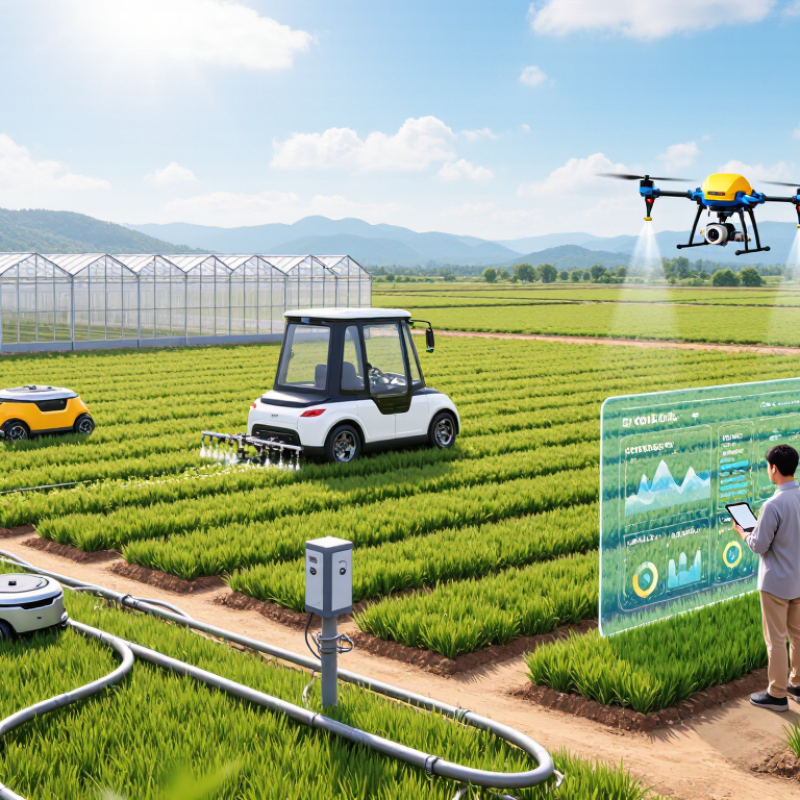
Agriculture automation is moving from experimental fields into everyday purchasing decisions. Global buyers now compare autonomous tractors, machine-vision harvesters, robotic weeders, drones, and connected irrigation systems. The choice is not simply about buying the newest machine. It involves labor availability, crop type, farm size, data ownership, maintenance access, and local climate.
The Food and Agriculture Organization’s The State of Food and Agriculture 2022 links digital technologies with higher productivity and more efficient resource use. The International Federation of Robotics also reported continued growth in professional service robots, including agricultural applications, in its World Robotics reports. These findings matter, but they do not guarantee a return on investment. A robot that performs well in California may struggle in muddy fields, fragmented farms, or regions with limited technical support.
Professor Simon Blackmore, a recognised agricultural robotics specialist, has often expressed the principle: “Robots will not replace farmers; farmers using robots will replace those who do not.” The message is powerful, although perhaps too absolute. Farmers still need judgment, seasonal experience, and practical repair skills. Technology can reduce repetitive work, but it cannot remove uncertainty.
This guide presents 10 agriculture automation tips for global buyers. It focuses on measurable performance, total ownership cost, interoperability, safety, training, and supplier credibility. Look closely. A polished demonstration may hide weak after-sales service or unreliable field data. Buyers should test equipment under real conditions, request independent evidence, and question every optimistic forecast. Automation is promising. It is not effortless.
Agricultural automation combines sensors, software, robotics, and controlled machinery to improve farm decisions. It is not simply replacing workers with machines. Soil sensors can measure moisture, while weather stations support irrigation and frost planning. Automated seeders place seeds at consistent depths. Camera-guided systems can identify weeds before mechanical removal. These applications reduce waste, but field conditions still matter.
Global buyers should examine ten practical areas: soil monitoring, weather analysis, irrigation control, precision seeding, targeted spraying, robotic weeding, harvesting assistance, crop sorting, livestock monitoring, and digital traceability. Start with the crop. A greenhouse may benefit from climate controls, while an open field may need rugged navigation equipment. Ask for calibration records, maintenance procedures, training requirements, and clear performance data. Demonstrations should use local soil, slopes, crops, and labor patterns.
I have seen automation projects struggle when connectivity was assumed rather than tested. Data needs context. Buyers should check offline functions, cybersecurity safeguards, spare-part access, and operator safety. Systems must also respect local agricultural rules and environmental requirements. A small pilot can reveal false alerts, muddy-wheel problems, or poor battery endurance. That feedback is valuable. Perfect automation is unlikely, and human inspection remains essential during unusual weather, equipment faults, and sensitive crop stages.
Begin with the crop, not the machine. Record field size, soil variation, labor gaps, and seasonal pressure. Measure current fuel, water, and labor costs. Speak with operators who handle the equipment daily. Their practical complaints often reveal hidden risks.
Define one measurable target. It might be lower irrigation use or fewer hours per hectare. Check power supply, mobile coverage, storage, and maintenance access. Confirm whether local technicians can repair essential components. Review safety requirements and import rules before purchasing. Request transparent figures for installation, training, spare parts, and software access.
Build a staged budget. Include five-year operating costs, not only the purchase price. Test a small area before expanding. Compare manual work with automated results during the same season. Automation readiness is also a people issue. Train staff before delivery, and appoint someone to monitor performance.
Keep paper records when digital systems fail. They sometimes do. My early assessment once focused too heavily on labor savings and ignored unreliable connectivity. That mistake changed the evaluation process.
A useful system should fit the farm’s real routines, climate, skills, and cash flow. Perfect automation is rarely the first goal. Reliable improvement is.
10 Agriculture Automation Tips for Global Buyers
Selecting suitable technology starts with the crop, not the machine. Match automation to field size, terrain, climate, and labor availability. For open fields, use guidance systems that maintain accurate rows on uneven ground. For orchards, consider vision tools that detect fruit color and maturity. Select soil sensors that measure moisture at root depth. Test connectivity before purchasing. Remote areas may need local data storage. Ask for field trials under similar weather conditions. Cheap sensors can become expensive.
Livestock systems require careful attention to animal behavior. Choose feeding equipment that supports different ration sizes and reduces waste. Install cameras or wearable sensors only when they provide useful health indicators. Check whether alarms remain clear during power or network failures. Request cleaning instructions, replacement schedules, and staff training. A practical system should support workers, not simply add screens. Visit a working farm when possible. Small details matter.
For tractors and other equipment, verify compatibility with existing attachments, fuel systems, and control standards. Prefer modular tools that can be repaired locally. Confirm data ownership, cybersecurity measures, and export options before signing a contract. Ask about language support and regional service capacity. Keep manual controls available during software faults. I would not automate every task immediately. A limited pilot can reveal hidden costs, operator resistance, and unreliable readings. Document results by hectare, labor hour, animal condition, and maintenance event before expanding.
| No. | Agriculture Area | Automation Tip | Suitable Technology | Best-Fit Crops, Livestock, or Equipment | Key Selection Criteria | Indicative Measurable Output | Implementation Notes for Global Buyers |
|---|---|---|---|---|---|---|---|
| 1 | Crop Irrigation | Automate irrigation according to soil moisture and crop demand instead of using a fixed schedule. | Soil-moisture sensors, weather data, flow meters, automated valves, and a farm irrigation controller. | Vegetables, orchards, vineyards, greenhouse crops, and drip-irrigated field crops. | Sensor accuracy, calibration procedure, valve compatibility, filtration requirements, operating pressure, and local replacement-part availability. | Water volume applied per hectare, irrigation runtime, soil-moisture range, and crop yield per unit of water. | Use a small pilot zone first. Confirm that the system can operate during weak internet connectivity through local control or offline scheduling. |
| 2 | Protected Cultivation | Control greenhouse climate automatically while retaining manual override for crop safety. | Temperature and humidity sensors, ventilation controls, shade screens, heating controls, carbon-dioxide monitoring, and a climate computer. | Tomatoes, cucumbers, peppers, leafy greens, flowers, and seedling nurseries. | Operating temperature range, response time, sensor placement, actuator capacity, alarm functions, and compatibility with local power supply. | Temperature and relative-humidity stability, ventilation hours, heating energy use, and marketable yield. | Specify fail-safe positions for vents and screens. Include high-temperature alarms because a control failure can damage crops rapidly. |
| 3 | Precision Crop Monitoring | Use field scouting data to identify crop stress before applying fertilizer or crop-protection products across the whole field. | Satellite imagery, unmanned aerial surveys where legally permitted, GPS field mapping, scouting applications, and geographic information systems. | Cereals, cotton, oilseeds, orchards, vineyards, and large vegetable fields. | Image resolution, revisit frequency, cloud coverage, positioning accuracy, data export format, and agronomist review capability. | Scouting time per hectare, mapped problem areas, treatment area, input use per hectare, and harvest variability. | Remote sensing indicates possible stress but does not identify its cause by itself. Pair imagery with field inspection and soil or tissue testing. |
| 4 | Variable-Rate Input Application | Apply seed, fertilizer, lime, or crop-protection products at different rates when reliable field data supports the prescription. | GPS guidance, electronic rate controllers, prescription maps, section control, and compatible spreaders or sprayers. | Broad-acre crops, orchards, vineyards, and fields with measurable soil or yield variability. | Application-rate accuracy, controller response time, nozzle or spreader compatibility, GPS correction service, and data-file interoperability. | Application accuracy, untreated overlap, input quantity per hectare, operating speed, and yield consistency. | Verify local regulations for chemical application and data use. Conduct calibration tests with clean water or non-hazardous material before field operation. |
| 5 | Autonomous Field Guidance | Automate steering assistance to reduce overlap, operator fatigue, and crop damage during repetitive field passes. | Satellite positioning, steering-assist systems, machine guidance displays, correction signals, and implement sensors. | Tractors, harvesters, planters, cultivators, and sprayers working on large or regularly shaped fields. | Pass-to-pass accuracy, signal availability, terrain performance, integration with existing machinery, operator training, and manual takeover controls. | Pass overlap, fuel use per hectare, effective field capacity, operator hours, and crop damage from wheel traffic. | Accuracy requirements depend on the task. Planting and mechanical weeding generally require more precise guidance than broad fertilizer spreading. |
| 6 | Livestock Feeding | Automate feed delivery and monitor consumption while keeping a practical manual feeding method available. | Programmable feed mixers, conveyor or robotic feeders, weighing systems, feed-bunk sensors, and ration-management software. | Dairy cattle, beef cattle, pigs, poultry, and other animals receiving formulated rations. | Batch weighing accuracy, cleaning access, feed ingredient compatibility, dosing repeatability, battery or power requirements, and animal-safe design. | Feed offered per animal, feed refusals, ration accuracy, labor hours, average daily gain, or milk yield. | Automation cannot replace professional ration formulation. Check that the equipment handles local feed moisture, particle size, and storage conditions. |
| 7 | Livestock Health Monitoring | Use automated alerts to prioritize animals needing inspection rather than treating sensor alerts as a diagnosis. | Wearable activity sensors, rumination or feeding monitors, camera-based observation, electronic identification, and alert dashboards. | Dairy cattle, beef cattle, sheep, goats, pigs, and poultry houses with suitable monitoring infrastructure. | Animal comfort, attachment durability, alert sensitivity, false-alert rate, data ownership, battery life, and veterinary workflow integration. | Time to identify abnormal behavior, inspection workload, treatment records, morbidity rate, and recovery time. | Establish an alert-response protocol with a veterinarian or trained livestock professional. Test the system under local housing, dust, heat, and humidity conditions. |
| 8 | Poultry and Barn Environment | Automate ventilation and environmental alarms to maintain stable conditions without eliminating human checks. | Temperature, humidity, ammonia, carbon-dioxide, and pressure sensors connected to ventilation, cooling, heating, and alarm systems. | Poultry houses, pig barns, dairy facilities, calf housing, and other enclosed livestock buildings. | Sensor calibration, alarm redundancy, emergency ventilation, generator compatibility, wash-down protection, and local service response. | Temperature variation, ventilation rate, gas concentration, mortality rate, feed conversion, and energy use. | Install independent high-temperature and power-failure alarms. Define emergency procedures for network loss, controller failure, and extreme weather. |
| 9 | Equipment Maintenance | Replace reactive repairs with maintenance based on operating hours, fault codes, and condition indicators. | Machine telematics, engine-hour tracking, vibration or temperature sensors, digital maintenance logs, and diagnostic tools. | Tractors, combines, pumps, irrigation equipment, milking systems, feed mixers, and refrigeration units. | Protocol compatibility, data export, sensor durability, alert quality, cybersecurity controls, spare-parts access, and technician training. | Unplanned downtime, maintenance cost per operating hour, repair response time, fuel consumption, and equipment availability. | Request clear ownership and export rights for machine data. Keep paper or offline maintenance records where connectivity is unreliable. |
| 10 | Post-Harvest Handling | Automate grading, weighing, cooling, and storage monitoring to protect quality after harvest. | Electronic scales, optical or camera grading, conveyor controls, temperature and humidity sensors, automated ventilation, and traceability records. | Fruits, vegetables, grains, seeds, potatoes, onions, and other commodities requiring controlled storage or sorting. | Throughput capacity, product damage rate, grade accuracy, cleaning requirements, cold-chain compatibility, calibration, and food-safety documentation. | Throughput per hour, weight accuracy, storage temperature range, shrinkage, rejected product, and shelf-life performance. | Match capacity to the actual harvest window, not only to peak theoretical throughput. Confirm that materials and cleaning procedures suit food-contact use. |

Comparing Global Suppliers, Standards, Support, and Total Costs
Global buyers should compare suppliers beyond the equipment price. Ask for factory records, installation photos, and customer references from similar climates. Tip one: verify production capacity. Tip two: inspect quality-control procedures. A polished website proves little.
Check electrical ratings, software safety, machine guarding, and local certification requirements before signing. Tip three: request test reports. Tip four: confirm language options. Tip five: examine data protection practices. Standards may differ between regions, so use an independent engineer when documents seem unclear. That extra review can prevent costly delays.
Support often determines whether automation performs well after delivery. Tip six: measure response times in writing. Tip seven: confirm spare-parts availability near your market. Tip eight: ask who trains operators. Tip nine: require remote diagnostics and maintenance schedules. Tip ten: define warranty limits, travel fees, and upgrade costs. Look beyond the quotation. Calculate freight, customs charges, site preparation, energy use, software subscriptions, labor changes, and downtime. A cheaper system may need imported parts every three months. That is not cheap. In my experience, buyers sometimes overestimate labor savings and underestimate cleaning time. I have also seen projects fail because workers received one rushed training session. Build a small pilot first, record water use and operating hours, then revise the purchase plan. Imperfect data is still useful when its limits are documented.
10 Agriculture Automation Tips for Global Buyers
Planning Installation, Training, Maintenance, and Future Expansion
Tip 1: Audit the site before ordering. Measure power quality, floor loading, network coverage, water access, and seasonal temperatures. A local engineer should verify electrical and safety requirements. The FAO estimates that agriculture must produce about 50% more food by 2050. Reliable automation will support that demand only when installation fits real farm conditions.
Tip 2: Build training into the contract. Operators need practical sessions on calibration, emergency stops, cleaning, and fault diagnosis. Use translated manuals and short video lessons. The ILO reports that agriculture still employs roughly 27% of the global workforce. Training should include technicians, not only machine operators. Otherwise, small faults become expensive downtime.
Tip 3: Plan maintenance before commissioning. Keep critical sensors, belts, filters, and cables in local stock. Record service intervals and assign one responsible technician. Ask suppliers for response times, diagnostic access, and software update procedures. This detail is often missed.
Tip 4: Design for expansion. Leave spare electrical capacity, network ports, floor space, and safe equipment routes. The OECD-FAO Agricultural Outlook 2024–2033 expects continuing growth in global agricultural production, but regional conditions will differ. Modular systems can adapt more easily than fixed layouts.
Tip 5: Test performance against farm data, not promises. Compare labor hours, yield quality, energy use, and downtime before and after installation. Run a pilot during a difficult season. The plan may fail. That is useful evidence. Revise it before scaling across multiple sites.