Why is Automation for Industry Essential for Global Buyers?
In today's competitive landscape, automation for industry has become vital for global buyers. This technology offers efficiency, cost savings, and improved productivity. As businesses seek to streamline operations, automation plays a key role in meeting these goals. Many companies report significant reductions in labor costs after integrating automated solutions.
However, the transition to automation for industry is not without challenges. Organizations must invest in training their workforce to adapt to new technologies. Resistance to change can hinder progress, requiring careful management and communication. Moreover, not all automation solutions are one-size-fits-all; buyers need to assess their unique needs.
Global buyers face an overwhelming array of choices. Understanding the specifications and capabilities of various automation tools is essential. Decision-makers must navigate technical complexities while ensuring reliability and effectiveness. With the right approach, automation for industry can lead to substantial advantages. It is imperative for companies to reflect on their automation strategies for lasting success.
The Role of Automation in Enhancing Industry Efficiency
Automation has become a cornerstone for enhancing efficiency across various industries. By streamlining processes, it reduces the need for manual intervention. This shift leads to faster production times. With automation, quality control improves significantly. Machines can operate consistently, ensuring fewer defects in products. As a result, companies can meet customer demands more effectively.
Tips for implementing automation: Start small. Test automation on a specific task before full-scale implementation. Evaluate the outcomes carefully. Monitor performance metrics to gauge effectiveness. Don't overlook employee training. Ensuring your team understands new technology is crucial for success. Their feedback can highlight unforeseen issues.
It is essential to recognize that automation is not a cure-all. Some industries may struggle with high initial costs. Resistance from employees is another common hurdle. Change can be daunting, and addressing concerns is vital. Take time to create an environment open to feedback. This can ultimately foster a culture of innovation. Adopting automation requires careful planning and ongoing assessment.
Why is Automation for Industry Essential for Global Buyers? - The Role of Automation in Enhancing Industry Efficiency
| Dimension |
Description |
Impact on Efficiency (%) |
Cost Reduction (%) |
| Process Automation |
Streamlining repetitive tasks with automated systems |
30 |
25 |
| Data Analysis |
Utilizing AI to analyze large data sets for better decision-making |
40 |
15 |
| Supply Chain Optimization |
Automating logistics and transportation for improved delivery |
35 |
20 |
| Quality Control |
Implementing automated testing systems to enhance product quality |
25 |
10 |
| Customer Service Automation |
Using chatbots and automated responses to improve customer interaction |
20 |
5 |
Global Market Trends Driving Automation Adoption
The global shift towards automation is largely driven by the need for efficiency and responsiveness. Businesses face increasing pressure to streamline operations and reduce costs. Automation provides a way to enhance productivity, especially in manufacturing and logistics. Many industries are exploring automated solutions to respond swiftly to market demands. This trend is evident in sectors like food production and pharmaceuticals, where precision and speed are critical.
As companies strive to stay competitive, they invest in advanced technologies. Robotics, AI, and IoT are at the forefront of this transformation. These innovations can lead to faster production cycles and improved quality control. However, the transition is not always smooth. Companies must contend with workforce resistance and the need for new skills. Balancing automation with human oversight is essential to maintain operational integrity.
Additionally, global supply chain challenges have heightened the urgency for automation. Events like pandemics and geopolitical tensions strain traditional processes. Automation can mitigate risks by providing alternative ways to manage operations. Yet, a one-size-fits-all approach doesn’t exist. Each industry and organization must tailor its automation strategy to effectively meet unique challenges. The journey may involve trial, error, and constant learning.
Cost Reduction and ROI Benefits of Industrial Automation
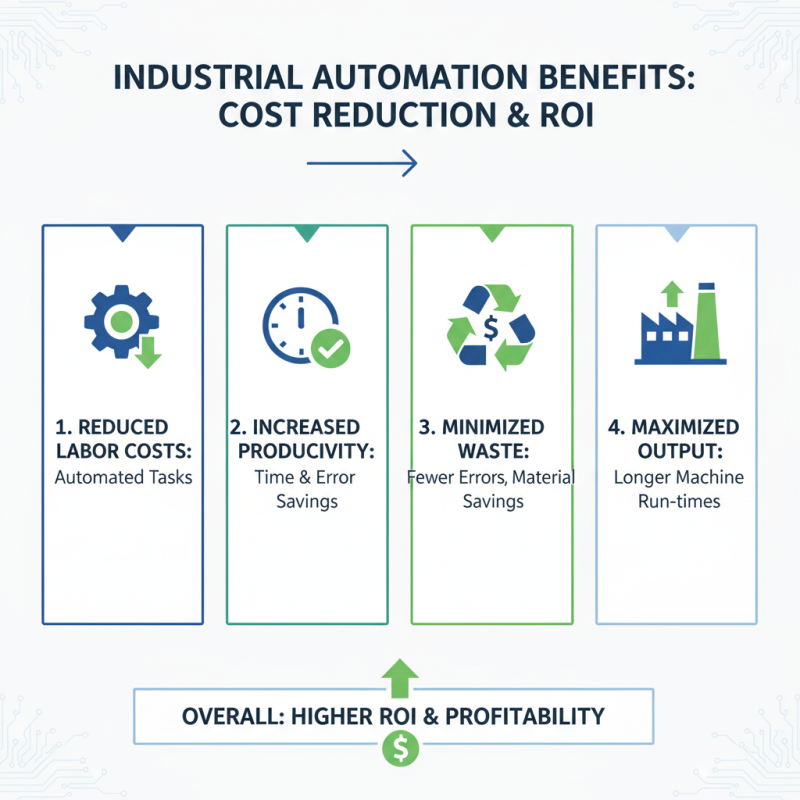
The rise of industrial automation offers significant cost reduction opportunities for businesses. Automating repetitive tasks can lower labor costs. This saves time and reduces human error, enhancing productivity. With fewer errors, companies can minimize waste, which can lead to further savings. Automation also enables companies to run machines longer, maximizing output without the need for additional shifts.
Investing in automation yields strong returns on investment (ROI). Initial costs may be daunting, but the long-term benefits often outweigh them. Industries that adopt automation see increased efficiency. They experience faster production cycles and enhanced consistency in product quality. As global competition heightens, automation becomes vital for survival. Companies are urged to analyze the long-term financial implications instead of focusing solely on upfront expenses.
However, transitioning to automated systems is not without challenges. Employees may resist changes, fearing job losses. Integrating new technology requires training and adjustment periods. It’s essential for leaders to manage these transitions with care, addressing fears while highlighting the benefits. Not all automation solutions will fit every industry perfectly, making careful planning necessary for successful implementation.
Technological Innovations Revolutionizing Automation in Industry
Automation in industry is transforming operations on a global scale. Technological innovations like artificial intelligence and machine learning are reshaping how companies approach productivity and efficiency. These tools enable businesses to identify patterns, optimize processes, and reduce costs. As a result, companies can make more informed decisions, leading to improved output.
Integrating automation requires careful planning and understanding of existing processes. This can be challenging. Some businesses might find it hard to adapt. A gradual implementation strategy can help minimize disruptions. Start with small projects to gain insights and build confidence in new technologies.
Tips: Focus on employee training. Ensure that your workforce understands how to use new tools effectively. This investment pays off in the long run. Regularly assess automation impacts. Adjust strategies based on performance data and employee feedback. Being flexible in your approach is crucial for sustained success in automation.
Sustainability and Automation: Meeting Global Environmental Goals
Sustainability and automation are becoming crucial for industries today. A report from McKinsey highlights that industries could cut emissions by 20-30% through automation. Automation streamlines processes, reducing energy consumption and waste. For instance, smart factories can optimize resource use in real-time, offering a pathway to achieve global environmental goals.
Despite these benefits, challenges still exist. Not all automation technologies are equally effective in reducing carbon footprints. A study from the International Energy Agency indicates that some solutions may increase reliance on non-renewable energy. It’s essential to ensure that automation aligns with sustainable practices. Users must critically assess technologies before implementation.
Moreover, a survey by Deloitte shows that only 39% of organizations factor sustainability into their automation strategies. This gap highlights a need for more robust integration of environmental concerns. As industries push towards sustainability, the focus on automation must evolve. Buyers need to engage in continuous learning to navigate this complex landscape.
Impact of Automation on Sustainability Goals