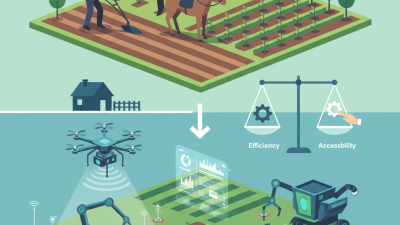
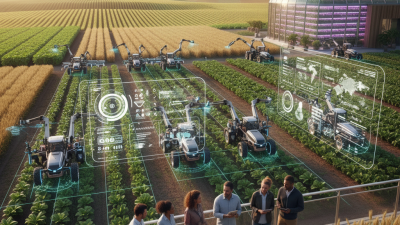
Agriculture automation is moving from experimental plots into working fields, barns, and packing lines. A camera-guided sprayer can target weeds row by row, while a milking robot records each cow’s yield and activity. These systems promise more precise work, but they also bring costs, maintenance needs, and new decisions for farm teams. The details matter.
The FAO’s 2022 report, The State of Food and Agriculture: Leveraging Automation in Agriculture for Transforming Agrifood Systems, reviews technologies ranging from mechanization to robotics and digital tools. It stresses that access and benefits differ across regions and farm types; one solution cannot fit every field. FAO Director-General QU Dongyu said, “Agricultural automation can play a significant role in making food production more efficient, productive and sustainable.” The opportunity is real. So are the trade-offs.
This guide compares ten agriculture automation solutions, from autonomous tractors and precision irrigation to robotic harvesting and livestock monitoring. It considers practical factors: field conditions, labor needs, equipment compatibility, operating costs, and the support available after installation. A sensor may produce clean data, yet deliver little value if nobody can act on it. Not every farm needs a robot. The best choice depends on the task, the crop, and the people using the system. Some promises still need stronger evidence from long-term, on-farm results. That is worth remembering before investing.
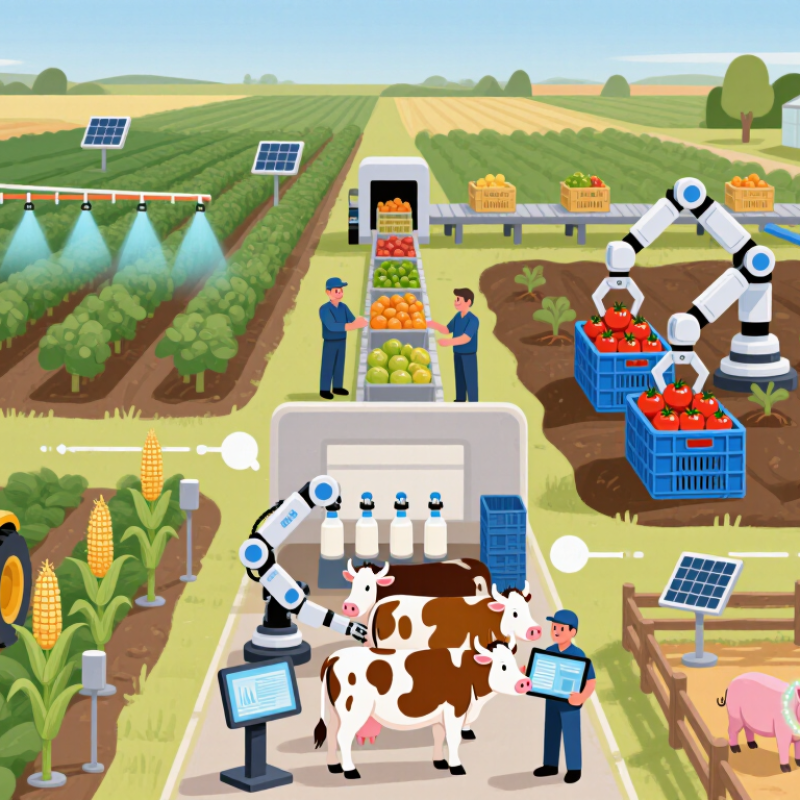
Agricultural automation uses sensors, connected software, and machinery to handle or guide routine farm tasks. It can monitor soil moisture, track equipment, steer tractors, or regulate irrigation. These tools support farm operations by giving workers timely information and reducing repetitive work. For example, a moisture sensor can flag a dry section before leaves begin to curl. Automated irrigation can then deliver water to selected zones instead of running across an entire field. It is not magic. Sensor readings can be inaccurate, and connectivity may fail in remote areas. Farmers still need to check conditions and make sound decisions.
Tips: Start with one recurring problem, such as uneven watering or missed equipment checks. Compare the tool’s readings with direct field observations. Keep a simple record of labor, downtime, and crop conditions before and after adoption. This helps show whether automation is actually useful. Small trials are often easier to evaluate than a farm-wide change.
Good implementation also depends on people and maintenance. Workers need clear training, and machines need regular cleaning and inspection. A clogged sensor or poorly calibrated system can quietly produce bad guidance. Automation can save time, but it may add costs and new tasks. That trade-off deserves an honest look before expanding a system.
| # | Automation solution | Farm operation supported | How it works | Potential operational value | Important considerations |
|---|---|---|---|---|---|
| 1 | GPS-guided steering and auto-steering | Tractor and machinery guidance for planting, spraying, and tillage | Satellite positioning and onboard guidance systems help keep equipment on planned paths, reducing overlap and missed strips. | Supports consistent passes, more accurate field operations, and reduced operator steering workload. | Performance depends on positioning accuracy, signal availability, field layout, and equipment compatibility. |
| 2 | Variable-rate application | Seeding, fertilizer, lime, and crop-protection application | Prescription maps or real-time sensor readings adjust application rates across different parts of a field. | Can match inputs more closely to soil or crop conditions and avoid applying a uniform rate where it is not needed. | Useful rate maps require reliable field data, appropriate calibration, and equipment able to control application rates. |
| 3 | Automated precision irrigation | Water delivery and irrigation scheduling | Controllers use schedules, soil-moisture measurements, weather information, or crop requirements to operate valves and irrigation equipment. | Helps coordinate irrigation timing and delivery with crop water needs and can reduce unnecessary watering. | Sensor placement, water pressure, system maintenance, and local weather conditions affect results. |
| 4 | Robotic mechanical weeding | Weed control in row crops and specialty crops | Cameras and other sensors identify crop rows or individual plants, while mechanical tools remove or disturb weeds. | Can automate repetitive in-row or between-row cultivation and reduce reliance on manual weeding in suitable fields. | Crop spacing, weed size, soil condition, weather, and crop-recognition accuracy influence performance. |
| 5 | Automated milking systems | Dairy cow milking and associated monitoring | Cows enter a milking unit, and automated equipment cleans teats, attaches milking cups, and records production and activity data. | Automates routine milking tasks and provides individual-animal records that can support herd management. | Requires suitable barn layout, regular equipment cleaning and maintenance, and ongoing animal-health oversight. |
| 6 | Automated livestock feeding | Feed mixing, delivery, and feed pushing | Programmable mixers, conveyors, or mobile units prepare and distribute rations; some systems also push feed closer to animals. | Makes feeding routines more repeatable and can reduce the time spent on frequent feed-delivery tasks. | Ration formulation, ingredient handling, equipment cleaning, and reliable access to feed storage remain essential. |
| 7 | Greenhouse climate and irrigation control | Temperature, ventilation, humidity, lighting, and watering | Sensors and controllers operate equipment such as vents, fans, heaters, shade screens, lights, and irrigation valves according to set points. | Helps maintain managed growing conditions and coordinate several environmental controls from a central system. | Controls need appropriate crop-specific settings, functioning sensors, and backup plans for power or equipment failures. |
| 8 | Drone and remote-sensing monitoring | Crop scouting and field-condition assessment | Aerial images and sensor data are used to create field views that can help identify variation in crop growth or areas needing inspection. | Can help prioritize scouting and provide a spatial overview that is difficult to obtain from ground checks alone. | Images require interpretation and ground verification; flight rules, weather, battery life, and data quality matter. |
| 9 | Autonomous field robots | Selected field tasks such as scouting, light cultivation, or targeted application | Navigation systems, sensors, and task-specific implements allow a machine to follow a planned route and perform defined work with limited direct steering. | Can automate repeated or specialized field passes and collect field observations during operation. | Operating area, terrain, obstacle detection, supervision requirements, and applicable safety rules must be considered. |
| 10 | Automated harvesting and sorting | Harvesting, produce handling, and post-harvest grading | Crop-specific machinery or machine-vision systems assist with picking, conveying, and sorting produce by measurable characteristics such as size or color. | Can speed up repetitive handling and support more consistent sorting in crops suited to mechanized harvest. | Crop variety, ripeness, product fragility, field conditions, and quality requirements determine suitability. |
Suitability and results vary by farm size, crop or livestock type, labor availability, infrastructure, and local operating conditions.