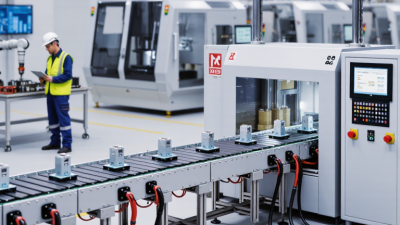
Choosing an oil and gas automation partner is not a simple ranking exercise. Buyers must weigh process expertise, cybersecurity practices, system compatibility, service coverage, and the ability to support equipment across a facility’s full life. A control platform may look impressive in a presentation. It must also work reliably beside compressors, pumps, and legacy systems.
Peter Zornio, an automation technology executive at Emerson, has emphasized that digital transformation should produce practical business value. A fair paraphrase of that principle is: “Technology matters when it helps people make better operating decisions.” That distinction is central to oil and gas automation. Sensors, control systems, analytics, and remote monitoring can improve visibility, but results depend on sound engineering, trained teams, and careful implementation. No tool removes the need for human judgment.
This guide compares ten companies serving global buyers, focusing on capabilities rather than promotional claims. It considers automation portfolios, industry experience, integration needs, and support for operations in varied regions. The right choice will depend on the asset, project scope, and existing infrastructure. There is no universal winner. Some comparisons also rely on public company information, which can be incomplete or change over time. Treat the shortlist as a starting point, then verify technical fit, service commitments, and measurable outcomes with each supplier.

Automation supports decisions across the oil and gas value chain, from well operations to transport and processing. At a remote site, sensors can track pressure, temperature, and flow in near real time. Operators use these readings to adjust equipment and spot unusual changes before they become costly disruptions. Small signals matter.
In pipelines, automated monitoring can flag pressure drops or unexpected flow patterns. Control teams can then investigate, while field crews verify conditions on site. This combination matters: software can raise an alert, but it cannot always explain a loose fitting or a sensor covered in dust. Data quality is not guaranteed.
At processing facilities, control systems help coordinate pumps, compressors, and safety interlocks. Maintenance teams can use equipment histories to plan inspections around actual wear, rather than relying only on fixed schedules. Yet automation needs careful setup and regular testing. A poorly tuned alarm may overwhelm staff; an outdated instrument may create false confidence. Human judgment remains essential, especially when conditions change faster than procedures can account for. Automation works best when it makes operations more visible, not when it hides uncertainty.
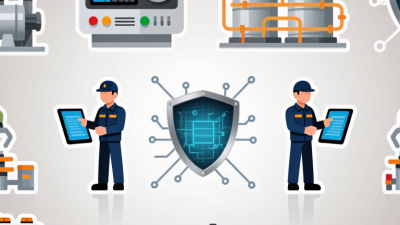
Oil and gas automation links field instruments, control systems, and operations teams. Pressure and temperature sensors feed data to programmable logic controllers and distributed control systems. Supervisory control and data acquisition systems help operators monitor remote wells, pipelines, and compressor stations. A sudden pressure drop can trigger an alarm before a technician reaches the site. Useful, but not magic. The IEA’s 2017 Digitalisation and Energy report estimated digital technologies could cut oil and gas production costs by 10–20%. Results depend on data quality and how well systems fit existing equipment.
Advanced systems add edge computing, predictive maintenance, and digital twins. Edge devices can flag vibration changes near a pump without sending every reading to a central cloud. Digital twins combine operating data with equipment models, helping teams test maintenance plans. The IEA’s 2023 report, The Oil and Gas Industry in Net Zero Transitions, estimated that operations produced about 5.1 gigatonnes of greenhouse gas emissions in 2022. Better monitoring can help locate leaks and track energy use, though sensors need regular calibration. Dashboards can mislead.
Tips: Start with one asset, such as a compressor train. Check sensor accuracy, alarm thresholds, and network security before scaling. Keep a manual fallback; field conditions rarely match the model perfectly.
Global buyers evaluating oil and gas automation providers should begin with operating conditions, not product claims. A control system designed for a stable onshore facility may not suit a remote site with intermittent connectivity, harsh weather, and limited technician access. Ask providers to map their proposed architecture against actual workflows, equipment interfaces, and shutdown procedures.
Details matter.
Request evidence from comparable deployments, including commissioning timelines, alarm reduction, and documented uptime assumptions. Then check how the provider handles legacy controllers, data ownership, secure remote access, and software updates. Clear answers are useful; vague promises about seamless integration deserve a second look.
Ask for proof.
Also clarify who is responsible when systems from different suppliers fail to communicate.
Assess more than engineering. Ask who will support the system across time zones, what spare parts are locally available, and how operators will train with realistic scenarios. Review service terms and escalation paths before procurement.
A pilot can expose gaps, but only if success criteria are agreed in advance and results are measured consistently.
It is easy to make migration look simpler in a planning spreadsheet than it is on site, so invite site engineers to challenge assumptions before budgets are fixed.
The ten leading oil and gas automation companies are not interchangeable. Their work may cover plant control systems, safety instrumented systems, measurement, and equipment monitoring. A provider supporting an offshore platform may not suit a small onshore compressor station. Match the company’s experience to the site, operating conditions, and existing equipment.
Look for evidence in comparable projects, not polished presentations alone. Ask how teams handle a failed pressure transmitter, an outdated controller, or a sudden loss of network communication. Details matter. Strong providers explain alarm design, data access, cybersecurity practices, and commissioning plans in plain language. They also train operators using realistic scenarios, such as isolating a pump before maintenance. Regional service coverage can affect response times, especially at remote facilities. Check it.
A shortlist of ten can be useful, but rankings often simplify a complicated decision. Some firms excel at large control-room upgrades; others are better suited to integrating instruments across older equipment. Neither is automatically the right choice. Request references, define acceptance tests, and compare lifecycle support alongside purchase cost. Even careful evaluations miss things. A pilot installation can reveal integration problems that were invisible in the proposal.
Anonymous supplier profiles for comparison. Profiles are illustrative, not a company-specific ranking; actual capabilities vary by product, project, and region.
| Anonymous Profile | Typical Automation Focus | Oil and Gas Applications | Common Functions | Buyer Evaluation Points |
|---|---|---|---|---|
| Provider 01 | Integrated process control and safety systems | Refineries, gas processing plants, and large production facilities | Continuous process control, alarms, operator interfaces, and safety-system integration | Lifecycle support, system availability, migration options, and safety documentation |
| Provider 02 | Programmable control and machine automation | Pipelines, pumping stations, compressor stations, and utility systems | Sequencing, equipment control, remote monitoring, and packaged-unit integration | Environmental ratings, spare-parts access, and integration with existing controls |
| Provider 03 | Instrumentation and measurement systems | Well sites, custody-transfer points, terminals, and process units | Pressure, temperature, flow, and level measurement; field-device diagnostics | Measurement range, calibration support, hazardous-area suitability, and local service |
| Provider 04 | Safety instrumented systems and emergency shutdown | Offshore facilities, LNG plants, refineries, and high-hazard process areas | Safety logic, shutdown functions, fire-and-gas interfaces, and proof-test support | IEC 61511 alignment, independence, verification records, and long-term maintainability |
| Provider 05 | Supervisory control and telemetry | Long-distance pipelines, remote wells, and geographically distributed assets | Remote data acquisition, telemetry, alarm management, and centralized supervision | Communications coverage, redundancy, secure remote access, and support for legacy field equipment |
| Provider 06 | Industrial software, operations management, and data integration | Production sites, refineries, terminals, and enterprise operations centers | Historian functions, dashboards, production reporting, and operational data exchange | Interoperability, data ownership, deployment options, and alignment with site workflows |
| Provider 07 | Rotating-equipment monitoring and optimization | Gas compression, refining, LNG, and offshore production | Condition monitoring, performance tracking, and maintenance planning for critical equipment | Sensor compatibility, actionable diagnostics, and integration with maintenance processes |
| Provider 08 | Electrical, drive, and power-control automation | Pumps, compressors, process units, and facility power systems | Motor control, variable-speed operation, electrical monitoring, and load coordination | Power-system compatibility, energy performance, maintainability, and hazardous-area requirements |
| Provider 09 | Industrial cybersecurity and secure system integration | Control networks, remote sites, processing facilities, and enterprise interfaces | Network segmentation, asset visibility, access controls, and security monitoring | IEC 62443 alignment, operational impact, incident response, and compatibility with site policies |
| Provider 10 | Engineering, system integration, and automation services | Greenfield projects, brownfield upgrades, commissioning, and multi-vendor facilities | System design, control-panel integration, testing, commissioning, and lifecycle support | Relevant project experience, local engineering capacity, documentation quality, and schedule control |
Standards note: IEC 61511 addresses functional safety for the process industry; IEC 62443 covers industrial automation and control system security. Standards applicability depends on the project scope and jurisdiction.
A credible comparison of oil and gas automation providers starts with the work they can deliver: control-system integration, remote monitoring, predictive maintenance, and cybersecurity support. Some firms excel at upgrading offshore platforms; others suit refineries with aging equipment and tight shutdown windows. Global reach matters when spare parts, engineers, and support must arrive across time zones. Yet a broad service map does not guarantee strong local response.
Industry fit is more useful than a polished capability list. Check whether a provider has worked with similar assets, harsh operating conditions, and existing control systems. Ask who handles commissioning, and how operators are trained. The World Economic Forum’s 2017 Digital Transformation Initiative estimated up to $1.6 trillion in value for the oil and gas industry, consumers, and society over 2016–2025. That was projected potential, not a guaranteed result. The ranking is never clean. A smaller specialist may understand one facility better than a global contractor, while lacking round-the-clock coverage. Compare documented project outcomes, integration limits, and support locations—not promises alone.