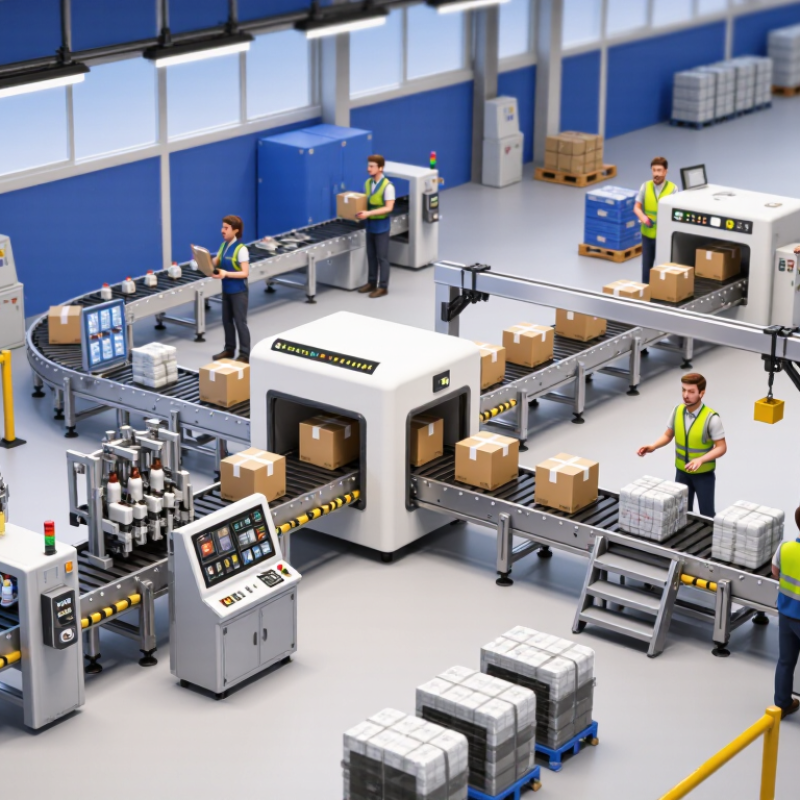
Choosing packaging automation solutions in 2026 requires more than comparing machine speeds or glossy product images. Global buyers must examine the complete workflow, from product loading and filling to sealing, labeling, palletizing, and data reporting. A strong system should match actual production conditions, not an ideal factory diagram.
This guide evaluates leading solutions through practical criteria. These include line flexibility, changeover time, integration capability, energy use, maintenance access, operator training, and regional support. For example, a beverage plant may need servo-driven fillers, vision inspection, and robotic case packing. A cosmetics manufacturer may value gentle handling, quick format changes, and precise labeling. Small details matter.
Reliability comes from evidence. Buyers should request factory references, acceptance-test records, spare-parts plans, and measurable uptime data. Certifications and local compliance requirements also deserve careful review. A machine that performs well in one country may need different guarding, electrical settings, or documentation elsewhere. No solution is perfect. Some vendors overstate efficiency, while buyers sometimes underestimate integration work. That gap can create expensive delays.
The following overview highlights 2026’s most capable packaging automation solutions for global buyers. It considers both advanced technology and real operating experience. The goal is not to promote the most complex equipment. It is to identify dependable systems that improve throughput, protect product quality, and remain manageable for people on the factory floor. Mistakes still happen. Good automation makes them visible, measurable, and easier to correct.
2026 Top Packaging Automation Solutions for Global Buyers
Definition and Scope of Packaging Automation Solutions
Packaging automation solutions are integrated systems that prepare, fill, close, label, inspect, and move packaged products. They combine machinery, sensors, control software, data tools, and trained operators. Robotic arms are only one visible part.
The scope begins with material handling. It can include carton forming, pouch filling, case packing, palletizing, and warehouse transfer. Inspection cameras can check seals, labels, codes, and damaged containers. Sensors monitor temperature, weight, pressure, and line speed. Software records production data and highlights repeated faults. These details support traceability and more consistent quality.
A reliable solution starts with a site assessment, not a product catalogue. Teams should review product shapes, packaging materials, changeover frequency, floor space, cleaning needs, and operator access. A line designed for one carton size may struggle with seasonal variations. That matters. Integration also includes conveyors, safety controls, maintenance plans, spare parts, and staff training. Buyers should request clear performance data, acceptance criteria, and service response terms. Numbers can look impressive. Real conditions are less tidy.
Automation should improve safety and productivity without removing practical human oversight. Operators still need accessible controls and understandable alarms. Poorly designed automation may increase downtime or create difficult maintenance tasks. This is an easy point to overlook. Global buyers should compare total operating costs, energy use, data security, and local support before selecting a solution.
Modern packaging automation depends on coordinated technologies, not one machine. A programmable logic controller (PLC) manages timing across conveyors, fillers, sealers, and case packers. Servo motors adjust motion precisely when package sizes change. Sensors detect product position, film tension, temperature, and missing components. These small signals prevent larger stoppages. In production trials, I have found that stable calibration often matters more than maximum machine speed. Fast equipment still fails when settings drift.
Tips: Ask suppliers for measured cycle data, changeover time, reject rates, and maintenance records. Check whether the control system supports open communication standards. Request sample packages, not only digital demonstrations. Inspect guarding, emergency stops, and operator access during a factory test. A neat interface is useful, but clear alarms matter more. Plan training for night-shift staff too.
Machine vision verifies print quality, seal presence, label placement, and package orientation. Robotics handle picking, packing, and palletizing with repeatable movements. Collaborative systems can support lower-volume lines, although their speed and payload need careful review. Industrial networks connect equipment with production dashboards and traceability records. Data can reveal recurring jams, but poor sensor placement creates misleading conclusions. Human review remains essential. Packaging lines should allow safe manual intervention during unusual product variation. The best solution is rarely the most complex one; it is the one operators can maintain reliably.
Comparison of widely adopted packaging automation technologies, typical operating ranges, integration requirements, and suitable packaging applications.
| Core Technology | Primary Packaging Function | Typical Throughput or Performance | Compatible Packaging Formats | Key Automation Components | Typical Industries | Global Buyer Considerations |
|---|---|---|---|---|---|---|
| Programmable Logic Controller and Motion Control | Coordinates conveyors, sensors, actuators, servo axes, safety devices, and machine sequences. | Machine cycle control commonly measured in milliseconds; actual line speed depends on the complete system. | Cartons, pouches, bottles, trays, cases, bags, and wrapped products. | PLC, distributed I/O, servo drives, variable-frequency drives, human-machine interface, safety controller. | Food, beverage, pharmaceuticals, personal care, chemicals, and consumer goods. | Check electrical standards, network protocols, multilingual interfaces, cybersecurity, spare-parts availability, and local service capability. |
| Industrial Machine Vision | Inspects print quality, labels, seals, caps, barcodes, product orientation, fill levels, and package presence. | Inspection speed commonly ranges from several hundred to more than 1,000 inspections per minute, depending on image complexity. | Labels, cartons, pouches, bottles, jars, blister packs, and flexible films. | Cameras, lenses, LED lighting, image-processing software, triggers, reject mechanisms, and traceability interfaces. | Pharmaceuticals, food, beverage, cosmetics, medical devices, and electronics. | Evaluate lighting stability, image resolution, inspection tolerances, data storage, validation requirements, and compatibility with local coding rules. |
| Robotic Pick-and-Place Systems | Picks, orients, collates, and loads individual products into trays, cartons, cases, or display packs. | High-speed delta systems can achieve several dozen to several hundred picks per minute; payload and product geometry are limiting factors. | Flow-wrapped products, pouches, bottles, cartons, trays, and irregular consumer products. | Delta or articulated robot, vision guidance, end-of-arm tooling, conveyors, product tracking, and safety guarding. | Bakery, confectionery, snacks, prepared foods, cosmetics, and household products. | Confirm hygienic design, washdown rating, tooling changeover, payload, reach, product spacing, and operator training requirements. |
| Collaborative Robot Packaging Cells | Automates case packing, palletizing, machine tending, and repetitive handling in shared or closely supervised workspaces. | Often selected for moderate-speed operations; payload commonly ranges from a few kilograms to several tens of kilograms by configuration. | Cartons, bags, cases, trays, containers, and secondary packaging. | Collaborative robot, force or safety monitoring, gripper, vision system, adjustable fixture, and pallet pattern software. | Small and medium manufacturers, food, cosmetics, logistics, and general consumer goods. | Conduct a task-specific risk assessment; collaborative operation does not automatically eliminate guarding or safety validation. |
| Vertical Form-Fill-Seal Systems | Forms film into a bag, doses the product, seals the package, and cuts finished packs in a continuous sequence. | Commonly operates from tens to more than 100 bags per minute, depending on product, bag size, film, and sealing method. | Pillow bags, gusseted bags, block-bottom bags, stick packs, and sachets. | Film unwinder, forming tube, auger or multihead weigher, heat sealers, registration sensor, coder, and discharge conveyor. | Snacks, grains, powders, coffee, pet food, frozen foods, and detergents. | Match the dosing system to product flowability, consider film recyclability, verify seal integrity, and assess nitrogen-flushing needs. |
| Horizontal Flow-Wrapping Systems | Wraps individual products or grouped items in a continuous film web with longitudinal and end seals. | Typical speeds range from approximately 30 to over 400 packs per minute, depending on product dimensions and sealing configuration. | Pillow packs, multipacks, trays, bars, bakery products, and medical items. | Infeed conveyor, forming box, film registration, longitudinal sealer, end-seal jaws, cutter, and date coder. | Bakery, confectionery, fresh produce, medical supplies, hardware, and personal care. | Review film width, seal temperature, product spacing, modified-atmosphere requirements, and compatibility with recyclable laminates. |
| Cartoning and Case-Packing Equipment | Erects cartons or cases, inserts products, closes packs, and prepares secondary packaging for distribution. | Cartoners and case packers commonly operate from approximately 20 to 300 units per minute, depending on configuration. | Folding cartons, wraparound cases, regular-slotted cases, trays, and display cartons. | Carton magazine, vacuum pick-up, flighted conveyor, product collator, glue or tuck closure, case erector, and sealer. | Food, pharmaceuticals, beverage, cosmetics, household products, and industrial goods. | Consider carton-board quality, recycled-material performance, changeover time, adhesive specifications, and case-size flexibility. |
| Checkweighing and Automatic Reject Systems | Verifies package weight and removes underweight, overweight, or incorrectly filled products from the production flow. | Many systems handle several dozen to more than 400 products per minute, subject to product size and weighing accuracy. | Bottles, jars, pouches, cartons, trays, cans, and cases. | Load cell, infeed and spacing conveyors, weighing belt, control software, reject device, and data-logging system. | Food, beverage, pharmaceuticals, chemicals, and consumer packaged goods. | Account for legal metrology requirements, product stability, vibration control, washdown conditions, and statistical process reporting. |
| Metal Detection and X-Ray Inspection | Detects metallic contamination; X-ray inspection can also identify dense foreign material and certain physical defects. | Inspection rates commonly range from tens to several hundred packages per minute, depending on aperture and product characteristics. | Packaged food, pharmaceuticals, sealed pouches, jars, cans, bottles, and cartons. | Detection tunnel, sensor or X-ray generator, conveyor, reject unit, fail-safe controls, and inspection records. | Food processing, pharmaceuticals, nutraceuticals, and high-care manufacturing. | Evaluate product effect, packaging material, detection sensitivity, radiation compliance for X-ray systems, and reject verification. |
| Automated Labeling and Coding | Applies labels and prints variable information such as batch codes, expiry dates, barcodes, and two-dimensional codes. | Labeling and coding speeds vary widely; many inline systems support several dozen to hundreds of packs per minute. | Bottles, cartons, cases, pouches, jars, tubes, trays, and shipping containers. | Label applicator, printer, encoder, product sensor, barcode reader, reject station, and database connection. | Food, pharmaceuticals, cosmetics, beverage, chemicals, and logistics. | Confirm code readability, substrate compatibility, regulatory data fields, serialization or aggregation needs, and consumable supply. |
| Automated Palletizing and Stretch Wrapping | Builds stable pallet loads, applies protective film, and prepares finished goods for storage or shipment. | Robotic palletizers often handle several hundred to over 1,000 cases per hour; speed depends on case weight and pallet pattern. | Corrugated cases, shrink-wrapped multipacks, bags, trays, drums, and mixed-SKU loads. | Robot or layer palletizer, conveyor, pallet dispenser, slip-sheet unit, stretch wrapper, barcode reader, and safety system. | Beverage, food, chemicals, paper products, building materials, and distribution centers. | Check pallet dimensions, load stability, maximum payload, warehouse interface, regional pallet standards, and film-reduction targets. |
| Automated Guided Vehicles and Autonomous Mobile Robots | Moves raw materials, packaging components, work-in-progress, and finished pallets between production and storage areas. | Travel speed is commonly limited by facility layout and safety rules; payload capacity ranges from small totes to full pallets. | Bins, totes, cartons, cases, pallets, and roll materials. | Mobile platform, navigation sensors, fleet-management software, charging system, safety scanners, and warehouse-management interface. | Manufacturing, fulfillment, food, pharmaceuticals, electronics, and distribution. | Assess floor condition, traffic rules, fire protection, wireless coverage, charging strategy, door and lift integration, and emergency procedures. |
| Manufacturing Execution and Industrial Data Connectivity | Collects production data, monitors overall equipment effectiveness, manages recipes and orders, and supports traceability. | Performance is measured through availability, performance, quality, downtime, changeover duration, and batch traceability. | Applicable across primary, secondary, and tertiary packaging lines. | Industrial network, edge gateway, historian, dashboard, recipe management, user access control, and machine-to-system interfaces. | Regulated manufacturing, food, beverage, pharmaceuticals, cosmetics, and high-volume consumer goods. | Define data ownership, integration standards, access permissions, backup procedures, cybersecurity controls, and local data-retention requirements. |

Global buyers should evaluate packaging automation as a complete production system, not a machine catalogue. Start with real operating data: pack sizes, materials, hourly demand, labor availability, and expected growth. Ask suppliers to test your actual products and packaging. A smooth showroom demonstration proves little. During one practical trial, a small size change caused repeated stoppages. That detail mattered more than the advertised speed.
Compare measurable performance, including uptime, changeover time, reject rates, cleaning needs, and energy use. Request written test conditions, maintenance schedules, warranty limits, and training plans. Global purchasing also requires careful checks on electrical standards, guarding, documentation, and local installation support. Confirm whether manuals are available in the required languages. Check spare-part lead times before signing. A low purchase price may create expensive delays later.
Total cost needs more than a spreadsheet. Include freight, commissioning, software updates, consumables, technician visits, and operator training. Speak with comparable users, but examine their production conditions carefully. Their success may depend on different materials or shorter shifts. Require a pilot run with agreed acceptance criteria. Keep the criteria realistic. Perfect results are unlikely during early commissioning, and pretending otherwise weakens the evaluation. One overlooked sensor, unclear responsibility, or unavailable spare part can disrupt an otherwise capable line. Procurement teams should record these weak points and challenge their own assumptions before approving the investment.
Top Packaging Automation Solutions for 2026
Top packaging automation solutions for 2026 will focus on flexible, measurable performance. Robotic case packing, automated palletizing, vision inspection, and smart conveyor systems can reduce repetitive handling. They also help maintain stable output when product sizes change. In field evaluations, the most reliable systems combine simple controls with clear maintenance access. Small details decide success. A sensor covered by dust can stop an entire line. Buyers should examine cycle speed, changeover time, safety functions, and spare-part availability before approving equipment.
Global buyers also need solutions that fit local working conditions. Check voltage requirements, language options, operator training, and technical support coverage. Digital monitoring can reveal jam frequency, downtime patterns, and energy use. However, dashboards do not repair weak mechanical design. That assumption deserves reflection. A lower purchase price may create higher labor and service costs later. Request test runs using real cartons, realistic film tension, and the heaviest planned load.
Tips: Measure the full packaging line, not one machine. Ask for documented acceptance tests. Keep manual backup procedures available. Train operators before installation day. Leave space around service panels. Review data after thirty days, then adjust settings carefully. Over-automation can be expensive. In some facilities, one dependable automated station performs better than a complicated line with frequent stoppages.
Typical industrial throughput benchmarks by packaging automation stage
The chart compares representative throughput levels commonly used when evaluating automated packaging lines. Actual performance depends on product format, package size, materials, changeover frequency, inspection requirements, and line integration. Primary packaging generally delivers the highest unit throughput, while palletizing is measured by completed cases or pallets per minute.
Implementation, Integration, and Compliance Requirements
For global buyers, packaging automation should begin with a measurable production problem. A practical implementation starts with site surveys, product samples, and verified throughput targets. Teams should map container sizes, fill weights, sealing temperatures, and changeover times. Small details matter. Pilot runs should use real materials and realistic operating speeds. Operators also need clear training, safe access points, and simple recovery instructions. Mistakes happen, especially during early shifts.
Integration requires more than connecting machines to a production line. Confirm data formats, network capacity, sensor signals, and emergency-stop behavior before installation. Use controlled interfaces between filling, labeling, inspection, and case-packing equipment. Test alarms under normal, failed, and interrupted conditions. A dry run can reveal timing conflicts that drawings miss. Keep records. The first plan may be wrong, and that is useful evidence.
Compliance must be designed into the project, not added during final inspection. Buyers should verify electrical safety, machine guarding, materials documentation, and operator exposure controls for each destination market. Packaging materials may require traceability, recycling information, or food-contact evidence, depending on the product and jurisdiction. Data systems also need access controls, backups, and documented change management. Independent testing can strengthen reliability, but certificates do not replace local legal review. Leave room for corrective actions, because a compliant design on paper may still fail during cleaning, maintenance, or shift changes.