Top Packaging Automation Solutions Tips for Global Buyers?
In today's fast-paced global marketplace, businesses are constantly seeking packaging automation solutions to enhance efficiency and productivity. The growing demand for sustainable practices also pushes companies to adopt innovative technologies in their packaging processes. These solutions often require specific considerations from buyers.
Identifying quality packaging automation solutions can be challenging. Each company has unique requirements. Factors such as budget, operational scale, and product types play crucial roles. Moreover, staying updated with industry trends is essential. Buyers often struggle with information overload. They may overlook key aspects or make hasty decisions that impact operations.
A thoughtful approach is necessary to navigate these complexities. Understanding the strengths and limitations of various packaging automation solutions is vital. Relying on expert opinions and credible resources can help in making informed choices. This exploration of top tips aims to guide global buyers in ensuring they choose solutions that align with their strategic goals.

Understanding the Importance of Packaging Automation for Global Buyers
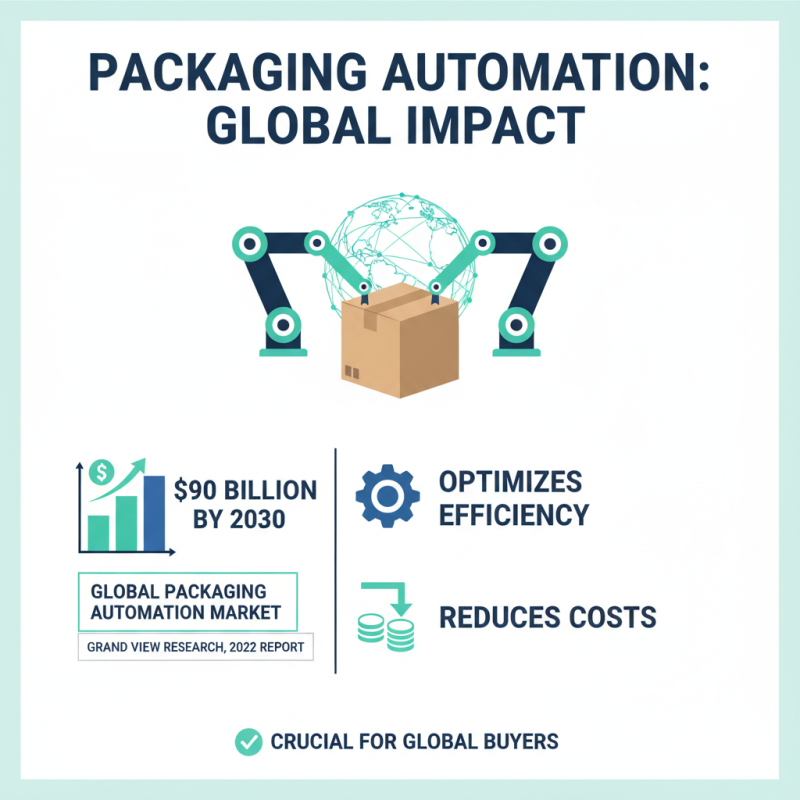
Packaging automation is crucial for global buyers. It optimizes efficiency and reduces costs. According to the “Global Packaging Automation Market Report” published by Grand View Research in 2022, the market is expected to reach $90 billion by 2030. This shows a significant focus on automation in packaging processes.
The role of automation extends beyond mere speed. It enhances accuracy and ensures product safety. Automated systems can reduce human error by up to 70%, according to a report from Research and Markets. For global buyers, this reliability is vital. Mistakes in packaging can lead to product recalls, tarnishing brand reputation and incurring hefty losses.
However, the journey to automation isn't without challenges. Many companies struggle with the transition due to initial costs and the complexity of new systems. Training staff is essential for successful implementation. As the market evolves, businesses must adapt to stay competitive. Failing to embrace change may lead to stagnation in a rapidly advancing landscape.
Key Considerations for Selecting Packaging Automation Solutions
When selecting packaging automation solutions, the key considerations revolve around functionality, scalability, and integration capabilities. Buyers should evaluate how well the technology fits their current production processes. An effective solution should enhance efficiency while reducing operational costs. This requires a clear understanding of your production demands. Knowing the output levels and types of products is crucial.
Another critical factor is the system's adaptability. As market conditions change, your packaging needs may evolve. Solutions must be flexible enough to accommodate different product lines and sizes. It is also vital to assess the ease of integration with existing systems. Having multiple systems that communicate well maximizes productivity.
Lastly, consider the support and training offered by the vendor. A reliable provider should offer comprehensive training programs. This supports your team in effectively using the system. While many vendors promote extensive features, be cautious of over-promising. It's beneficial to ask for case studies or references to verify claims. Understanding the total cost of ownership is essential too. Cheaper initial investments can lead to expensive maintenance down the line. This holistic approach ensures your packaging automation aligns with your long-term business goals.
Innovative Technologies in Packaging Automation
Innovative technologies in packaging automation are revolutionizing the industry. Automated systems now handle tasks like filling, sealing, and labeling more efficiently. Robotics and artificial intelligence are at the forefront of these advancements. They improve accuracy, reduce waste, and speed up production lines. These technologies allow companies to respond swiftly to market changes.
Sensors and IoT devices play crucial roles in modern packaging. They provide real-time data to monitor performance. This data helps in making informed decisions to enhance efficiency. However, integrating these technologies presents challenges. Companies must ensure compatibility and train staff. Such hurdles require careful planning and resource allocation.
Sustainability is also a vital consideration. Eco-friendly materials and processes are becoming more popular. However, sourcing these materials can be complex and costly. Therefore, buyers need to balance innovation with sustainability. Embracing these new trends can lead to significant rewards, but companies must navigate the accompanying difficulties.
Top Packaging Automation Solutions Tips for Global Buyers
| Solution Type |
Technology |
Key Features |
Benefits |
Ideal Industries |
| Robotic Automation |
Industrial Robots |
Flexibility, Precision |
Increased efficiency, Reduced labor costs |
Food & Beverage, Pharmaceuticals |
| Conventional Automation |
Automated Machinery |
Speed, Consistency |
Higher throughput, Lower units cost |
Consumer Products, Electronics |
| Smart Packaging |
IoT-Enabled Systems |
Real-time monitoring, Data Analytics |
Enhanced supply chain visibility, Predictive maintenance |
Logistics, Healthcare |
| Sustainable Packaging |
Biodegradable Materials |
Eco-friendly design, Reduced waste |
Brand loyalty, Compliance with regulations |
Food & Beverage, Personal Care |
| Automated Inspection |
Vision Systems |
Quality control, Defect detection |
Improved product quality, Reduced returns |
Manufacturing, Automotive |
Evaluating ROI and Cost-Effectiveness of Automation Investments
When considering automation investments in packaging, evaluating the return on investment (ROI) is critical. A detailed analysis helps buyers understand the financial implications of their choices. Automation can significantly reduce labor costs. However, initial setup costs may be high. This requires careful budgeting and forecasting.
Packaging automation enhances efficiency but involves trade-offs. The machinery might require frequent maintenance. Unexpected downtime can diminish your ROI. Assessing the true cost-effectiveness means looking at potential savings versus risks. A successful implementation often hinges on employee training.
Considering long-term benefits is essential. More productive systems may yield better margins over time. However, buyers should not overlook ongoing operational expenses. Make sure to reflect on all factors. Evaluate the overall impact on the supply chain to optimize decision-making.
Challenges and Solutions in Implementing Packaging Automation
Implementing packaging automation presents various challenges for global buyers. A recent report from the International Society of Automation highlights that nearly 70% of companies face obstacles during adoption. These challenges often stem from high initial costs and integration complexities with existing systems. Many organizations struggle to find the right balance between automation and maintaining manual processes.
Training employees is another critical issue. The same report states that insufficient training contributes to a 30% failure rate in automation projects. Employees may resist changes without proper guidance. Additionally, the rapid pace of technological advancements makes staying current a daunting task. Firms need to invest not only in technology but also in ongoing employee education to keep up.
Supply chain disruptions also pose significant challenges. According to a study by McKinsey, 45% of companies experienced supply chain interruptions in the past year. These issues can derail automation plans and affect production timelines. Flexibility and adaptability are essential in responding to these disruptions, as relying solely on automated solutions may not yield the desired results. Companies need a strategic approach that considers both technology and human factors to successfully implement packaging automation.
Top Packaging Automation Solutions: Challenges and Solutions