China Top Pneumatic to Electric Actuator Manufacturers?

Choosing among China’s top pneumatic to electric actuator manufacturers requires more than comparing catalogs or factory photographs. The real question is simple: which supplier can deliver reliable motion for your process, environment, and maintenance team?

Motion-control authority Dr. George Ellis offers a useful principle: “Understand the load before selecting the actuator.” That advice fits this market closely. A compact electric actuator may replace compressed air, but it still needs correct torque, speed, duty cycle, braking, and feedback. A valve installed beside a hot pipe may require a different enclosure than one used in a clean packaging room.

This guide examines Chinese manufacturers through practical evidence. It considers product range, motor and gearbox quality, sealing, control compatibility, testing, customization, and after-sales support. Factory capacity matters. So does the traceability of every critical component. Ask whether the supplier can provide load calculations, IP ratings, wiring diagrams, test records, and clear warranty terms.

Energy efficiency is another important factor. Pneumatic systems can lose power through leaks, pressure fluctuations, and oversized compressors. Electric alternatives may reduce those losses, especially where motion is frequent and accurately controlled. However, conversion is not automatically economical. Installation cost, electrical protection, programming, and emergency behavior must also be reviewed.

Some manufacturers look impressive online but provide limited technical detail. That is a warning sign. No shortlist is flawless. Buyers should test samples under real operating conditions before approving a large order. The strongest supplier is not always the largest one; it is the one that explains limitations honestly and supports performance after delivery.
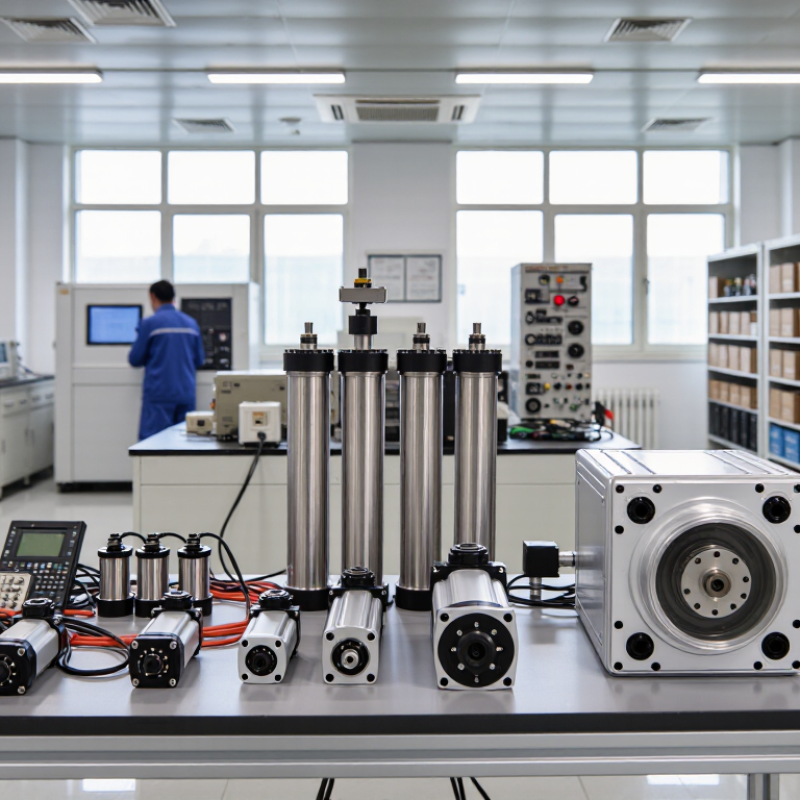
China Top Pneumatic to Electric Actuator Manufacturers?

Types of Pneumatic-to-Electric Actuator Conversion Solutions

China Top Pneumatic to Electric Actuator Manufacturers?

Types of Pneumatic-to-Electric Actuator Conversion Solutions

Pneumatic-to-electric conversion usually follows three practical paths. A direct retrofit replaces the air actuator with an electric actuator, using the existing valve body and mounting position. This suits clean, accessible lines. A hybrid solution keeps pneumatic actuation but adds electric position feedback and smart controls. It reduces compressed-air waste without rebuilding the whole station. Full replacement uses electric actuators across a process area, often with fieldbus or industrial Ethernet communication.

The U.S. Department of Energy reports that compressed-air systems can represent 10% to 15% of industrial electricity use. Its compressed-air guidance also notes that leaks may waste 20% to 30% of compressor output. These figures explain why electric conversion attracts plant engineers. Still, conversion is not automatically better. A poorly sized electric actuator may stall near a sticky valve seat. That mistake is common.

Selection should compare torque, stroke speed, duty cycle, enclosure rating, fail position, and ambient temperature. A 2023 industrial automation market report identifies predictive maintenance and connected control as major investment drivers. In practice, a smart electric actuator can record travel cycles and current changes. Operators may detect rising friction before production stops. However, sensor data needs calibration and human review. More data is not always better. A small pilot on three valves can reveal wiring limits, response delays, and maintenance habits before a wider conversion.


Key Features of Leading Chinese Actuator Manufacturers

China’s leading pneumatic-to-electric actuator manufacturers compete through measurable engineering features, not catalog size. The electric actuator market was valued at about USD 19.5 billion in 2023 and may reach USD 26.2 billion by 2028, according to MarketsandMarkets. This growth increases pressure for reliable retrofits in valves, dampers, and packaging lines.

Strong manufacturers typically offer brushless motors, precise position feedback, manual override, and IP65 or higher enclosure protection. A useful unit should deliver repeatable torque across thousands of cycles, while limiting heat inside a crowded control cabinet. Many factories now request Modbus, CANopen, or Ethernet-based communication for condition monitoring. Practical testing matters more than attractive specifications. Ask for torque curves, cycle-test records, noise data, and failure-rate evidence.

Energy performance also deserves attention. The International Energy Agency reports that electric motor systems consume a major share of industrial electricity, often exceeding 40% of global electricity use. Efficient actuation can therefore reduce compressed-air losses, especially where pneumatic leakage is frequent. Yet conversion is not automatically better. Oversized motors waste energy, and poor commissioning can create unstable valve movement. Some suppliers provide factory calibration, traceable inspection reports, and spare-part support for five to ten years. That is reassuring, but buyers should verify the documents independently. Field experience still exposes gaps that laboratory tests miss.

China Top Pneumatic to Electric Actuator Manufacturers? - Key Features of Leading Chinese Actuator Manufacturers
Evaluation Dimension Pneumatic Actuator Manufacturers Electric Actuator Manufacturers Electro-Pneumatic and Retrofit Suppliers Practical Selection Consideration
Primary Product Type Quarter-turn and linear pneumatic actuators using compressed air to produce motion. Quarter-turn, multi-turn, and linear electric actuators driven by an electric motor and gearbox. Electric actuator packages, actuator replacement units, positioners, solenoid valves, and control accessories. Choose according to valve movement, available utilities, operating environment, and required control accuracy.
Typical Torque or Thrust Coverage Common quarter-turn product ranges extend from a few newton-metres to several thousand newton-metres, depending on the series and air pressure. Common quarter-turn product ranges extend from several newton-metres to several thousand newton-metres; larger industrial units may provide substantially higher torque. Usually focused on replacement-size ranges matching existing pneumatic valve interfaces and plant automation requirements. Compare breakaway torque, running torque, safety factor, and the valve manufacturer's required torque—not only the nominal actuator rating.
Operating Medium Compressed air, commonly specified around 5–7 bar for industrial operation. Electrical power, commonly supplied as 24 V DC, 110 V AC, 220–240 V AC, or other site-specific voltages. May combine electric power with pneumatic control hardware, or replace pneumatic power with a standalone electric drive. Check plant air quality, voltage stability, emergency-power requirements, and the availability of local service infrastructure.
Control Method On/Off Double-Acting Spring-Return Positioner On/Off Modulating Proportional Fieldbus Remote I/O Position Feedback PLC Integration Retrofit Control Modulating applications require confirmation of positioning accuracy, cycle frequency, feedback signals, and control protocol compatibility.
Fail-Safe Capability Spring-return designs can provide fail-open or fail-closed action when air or control signal is lost. Fail-safe action generally requires a spring-return mechanism, battery backup, supercapacitor, or an external emergency power system. Can be configured to preserve an existing fail-safe philosophy during pneumatic-to-electric conversion. Define the safe valve position, failure cause, response time, and required proof-test procedure before selecting the actuator.
Environmental Protection Industrial models are commonly offered with IP65, IP66, or IP67 protection; exact ratings depend on construction and testing. Industrial models are commonly offered with IP65, IP66, or IP67 protection; some specialized designs provide higher protection. Protection depends on the actuator, control box, cable glands, connectors, and installation method as a complete assembly. Verify the complete installed assembly rating, temperature range, corrosion resistance, and suitability for outdoor or washdown service.
Valve Mounting Interface Quarter-turn products commonly use ISO 5211 mounting patterns and standardized drive dimensions. Quarter-turn products commonly use ISO 5211 mounting patterns; multi-turn products may require a separate thrust or mounting arrangement. Retrofit products should match the valve stem, mounting flange, rotation angle, and available installation envelope. Interface compatibility must be checked using dimensional drawings rather than product photographs or nominal valve size alone.
Accessory Compatibility Frequently paired with solenoid valves, limit switches, air filters, regulators, lubricators, positioners, and manual overrides. Frequently paired with limit switches, torque switches, local controls, position transmitters, heaters, brakes, and communication modules. Often supplied with conversion brackets, feedback modules, control cabinets, relays, and commissioning accessories. Assess whether accessories are factory-tested as a package and whether replacement parts are available separately.
Relevant Standards and Conformity Common references include ISO 5211 for valve mounting, VDI/VDE 3845 for accessory mounting, and applicable CE or other market requirements. Common references include ISO 5211 for quarter-turn mounting, IEC electrical requirements, and applicable CE or other market requirements. Conformity applies to the complete assembled system, including electrical controls, enclosure, wiring, and installed accessories. Request declarations, test records, drawings, and manuals that correspond to the exact model and configuration being quoted.
Response and Cycle Characteristics Typically provides fast actuation, with speed adjustable through air-flow controls and supply conditions. Typically provides controlled travel speed and accurate positioning, but may have slower full-stroke times depending on motor and gearbox selection. Conversion performance depends on the selected motor, gearbox, valve load, control logic, and existing process sequence. Evaluate required stroke time, allowable overshoot, duty cycle, starts per hour, and thermal limits.
Maintenance Profile Requires attention to air leakage, filter condition, lubrication where applicable, seals, tubing, and solenoid valves. Requires inspection of electrical connections, gear lubrication, limit and torque switches, seals, and motor or drive condition. Requires coordinated maintenance of the electric drive, retrofit hardware, control panel, and any retained pneumatic components. Total maintenance cost depends on plant utilities, accessibility, spare-parts policy, and technician capability.
Common Application Areas Water treatment, chemical processing, general industrial automation, compressed-air systems, and fast on/off valve service. HVAC, water treatment, power systems, process automation, damper control, and applications requiring precise or remote positioning. Plant modernization, utility reduction projects, remote valve automation, and replacement of pneumatic systems where compressed air is unavailable. Application suitability should be confirmed through process data, hazardous-area classification, valve type, and operating cycle requirements.
Manufacturer Evaluation Criteria Product breadth, torque calculation support, actuator testing, machining quality, seal selection, and pneumatic accessory integration. Motor and gearbox design, position-control capability, thermal management, electrical testing, feedback accuracy, and service support. Engineering capability, retrofit measurement, control integration, commissioning support, documentation quality, and spare-parts continuity. Use a technical compliance matrix and require model-specific drawings, datasheets, certificates, and test procedures before approval.
Note: The values and descriptions above represent common industrial specifications, interfaces, and selection criteria used across actuator suppliers. Exact performance, protection ratings, certifications, and torque ranges must be verified against the specific manufacturer's current datasheet and test documentation.

Manufacturing Standards and Quality Control in China

China’s leading pneumatic-to-electric actuator manufacturers rely on controlled processes, not attractive catalogs. A serious factory defines torque, travel, response time, duty cycle, and enclosure protection before production begins. These requirements should match applicable international standards and the customer’s operating environment.

During supplier audits, buyers should examine incoming material records, machining tolerances, and assembly instructions. Steel, seals, gears, and wiring need documented inspection results. Each actuator should receive a serial number linked to its batch, operator, test equipment, and calibration date. Production teams commonly check output torque, limit-switch accuracy, insulation resistance, noise, and repeated cycling. Test conditions matter. A motor tested without realistic load may hide overheating or backlash. That detail is easy to miss.

Quality control should continue after final assembly. Inspectors can review waterproofing, terminal tightness, surface coating, and packaging protection. Photographs and digital test reports improve traceability during later service. Yet no factory is flawless. A passed sample does not prove every unit is consistent. Random sampling can also miss intermittent faults. This is where independent inspection and corrective-action records become valuable. Manufacturers should explain rejected-unit rates honestly, even when the numbers look uncomfortable. A transparent response often reveals more expertise than a perfect sales presentation. Supplier evaluations should include factory visits, process interviews, and witnessed performance tests under representative loads.

Manufacturing Standards and Quality Control for Pneumatic-to-Electric Actuators in China

The chart presents a practical quality-control checklist commonly used for industrial actuator production, covering incoming materials, machining, assembly, testing, and final documentation.

Reference framework: Quality systems and inspection activities are typically aligned with ISO 9001, ISO 5211 mounting-interface requirements, ISO 4414 pneumatic safety principles, and IEC 60529 enclosure protection testing where applicable.

How to Compare Chinese Pneumatic-to-Electric Actuator Suppliers

How to Compare Chinese Pneumatic-to-Electric Actuator Suppliers

Comparing Chinese pneumatic-to-electric actuator suppliers requires more than checking price. Confirm the conversion method, rated torque, duty cycle, response time, and control signal. A valve may need 120 Nm continuously, not only during a short bench test. Ask for ISO 5211 mounting dimensions, IEC 60529 ingress ratings, wiring diagrams, and test records. The details matter.

Demand is growing. The International Federation of Robotics reported 541,302 industrial robots installed worldwide in 2023, a 10% annual increase. This supports wider automation investment, but it does not prove every actuator supplier is reliable. Request sample data under load, temperature, and repeated cycling. Check whether torque curves come from actual tests or polished spreadsheets. A spreadsheet can mislead.

Supplier evaluation should include motor efficiency, gearbox backlash, manual override design, noise, spare-part availability, and firmware support. Ask how failed units are analyzed. Review factory calibration equipment and traceability records. Compare warranty terms, delivery history, and engineering response times, not only unit cost. The U.S. Department of Energy notes that compressed-air systems often waste significant energy through leaks and poor control. A pneumatic-to-electric conversion may reduce operating losses, but savings depend on cycle frequency and installation quality. I would calculate total cost using three years of energy, maintenance, downtime, and replacement data. That estimate may still be imperfect.

Applications and Selection Criteria for Electric Actuators

Electric actuators suit water treatment, HVAC systems, chemical dosing, and automated process lines. They convert electrical signals into precise valve movement. Quarter-turn models commonly control butterfly and ball valves. Linear models operate globe valves and dampers. Not always.

Selection should begin with valve torque, stroke, and operating frequency. Add a safety margin, but avoid excessive sizing. An oversized actuator may move slowly, waste energy, and damage valve seats.

Check the required voltage, control signal, and duty cycle. Continuous modulation needs different components than occasional open-close service. Measure twice.

For outdoor installations, review the enclosure rating, corrosion resistance, temperature range, and cable entry design. A coastal site may require stronger protection than an indoor plant room. Feedback options, such as position signals or limit switches, can improve maintenance decisions. Battery backup or spring-return functions may matter when power failure creates process risks. Manual override is useful during commissioning, although it is often overlooked.

When comparing China-based manufacturers, request torque curves, wiring diagrams, test records, and clear warranty terms. Ask how each unit is tested under load, not only at no-load conditions. Factory inspection can reveal inconsistent assembly, weak sealing, or unclear labeling. Communication quality also matters. A technically capable supplier should explain limitations instead of promising universal compatibility. Real installations are rarely perfect, and selection assumptions should be reviewed after commissioning.