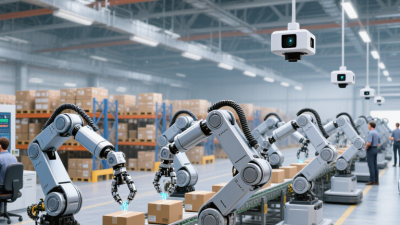
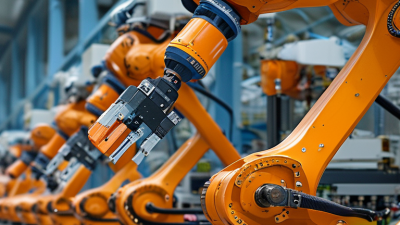
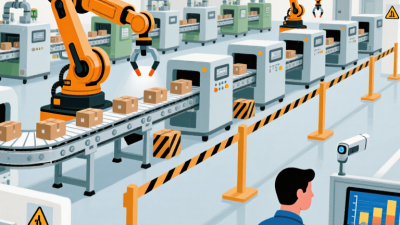
China’s automation market is no longer defined by robot arms alone. Factories increasingly combine industrial robots, machine vision, programmable controls, and autonomous mobile robots. These automation solutions support welding, inspection, packaging, and material movement. The scale is substantial. The International Federation of Robotics reported 276,288 industrial robot installations in China during 2023, representing 51% of global installations. Its World Robotics 2024 report also put China’s operational robot stock at about 1.8 million units. These figures describe a fast-moving market, not a guarantee of equal results for every factory.
For buyers, the leading option depends on production volume, product variation, safety needs, and existing equipment. A high-speed electronics line may need compact robots and vision inspection; a warehouse may gain more from AMRs and fleet-management software. IFR reported China’s robot density at 470 units per 10,000 manufacturing employees in 2023. Impressive, yes. Yet adoption figures cannot show integration cost, downtime, or worker training. Those details matter on the factory floor. This guide compares top automation solutions in China by capability, typical application, and practical fit, while distinguishing established technologies from claims that need closer scrutiny. No single platform suits every plant. The useful question is which system solves a measurable bottleneck, and whether local support can keep it running.
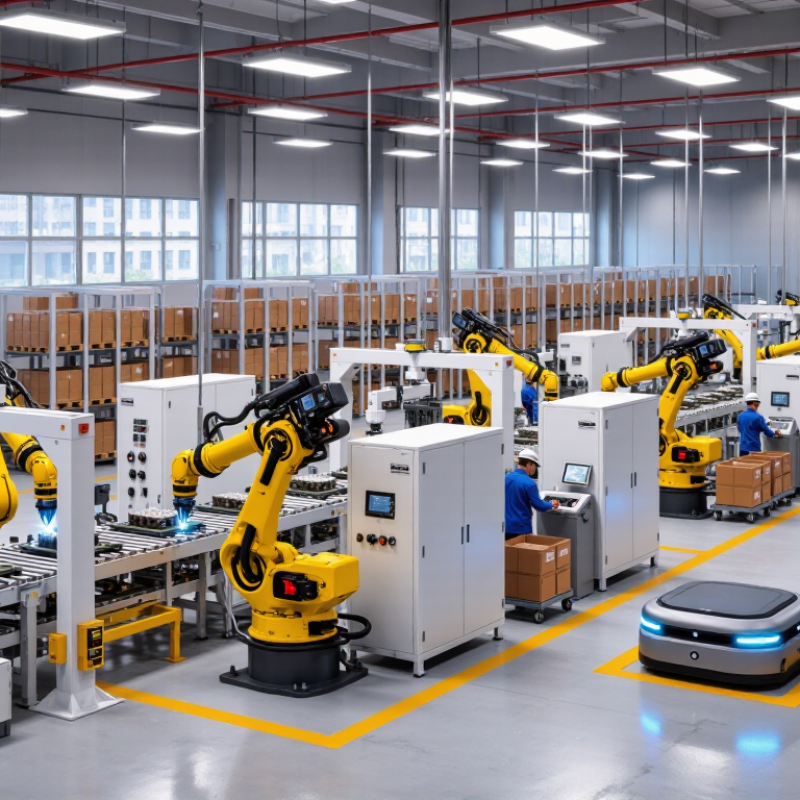
China’s automation industry is moving beyond isolated robot installations toward connected production systems. The International Federation of Robotics reported 276,288 industrial robot installations in China in 2023, around 51% of global installations. That is substantial. Its World Robotics 2024 report also recorded about 1.8 million robots operating in Chinese factories. Automotive, electronics, and metalworking plants use robotic arms for welding, assembly, and material handling. Sensors and machine-vision systems help monitor parts as they move along production lines.
The same report put China’s manufacturing robot density at 470 robots per 10,000 employees in 2023. This points to a mature market, but not an evenly automated one. Large factories can connect robots, inspection equipment, and production software; smaller workshops may still rely on manual checks and separate systems. Integration takes time. A robot arm beside a conveyor does not automatically create a smart factory. Reliable results depend on worker training, maintenance, and clean data from machines. These practical gaps matter as much as headline installation figures when assessing automation across China.

China’s automation advances are driven by robotics, machine vision, industrial software, and connected sensors. The International Federation of Robotics reported 276,288 industrial robot installations in China in 2023, representing 51% of global installations. The figures show scale, not guaranteed productivity. A robot still needs reliable data, safe cell design, and trained operators.
Machine vision helps inspect parts under changing light, while programmable controllers coordinate conveyors, motors, and robotic arms. Industrial IoT sensors feed equipment data to edge systems, enabling faster fault detection without sending every signal to the cloud. AI can support predictive maintenance, but poor sensor quality can produce confident-looking errors. Digital twins help teams test layouts or production changes before moving physical equipment. Useful, but not magic. I would not call every connected machine intelligent; that label is often stretched.
Tips: Start with one repetitive task. Measure cycle time, defects, and downtime before and after installation. Keep camera lenses clean, label data consistently, and involve operators in testing. Small details matter. Automation works best when the process is already understood.
China’s automation solutions span industrial robots, machine vision, control systems, and automated storage and transport. The International Federation of Robotics’ World Robotics 2024 report records 276,288 industrial robots installed in China in 2023, about 51% of global installations. That scale reflects demand for welding, assembly, and material handling, especially on high-volume production lines.
Machine vision checks parts as they pass beneath cameras, while programmable controllers coordinate sensors, motors, and safety stops. In warehouses, automated guided vehicles move totes between shelves and packing stations. The Ministry of Industry and Information Technology’s 14th Five-Year Plan for Intelligent Manufacturing also emphasizes connected equipment, production data, and integrated manufacturing systems. These technologies work best when chosen for a defined bottleneck, not added as decoration.
Not every line needs a robot. Smaller factories may gain more from sensors and better scheduling than a costly full-line retrofit. Integration can still be messy: older machines may use incompatible data formats, and poor lighting can weaken vision inspection. A pilot cell helps reveal these limits before expansion. It is not foolproof, though. Human review remains useful when products vary or defect records are thin.
China’s automation market is best understood by provider capability, not by one universal ranking. Some firms build control hardware, including programmable logic controllers, servo drives, sensors, and operator panels. These systems coordinate motors, conveyor speeds, and safety interlocks on factory lines. Other providers specialize in industrial robots and integration. They configure arms, grippers, guarding, and work cells for welding, palletizing, or machine tending. Results depend on the application.
Machine-vision providers supply cameras, lighting, optics, and inspection software. On a packaging line, a tuned setup can flag a missing cap or blurred label in milliseconds. Systems integrators connect equipment with production software, often adding manufacturing-system links, traceability, and downtime dashboards. Some also deliver warehouse automation, such as mobile robots and automated storage. Fit varies. A short demonstration rarely captures every shift condition.
Buyers can compare cycle-time evidence, changeover support, spare-part access, and service coverage near the plant. Ask providers to trial real parts, including difficult finishes and normal lighting variation. Request documented acceptance tests and a clear software-update plan. Smaller factories may need simpler packages, not the most elaborate architecture. Details matter. Vendor claims can appear comparable even when measurement methods differ, so ask how each figure was recorded.
Choosing automation for a Chinese operation should begin with its process constraints, not a ranking. A packaging line may need fast changeovers, while a metalworking cell may prioritize precise handling and reliable uptime. In food production, washdown conditions and product traceability can shape equipment choices. Electronics assembly often demands consistent placement accuracy and careful defect detection. These needs are not interchangeable.
Look beyond the machine’s advertised speed. Test it with real parts, typical workers, and peak-shift conditions. Small details matter.
For a warehouse, measure travel time, picking errors, and how systems handle busy periods. In a hospital, consider whether automated equipment fits existing workflows and can be cleaned between tasks. Ask for clear service-response times, spare-parts plans, and operator training. Check whether software can exchange data with current systems before committing. During a pilot, record downtime and rejected items, not just output. A short test may hide problems that appear after several weeks. That limitation is easy to overlook. Compare expected savings with installation, maintenance, and energy costs. Keep operators involved; their feedback can reveal awkward steps that a dashboard misses. The first layout may not be the best one.