How to Choose the Right Automation for Your Industry?

Choosing automation for an industry is not simply a matter of buying the newest machine. It requires a clear understanding of daily work, business risks, staff capabilities, and customer expectations. A robotic arm may improve consistency on a factory line, while workflow software may better serve a logistics company. The right decision begins with evidence. Measure production delays, repetitive tasks, error rates, and maintenance costs before comparing suppliers. Small details matter. A packaging line that stops for seven minutes each hour may reveal a larger process problem.

Practical experience also shows that automation should support people, not merely replace tasks. Operators need training, accessible controls, and reliable technical support. Safety standards, data protection, and industry regulations must guide every stage of implementation. Independent testing and transparent vendor records can strengthen confidence, although no system is perfect. That reality deserves attention. A pilot project may perform well in a controlled area but struggle during peak demand. Results should be reviewed honestly, including failures, unexpected expenses, and employee feedback. Within the broader automation industry, successful organizations usually select technology that fits their processes, budgets, and long-term goals. The most advanced option is not always the most suitable one. A careful comparison can prevent expensive disruption and create measurable improvements in quality, speed, and resilience. What works in one workplace may disappoint in another. Context matters.
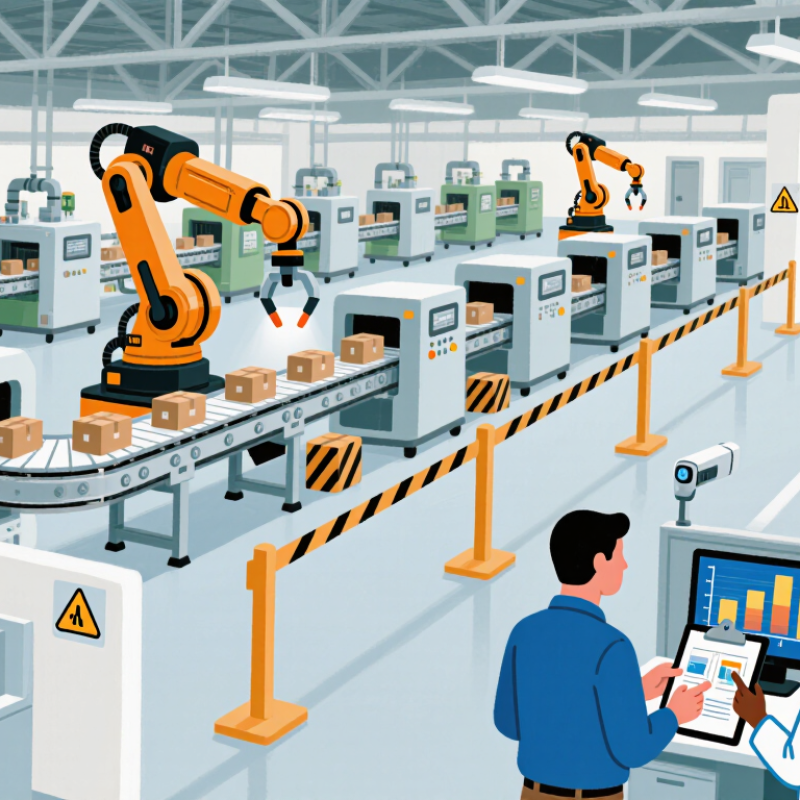
How to Choose the Right Automation for Your Industry?

Define Your Industry’s Automation Goals and Operating Requirements

Industry automation should begin with a defined operating problem, not a fashionable machine. Map the workflow first. Record cycle time, error rates, safety exposure, staffing gaps, and peak demand. Then define measurable goals, such as reducing changeover time by 20% or improving order accuracy to 99%. The International Federation of Robotics reported that 541,302 industrial robots were installed worldwide in 2023. That figure shows strong adoption, but it does not prove suitability for every plant. A fast production line may still need better scheduling, sensors, or worker training.

Tips: Interview operators before selecting equipment. Watch one complete shift, including interruptions and manual workarounds. Specify temperature, dust, floor space, network access, maintenance skills, and response time. For office or service operations, measure case volume, document variation, approval rules, and exception frequency. The McKinsey Global Institute estimates that automation could affect activities representing up to 30% of working hours by 2030 in some scenarios. Treat this as a planning signal, not a promise. Human judgment remains essential when inputs are unclear.

Pilot the smallest useful process. Compare baseline performance with results from four to eight weeks. Track uptime, rework, training hours, and operator acceptance. Deloitte’s 2024 industrial survey identified workforce capability as a major barrier to advanced manufacturing progress. That is easy to underestimate. My practical preference is to budget for integration and maintenance before buying hardware. Even then, goals may change after the first pilot. Build review points, document failures honestly, and keep a manual fallback for critical operations.

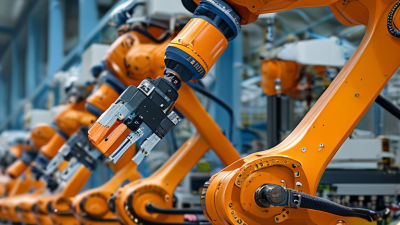
Compare Automation Types, Technologies, and Industry Applications

How to Choose the Right Automation for Your Industry?

Choosing automation starts with comparing its type, technology, and practical purpose. Fixed automation works well for stable, high-volume production. Programmable systems suit changing batches and repeatable tasks. Flexible or collaborative equipment helps workers handle varied operations. The best option depends on product volume, process risk, available skills, and future changes. A fast machine is not always the right machine.

Compare technologies against real workplace conditions. Sensors can monitor temperature, pressure, position, or product quality. Machine vision can inspect labels, surfaces, and dimensions. Programmable controllers support reliable sequencing, while data platforms reveal downtime patterns. In a packaging line, vision inspection may prevent incorrect labels. In healthcare, controlled automation can support sample handling and reduce manual errors. Office teams may benefit from software automation for repetitive records and approvals. Technology should solve a measured problem, not create impressive noise.

Tips: Map one process before buying. Record cycle time, errors, maintenance, and worker movement. Test a small pilot. Ask whether employees can operate and maintain it safely. Leave room for exceptions; real work is rarely perfectly predictable. A pilot may expose hidden costs, such as training gaps or poor data quality. That lesson can feel inconvenient, but it prevents expensive decisions. Review results with operators, engineers, and safety specialists before expanding the system.

Evaluate Compatibility with Existing Systems and Workflows

Choosing automation starts with the workflow already operating on the factory floor, not with an impressive demonstration. The International Federation of Robotics reported 541,302 industrial robot installations worldwide in 2023. That growth makes integration discipline essential. Map every handoff before selecting equipment. Record file formats, network limits, approval steps, and response times. A barcode scanner may send data through an outdated interface. A scheduling tool may depend on one spreadsheet. Small details matter.

Test compatibility with real work, including exceptions. Connect the proposed system to a sample database, then simulate a rejected order, a missing sensor signal, and a night-shift changeover. Track whether operators can recover without specialist support. The NIST Cybersecurity Framework 2.0 recommends identifying assets, risks, and dependencies before managing technology. It is practical advice. The World Economic Forum’s Future of Jobs Report 2023 estimates that 44% of workers’ core skills may change within five years. Training must therefore fit the workflow, not interrupt it for weeks. A pilot can still look successful while hiding manual workarounds. I have seen clean dashboards conceal duplicate data entry. Recheck the numbers. A compatible system should share information reliably, preserve human decision points, and leave a clear audit trail.

How to Choose the Right Automation for Your Industry?

Evaluate compatibility with existing systems and workflows by first identifying how much of an industry's routine, rules-based work can be automated with currently demonstrated technologies.

Estimated share of work activities that could be automated using currently demonstrated technologies. Source: McKinsey Global Institute, A Future That Works (2017); rounded estimates.

Industries with a higher automation potential may benefit more from workflow automation, but implementation success still depends on data quality, system connectivity, process standardization, security controls, and the availability of APIs or other integration methods.

Assess Costs, Benefits, Risks, and Workforce Impact

How to Choose the Right Automation for Your Industry?

Choosing automation should begin with a measured view of costs, benefits, risks, and people. A factory may spend $80,000 on equipment, integration, training, and maintenance during year one. That figure matters more than the purchase price. Estimate labor savings, output gains, error reduction, and downtime before approving the project. Use real production records, not optimistic projections. A six-month pilot can expose hidden expenses, such as sensor replacement and workflow redesign. The pilot may fail. It can still provide valuable evidence.

Benefits should be specific enough to measure. Reducing inspection time from ten minutes to four may improve daily capacity. However, speed alone does not prove value. Track defect rates, energy use, service calls, and employee hours after deployment. Risk assessment needs equal attention. Consider cybersecurity, equipment failure, unsafe responses, poor data quality, and dependence on one technical specialist. Create manual fallback procedures and test them during a controlled interruption. Have a qualified safety professional review safeguards before production use.

Workforce impact deserves direct conversations before installation. Operators may fear job loss when automation is presented as a replacement. Explain changing duties, provide paid training, and invite workers to test the new process. Their practical experience can reveal awkward controls or unrealistic cycle times. Not every worker will adapt quickly, and that is a planning issue, not a personal failure. Include redeployment costs, training time, and slower performance during learning. Keep assumptions visible. Review them monthly.

Select, Test, and Scale the Most Suitable Automation Solution

Choosing automation starts with the work, not the machinery. In my process reviews, the best results came from mapping each task before comparing solutions. Record cycle time, error frequency, labor effort, and safety risks. A simple spreadsheet often reveals more than an impressive demonstration.

Select a system that matches your workflow, staff skills, and maintenance capacity. Ask whether it handles variable materials, changing volumes, and unexpected pauses. Request clear performance data, service requirements, training details, and integration limits. Do not trust a perfect showroom test. Real conditions are messier.

Test on a small, measurable process. Run the solution through normal shifts, peak demand, and common operator mistakes. Compare baseline results with actual output, downtime, quality, and energy use. Include the people who will operate and maintain it. Their feedback can expose hidden problems early. I once focused too heavily on speed and underestimated cleaning time. That mistake changed my evaluation checklist.

Scale only after the pilot proves reliable. Set approval criteria before expanding, such as stable quality over several weeks and a defined payback period. Document adjustments, assign ownership, and train backup personnel. Increase capacity in stages rather than replacing an entire process at once. Some automation needs more human oversight than expected. That is not failure; it is evidence for a better design.

How to Choose the Right Automation for Your Industry? – Select, Test, and Scale the Most Suitable Automation Solution

Automation Solution Best-Fit Industries Suitable Process Profile Typical Implementation Range* Primary Benefits Pilot Test Metrics Main Scaling Considerations
Rule-Based Software Automation Finance, insurance, healthcare administration, logistics, public services Structured, repetitive, high-volume tasks using stable digital systems and clear business rules 4–12 weeks for a limited process pilot Reduced manual data entry, faster processing, consistent rule execution, improved audit trails Processing time per case, exception rate, data-entry accuracy, manual-touch reduction Application changes, exception handling, credential security, centralized monitoring and governance
Workflow and Process Orchestration Manufacturing, healthcare, construction, field services, supply chain Processes involving multiple teams, approvals, deadlines, documents, and handoffs 6–16 weeks for a defined cross-functional workflow Better visibility, fewer approval delays, standardized procedures, clearer accountability Cycle time, queue age, approval turnaround, rework rate, percentage of steps completed automatically Process ownership, integration quality, change management, role-based access, exception routes
Industrial Robotics Automotive, electronics, metalworking, food processing, packaging Repetitive physical work with defined positions, predictable materials, and measurable takt times 3–12 months, including equipment integration and safety validation Higher throughput, repeatable quality, reduced exposure to hazardous or ergonomic tasks Cycle time, overall equipment effectiveness, first-pass yield, unplanned downtime, safety incidents Line layout, guarding, material presentation, maintenance capability, worker training and safety compliance
Collaborative Robotics Small-batch manufacturing, laboratories, light assembly, packaging, warehousing Tasks performed near people where flexibility and quick changeovers are more important than maximum speed 1–6 months, depending on tooling, integration, and risk assessment Flexible deployment, reduced repetitive strain, easier product changeovers, support for labor-intensive tasks Output per hour, changeover time, human-robot idle time, defect rate, ergonomic exposure Task suitability, end-of-arm tooling, workspace risk assessment, operator acceptance, process variability
Machine Vision Inspection Electronics, pharmaceuticals, food and beverage, packaging, automotive components Visual inspection, presence or absence checks, measurement, sorting, and traceability 2–6 months for a controlled inspection station Consistent inspection, faster defect detection, objective measurements, improved traceability False-positive rate, false-negative rate, inspection time, defect-detection coverage, image availability Lighting, camera position, product variation, labeled sample quality, model retraining and data governance
Warehouse and Material-Handling Automation Retail distribution, third-party logistics, manufacturing, cold-chain operations High-volume movement, storage, picking, replenishment, sorting, and order consolidation 6–18 months for facility-level deployment Higher throughput, improved inventory accuracy, shorter travel distances, more predictable fulfillment Lines or orders per hour, pick accuracy, order cycle time, equipment utilization, congestion rate Layout constraints, inventory master data, peak-demand capacity, integration with warehouse systems, maintenance coverage
Predictive Maintenance Analytics Manufacturing, utilities, energy, transportation, mining Assets generating reliable time-series data such as vibration, temperature, pressure, or operating states 3–9 months before meaningful model validation Earlier failure warnings, improved maintenance planning, reduced avoidable downtime and spare-parts waste Warning lead time, precision of alerts, missed failures, downtime hours, maintenance cost per asset Sensor reliability, historical failure records, data quality, model drift, integration with maintenance work orders
Intelligent Document Processing Banking, insurance, healthcare, procurement, legal administration, logistics Invoices, forms, claims, purchase orders, and other semi-structured documents requiring classification or extraction 6–14 weeks for a defined document category Reduced keying effort, faster document handling, searchable records, improved routing and review prioritization Field-extraction accuracy, confidence rate, straight-through-processing rate, review time, exception volume Document variability, privacy controls, human review thresholds, retention policies, integration with core systems

*Implementation ranges are practical planning estimates for a well-defined pilot or first deployment. Actual timing depends on process complexity, integration requirements, safety validation, data quality, site conditions, and organizational readiness.