Global manufacturers are reassessing pneumatic automation as production becomes faster, more connected, and more demanding. Pneumatic systems still power familiar tasks, including gripping, clamping, lifting, sorting, and rapid assembly. Their appeal remains practical: compact actuators, predictable motion, and relatively simple maintenance.
Industry data supports this continued relevance. The International Federation of Robotics reported 541,302 industrial robots installed worldwide in 2023, showing sustained investment in automated production. Many of these robotic cells rely on pneumatic grippers, valves, and air-preparation equipment. MarketsandMarkets also identifies industrial automation as a major growth sector, driven by labor shortages, flexible manufacturing, and connected control systems. However, market forecasts differ by research method and product definition. Numbers should be treated as directional evidence, not absolute truth.
Selecting the right supplier requires more than comparing catalog prices. Global buyers should examine ISO 9001 quality systems, product traceability, regional service coverage, delivery records, and technical support. Energy performance deserves close attention. The U.S. Department of Energy notes that compressed-air systems can lose substantial energy through leaks, poor pressure control, and inappropriate end uses. A supplier offering leak audits, pressure optimization, and correctly sized components may create greater value than the lowest-cost vendor.
This guide reviews leading pneumatic automation suppliers for international buyers. It considers product breadth, engineering capability, customization, documentation, and after-sales support. Supplier rankings are never perfect. A brand strong in automotive assembly may not suit food processing or small-batch packaging. Real factory conditions matter more than polished brochures. The best choice should fit the application, operating environment, compliance needs, and total cost over time.
Reliable pneumatic automation suppliers provide more than cylinders, valves, and fittings. They help buyers match pressure, flow, speed, load, and duty cycles to real production conditions. A capable supplier also supplies circuit drawings, selection calculations, installation guidance, and maintenance instructions. These details reduce costly sizing errors.
Energy performance matters. The U.S. Department of Energy reports that compressed air can consume 10% to 20% of industrial electricity. Suppliers should therefore identify leakage risks, pressure drops, inefficient controls, and unnecessary air demand. They may provide leak testing, flow monitoring, variable-pressure strategies, and practical payback estimates. Small losses become expensive across several shifts.
Integration is another critical service. The International Federation of Robotics reported 541,302 industrial robot installations worldwide in 2023. Pneumatic suppliers increasingly support robotic grippers, safety circuits, vacuum systems, sensors, and machine communication. They should follow relevant requirements, including ISO 4414 for pneumatic system safety and ISO 8573-1 for compressed-air quality. Documentation should be clear enough for technicians in different countries.
A catalog is not proof. Buyers should request test data, material certificates, spare-parts plans, and response times. I have seen projects overvalue purchase price and undervalue air consumption. That decision often looks efficient until maintenance begins. Supplier audits, sample testing, and site trials reveal weaknesses earlier, although they add time and cost. That trade-off deserves more attention.
Choosing pneumatic automation suppliers requires more than comparing catalog prices. Start with application evidence. Ask for cylinder life data, valve response times, air-consumption figures, and failure rates under similar duty cycles. A credible supplier should explain test conditions, not only show attractive graphs.
The International Federation of Robotics reported 541,302 industrial robots installed worldwide in 2023. This growth increases demand for reliable pneumatic gripping, clamping, and motion systems. It also raises integration risks. Evaluate whether the supplier supports PLC communication, sensor feedback, safety functions, and documented ISO-compliant quality procedures. The 2024 Pneumatic Equipment market analysis by Mordor Intelligence highlights energy efficiency and condition monitoring as important industry trends. Request leak-testing methods and compressed-air calculations before approval.
Look beyond the quotation. Check production capacity, traceability, spare-part availability, and technical response times across your operating regions. Ask for a sample failure report. The answer can reveal more than a sales presentation. Review material compatibility, temperature limits, seal selection, and maintenance intervals for your actual environment. Some suppliers provide excellent components but weak commissioning support. That difference becomes expensive beside a fast packaging line.
Test a small pilot batch first. Measure cycle stability, noise, air use, and downtime for several weeks. Do not trust every forecast. Our own assumptions can be wrong when dust, moisture, or poor tubing installation changes performance. A supplier willing to revise its recommendation after field data usually demonstrates stronger engineering discipline.
Global buyers need more than a long supplier list. They need the right supplier category for each project. Component manufacturers suit buyers seeking cylinders, valves, fittings, and air preparation units. Their technical catalogs often provide dimensions, pressure ranges, and material details. This helps engineers check compatibility before requesting prices.
System integrators are useful for complete automation cells, including controls, sensors, tubing, and safety devices. They can review cycle times and air consumption at the application site. Industrial distributors offer local stock, shorter delivery times, and easier after-sales communication. Engineering service suppliers may support installation, testing, and operator training. However, service quality can vary between regions. My experience shows that a low purchase price may hide higher commissioning costs.
Tips: Ask each supplier for drawings, test reports, warranty terms, and spare-parts availability. Confirm thread standards, voltage requirements, working pressure, and delivery responsibilities. Request a sample or pilot assembly when tolerances matter. Check whether documents support your destination market’s safety and import requirements. Do not rely on polished presentations alone. A detailed technical reply is often more valuable. Small gaps in documentation can delay production, and buyers sometimes underestimate this risk. Evaluate response speed, engineering clarity, and traceable quality records before signing a contract.
Reliable pneumatic automation suppliers should offer more than cylinders and valves. Buyers need complete solutions for different production environments. Core products include pneumatic actuators, directional valves, air preparation units, tubing, fittings, and grippers. Modern systems may add proportional control, servo-pneumatic positioning, and sensor-based feedback. These technologies improve repeatability while reducing unnecessary air consumption.
In food packaging, compact actuators support fast pick-and-place movements. In automotive assembly, guided cylinders handle pressing, clamping, and material transfer. Clean manufacturing areas require suitable materials, sealed designs, and controlled lubrication. I have seen reliable machines fail because fittings leaked after months of vibration. This detail is easy to overlook. Supplier expertise should include sizing, cycle analysis, installation guidance, and maintenance planning. A technically impressive component can still perform poorly when air quality or pressure stability is ignored.
Tips: Ask for tested flow data, not only catalog pressure ratings. Check response time at your actual operating pressure. Request spare-part availability and service support in your region. Review energy-saving options, especially for high-cycle equipment. Also, measure noise levels before installation. Specifications rarely show the whole picture. Leave room for adjustment, because production conditions often change.
| Supplier Capability Profile | Key Product Portfolio | Typical Technical Range | Core Technologies | Primary Industry Applications | International Standards and Compliance | Global Buyer Evaluation Criteria |
|---|---|---|---|---|---|---|
| Full-Line Pneumatic Automation Supplier Broad catalog and integrated component coverage |
Cylinders Valves FRL units Fittings Tubing Grippers |
Working pressure commonly up to 10 bar; cylinder bores approximately 8–320 mm; compact to heavy-duty configurations |
Modular manifolds, proportional pressure control, pneumatic sensing, valve islands, energy monitoring, and remote diagnostics | General factory automation, assembly lines, packaging, material handling, and machine building | ISO 15552, ISO 6432, ISO 6020/2, ISO 5599-1, ISO 4414, CE-related requirements, and RoHS where applicable | Product breadth, interchangeability, stock availability, engineering support, and compatibility with existing equipment |
| Motion Control Specialist Focused on precise pneumatic movement |
Guided cylinders Rodless cylinders Rotary actuators Shock absorbers Position sensors |
Typical operating pressure 1–10 bar; stroke lengths from several millimeters to multiple meters; repeatability depends on load, cushioning, and sensing method |
Magnetic sensing, adjustable cushioning, guided load support, servo-pneumatic positioning, and synchronized actuation | Pick-and-place systems, indexing, clamping, inspection equipment, and automated assembly | ISO 15552, ISO 6432, ISO 21287, ISO 4414, and applicable machinery safety requirements | Load capacity, side-load resistance, cycle life, positioning accuracy, mounting flexibility, and spare-part availability |
| Valve and Manifold Technology Supplier Optimized for centralized machine control |
Solenoid valves Directional valves Valve manifolds Soft-start valves Flow controls |
Common valve port sizes G1/8 to G1/2; response times often measured in milliseconds; flow capacity selected by required actuator speed |
Fieldbus valve islands, IO-Link connectivity, diagnostic LEDs, configurable I/O, and reduced-wiring architectures | Packaging machines, conveyor systems, robotics, process handling, and high-cycle production equipment | ISO 5599-1, ISO 15407, ISO 15218, IEC 61131-9 for IO-Link applications, and relevant EMC requirements | Flow rate, response time, electrical configuration, network compatibility, IP rating, maintenance access, and spare valve design |
| Vacuum Automation Specialist Designed for non-contact and delicate handling |
Vacuum ejectors Suction cups Vacuum switches Filters Vacuum grippers |
Typical vacuum levels down to approximately −0.9 bar gauge; suction cup diameters commonly 10–200 mm; performance varies with surface, leakage, and compressed-air quality |
Multi-stage ejectors, vacuum sensing, blow-off control, compact ejector modules, and energy-saving vacuum regulation | Sheet handling, carton picking, electronics assembly, glass handling, food packaging, and robotic palletizing | ISO 4414, ISO 8573-1 for compressed-air quality, food-contact requirements where applicable, and machinery safety regulations | Holding force, leakage tolerance, response time, surface compatibility, air consumption, filter maintenance, and failure detection |
| Process and Fluid-Control Supplier Suitable for demanding media and environmental conditions |
Process valves Air preparation Pressure regulators Flow meters Tubing systems |
Pressure regulation commonly from vacuum service to approximately 16 bar; temperature capability depends on seals and housing materials; stainless-steel options available for corrosive environments |
Electronic pressure regulation, proportional valves, contamination control, condition monitoring, and hygienic design | Chemical processing, water treatment, medical equipment, laboratories, food production, and clean manufacturing | ISO 8573-1, ISO 4414, hygienic design requirements, IP protection classifications, and sector-specific regulations | Media compatibility, seal material, temperature range, corrosion resistance, cleanability, leakage rate, and certification documentation |
| Robotic End-of-Arm Tooling Supplier Focused on flexible robot-based handling |
Parallel grippers Angular grippers Adaptive grippers Tool changers Pneumatic clamps |
Jaw strokes commonly 2–160 mm; gripping forces range from light-duty to several hundred newtons; operating pressure typically 2–8 bar |
Integrated position sensing, quick-change tooling, lightweight construction, collision protection, and smart gripping | Automotive assembly, machine tending, logistics, packaging, electronics, and collaborative robotic cells | ISO 9409-1 for robot tool interfaces where applicable, ISO 10218, ISO/TS 15066 for collaborative applications, and ISO 4414 | Payload, gripping force, jaw stroke, repeatability, allowable moment, tool weight, cycle time, and robot-interface compatibility |
| Cleanroom and Medical-Grade Supplier For contamination-sensitive automation |
Oil-free components Cleanroom cylinders Low-particle valves Stainless fittings Sterile-air filters |
Pressure and temperature ranges depend on cleanroom classification; low-particle designs typically use sealed surfaces and controlled lubricants; oil-free compressed air is commonly specified |
Low-outgassing materials, cleanroom-compatible lubrication, sterile filtration, smooth surfaces, and traceable manufacturing | Pharmaceutical filling, medical-device assembly, semiconductor production, laboratory automation, and biotechnology | ISO 8573-1, ISO 14644, ISO 13485 where applicable, hygienic-design principles, and sector-specific validation requirements | Particle generation, material traceability, sterilization compatibility, documentation, validation support, and cleaning procedures |
| Heavy-Duty Industrial Pneumatic Supplier Built for harsh and high-cycle operating environments |
Large cylinders Heavy-duty valves Air preparation Rotary actuators Industrial fittings |
Typical working pressure up to 10–16 bar depending on component; large bore sizes above 100 mm are common; reinforced construction for high loads and frequent cycling |
High-flow valve design, robust sealing, corrosion protection, position feedback, and predictive maintenance monitoring | Steel processing, foundries, tire production, mining equipment, heavy machinery, and industrial material handling | ISO 15552, ISO 6020/2, ISO 4414, IP protection classifications, and applicable industrial machinery standards | Load rating, duty cycle, impact resistance, seal life, temperature tolerance, contamination protection, and serviceability |
| Energy-Efficient Pneumatic System Supplier Focused on reducing compressed-air consumption |
Leak-monitoring devices Efficient valves Smart regulators Flow sensors Air-saving nozzles |
Air consumption is measured in Nl/min or scfm; pressure optimization commonly targets the minimum force required by the application; savings depend on leaks, pressure, cycle profile, and component selection |
Flow measurement, pressure zoning, automatic shut-off, leak detection, low-consumption vacuum generation, and cloud-ready data logging | High-volume manufacturing, packaging, automotive, electronics, food processing, and multi-shift facilities | ISO 8573-1, ISO 50001 energy-management practices, ISO 4414, and applicable machine-monitoring requirements | Total air consumption, measurable energy savings, sensor accuracy, data integration, payback period, and retrofit complexity |
| Regional Customization and Service Partner Supports local integration and rapid after-sales response |
Configured cylinders Custom manifolds Control panels Tubing assemblies Repair kits |
Specifications are application-specific; common designs use 1–10 bar operating pressure; lead times depend on local inventory and customization level |
CAD-based configuration, application engineering, panel assembly, commissioning, retrofit design, and preventive maintenance | Local machine builders, factory upgrades, production-line maintenance, packaging, assembly, and custom automation | Compliance is typically aligned with ISO 4414, ISO 12100, applicable electrical requirements, and destination-market regulations | Local inventory, response time, technical competence, documentation quality, installation support, warranty terms, and lifecycle service |

Top Pneumatic Automation Suppliers for Global Buyers?
International purchasing requires more than comparing unit prices. Experienced buyers verify pressure ratings, material specifications, control voltage, and expected cycle life before requesting quotations. Ask suppliers for current technical drawings, test records, and traceable serial labels. A clear quotation should identify the HS code, packing method, Incoterm, lead time, and warranty conditions. Small gaps create expensive delays.
Compliance must be checked before payment. Confirm whether the equipment meets the destination market’s safety, electrical, and machinery requirements. Request declarations, inspection reports, and operating manuals in a usable language. During pre-shipment inspection, examine fittings, tubing, valve bodies, and crate protection. Photograph each package. This evidence helps resolve disputes with freight companies or customs officials. Certificates alone are not enough.
After-sales support often separates a reliable supplier from a temporary vendor. Define response times, replacement procedures, troubleshooting channels, and spare-parts availability in writing. A remote video diagnosis can quickly identify leakage, incorrect wiring, or unstable air pressure. However, buyers should not assume every problem is a supplier failure. Installation quality matters. I have seen well-made systems perform poorly because filters were neglected or air lines were undersized. Suppliers should provide training, but buyers must document maintenance routines honestly. Some purchasing plans still overlook local service capability. That weakness deserves review.
International Purchasing, Compliance, and After-Sales Support
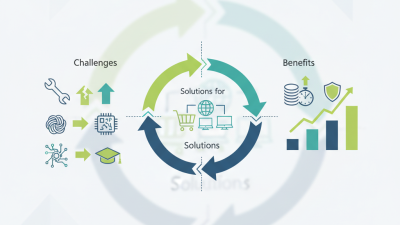
This 100-point evaluation model reflects the main factors global buyers typically assess when selecting pneumatic automation suppliers. Compliance documentation, product quality, delivery reliability, after-sales support, and total cost are considered together to reduce purchasing and operational risk.