Industrial automation is not one machine or software package. It is a connected set of tools that helps people monitor processes, control equipment, and keep production consistent. Industry automation solutions can range from programmable logic controllers and robotic cells to machine vision, supervisory control systems, and predictive maintenance platforms. Each type addresses different needs, such as reducing repetitive tasks, tracking production data, or detecting defects on a moving line.
The right choice depends on the process, existing equipment, workforce skills, and acceptable downtime. A packaging line may benefit from vision sensors that check labels and seals, while a water-treatment facility may rely more on process control and alarm systems. These examples are not universal recipes. Even a well-planned upgrade can reveal overlooked connections between machines, software, and daily work. Real plants are messy.
This guide introduces ten common types of industrial automation solutions and explains where each may fit. It also highlights practical considerations, including system integration, operator training, maintenance access, and the quality of collected data. A sensor is only useful when its readings are reliable and someone knows what to do with them. The aim is not to suggest that every facility needs every technology. Instead, the overview offers a grounded starting point for comparing options, asking better questions, and matching automation investments to measurable operational goals.
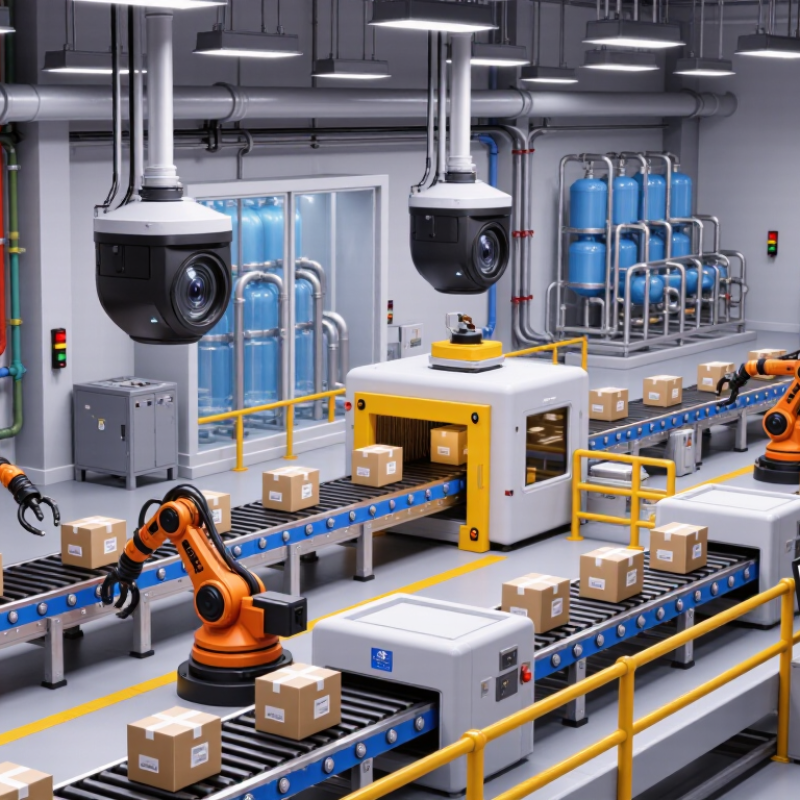
Industrial automation spans more than robotic arms on a factory floor. It includes machine-level control, production-line coordination, and plant-wide monitoring. The right scope depends on the task: a packaging cell may need precise motion control, while a water-treatment process may rely on continuous measurement and alarms. Define the process, operating conditions, and required response before selecting equipment. Otherwise, a system can be technically impressive but poorly matched to daily work.
The core components form a working loop. Sensors measure variables such as temperature, pressure, position, or flow. A programmable controller or industrial computer processes those signals and applies programmed logic. Actuators, including valves and motors, then change the process. Operators use an interface to view live values, acknowledge alarms, and adjust approved settings. Industrial networks connect these devices, while supervisory software can coordinate multiple machines and record trends. Safety circuits and interlocks provide separate protection where hazards require it.
Details matter. A loose sensor connection can create a false alarm, and a delayed network update may obscure a fast-moving fault. Good engineering includes clear device labels, tested alarm limits, documented wiring, and backup procedures. In real facilities, old equipment rarely matches the neat diagram. Integration can take longer than expected, and maintenance teams may uncover undocumented settings. That is a reason to verify assumptions on site, not to skip planning.
| No. | Solution Type | Scope | Core Components | Typical Applications |
|---|---|---|---|---|
| 1 | Programmable Logic Controller (PLC) Systems | Execute discrete and sequential control logic for machines, production cells, and equipment. | Controller, input/output modules, sensors, actuators, programming software, industrial network interfaces. | Packaging lines, conveyor systems, machine control, and equipment interlocks. |
| 2 | Distributed Control Systems (DCS) | Coordinate continuous or batch processes across multiple plant areas through distributed controllers and centralized operator supervision. | Process controllers, operator stations, engineering station, I/O modules, control network, alarms and historian functions. | Chemical processing, power generation, refining, and other large continuous-process facilities. |
| 3 | Supervisory Control and Data Acquisition (SCADA) | Provide supervisory monitoring, data collection, alarms, and remote control of geographically dispersed or plant-wide assets. | SCADA servers, operator interfaces, remote terminal units or PLCs, communications network, sensors, data storage. | Water and wastewater systems, pipelines, utilities, and distributed infrastructure. |
| 4 | Industrial Robotics and Robotic Cells | Automate programmable material handling and processing tasks within safeguarded work cells or production lines. | Robot arm, controller, end effector, fixtures, safety devices, sensors, and cell integration equipment. | Welding, palletizing, machine tending, assembly, and material transfer. |
| 5 | Machine Vision and Automated Inspection | Capture and analyze images to guide equipment or inspect products for presence, position, dimensions, or visible defects. | Industrial camera, lens, lighting, image-processing hardware or software, trigger sensors, and inspection interface. | Part verification, label inspection, measurement, surface inspection, and robot guidance. |
| 6 | Motion Control and Servo Systems | Control the position, speed, and torque of motors for coordinated or precise machine movement. | Servo or variable-speed drives, motors, motion controller, encoders or feedback devices, mechanical transmission. | CNC equipment, converting machinery, packaging, pick-and-place systems, and precision positioning. |
| 7 | Manufacturing Execution Systems (MES) | Manage and record production operations between business planning systems and shop-floor control systems. | Production scheduling and dispatch functions, electronic work instructions, quality records, traceability, performance data interfaces. | Work-in-progress tracking, genealogy, production reporting, quality management, and resource coordination. |
| 8 | Industrial Internet of Things (IIoT) and Edge Monitoring | Connect equipment and sensors to collect, process, and exchange operational data, often with local edge analysis. | Industrial sensors, gateways, edge computers, communication protocols, data platform, dashboards, cybersecurity controls. | Condition monitoring, energy tracking, equipment utilization, and remote asset monitoring. |
| 9 | Automated Material Handling and Storage | Move, buffer, identify, and store materials with coordinated equipment and control logic. | Conveyors, sorters, automated storage and retrieval equipment, identification devices, sensors, safety systems, control software. | Warehouses, distribution centers, assembly plants, and production-line supply. |
| 10 | Safety Instrumented and Machine Safety Systems | Detect hazardous conditions and initiate defined protective actions to reduce risk to people, equipment, and processes. | Safety sensors, safety controllers or relays, emergency stops, interlocks, final control elements, safety circuits. | Machine guarding, emergency shutdown, access protection, and process hazard protection. |