Choosing the right food automation system is less about buying the newest machine and more about matching equipment to daily production realities. The best fit depends on the product, process, and people operating it. A line handling sticky dough has different needs from one packing chilled salads. Consider current throughput, batch changes, available floor space, and cleaning routines. A compact conveyor may solve a bottleneck, while a robotic case packer may add needless complexity. Speed is not everything. The system should support consistent products and fit the plant’s staffing and maintenance capacity.
Before comparing vendors, map the work from ingredient receiving through packaging. Note where products spill, wait, or require repeated handling. These observations help teams set measurable goals, such as shorter changeovers or steadier pack weights. Check sanitation access, food-contact materials, control compatibility, operator training, spare-parts availability, and service response. Ask vendors to demonstrate your product, not just a similar one. A short pilot can expose awkward handoffs. It may also reveal assumptions that looked sound on a spreadsheet. Still, no calculation captures every shift variation, so projected savings deserve careful review. That uncertainty matters. A reliable decision weighs purchase price against installation, downtime, energy use, upkeep, and realistic output. This guide outlines practical questions for comparing system types and planning implementation. The goal is not maximum automation, but dependable performance with room to adapt as products and demand change.
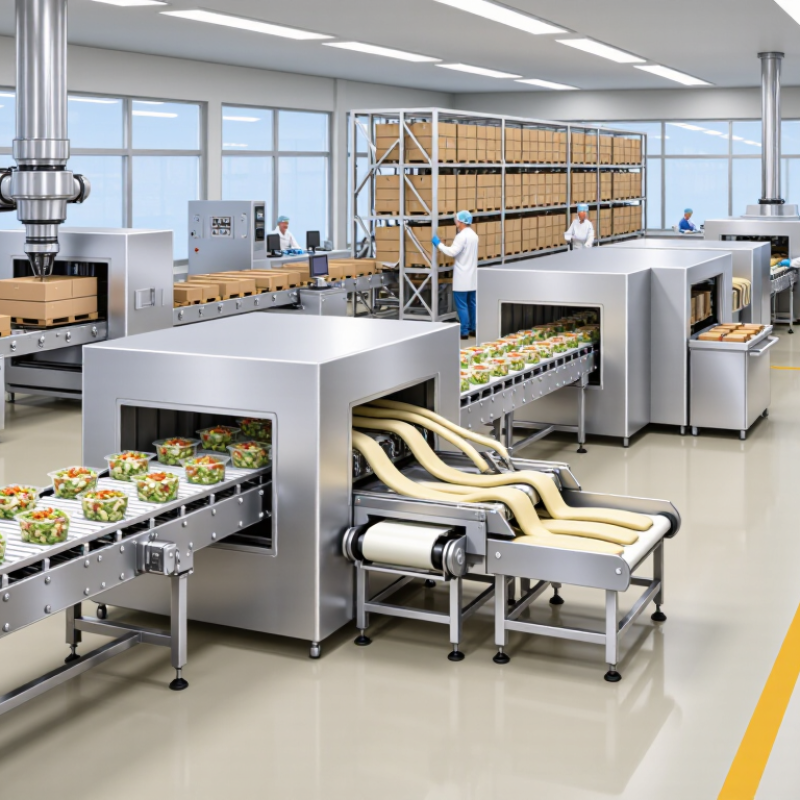
Before comparing equipment, map the production task from raw ingredients to packaged product. Record current output per shift, changeover time, reject rates, staffing, and sanitation downtime. A chilled-food line may need gentle handling and frequent washdowns; a bakery may prioritize precise portioning and steady oven feeding. Note product sizes, recipe changes, available floor space, and utility limits. These details prevent buying capacity that the line cannot use.
Set measurable goals, such as reducing repetitive lifting, improving portion consistency, or increasing output during peak shifts. The International Federation of Robotics reported 541,302 industrial robots installed worldwide in 2023, showing how widely automation is being adopted. The FAO’s 2024 report estimated that 13.2% of food was lost between harvest and retail in 2021. These figures do not prove automation will reduce a specific plant’s losses. They do highlight the value of measuring waste and process performance before investing. A spreadsheet may miss awkward handoffs or small stoppages. Walk the line, observe a full shift, and revisit assumptions with operators.
Tips: Start with one bottleneck. Track its baseline for several weeks, including changeovers and cleaning. Define a success threshold, then check that proposed equipment fits the actual product mix—not just the ideal run.
| Production Dimension | What to Assess | Example Automation Goal | Potential System Type | Useful Measures |
|---|---|---|---|---|
| Output and demand | Current and peak units per hour; seasonal demand; required operating hours. | Meet forecast peak demand without routinely relying on overtime. | Automated portioning, filling, conveying, or packaging equipment sized to the required line rate. | Units per hour; schedule attainment; overtime hours. |
| Product range and changeovers | Product sizes, recipes, packaging formats, and changeover frequency. | Reduce changeover time while maintaining accurate settings across product runs. | Recipe-controlled processing or filling equipment; quick-change tooling; automated format adjustment where suitable. | Changeover minutes; first-run quality; number of formats supported. |
| Labor and ergonomics | Manual handling, repetitive tasks, staffing availability, and hard-to-fill shifts. | Reduce repetitive lifting or handling and redeploy staff to monitoring and quality tasks. | Robotic case packing or palletizing, automatic case forming, or assisted material handling. | Manual touches per unit; handling-related incidents; labor hours per production unit. |
| Product consistency and yield | Variation in weight, fill volume, portion size, or process conditions; giveaway and scrap levels. | Improve repeatability and reduce overfilling, rework, and product loss. | Checkweighing, precision dosing, automated portioning, or in-line process monitoring. | Weight or fill variation; giveaway; scrap and rework rate. |
| Food safety and traceability | Hazard controls, allergen changeovers, sanitation procedures, and lot-record requirements. | Improve process control and capture consistent production and lot data. | Automated temperature or process monitoring, inspection equipment, and production data capture integrated with existing controls. | Record completeness; inspection results; sanitation and changeover verification time. |
| Downtime and maintenance | Unplanned stops, common failure points, cleaning time, and maintenance skills available on site. | Increase dependable running time and make routine maintenance manageable. | Equipment with accessible components, condition monitoring where appropriate, and clear fault diagnostics. | Unplanned downtime; mean time to repair; planned maintenance hours. |
| Facility and integration | Available floor space, utilities, line layout, upstream and downstream speeds, and data connections. | Add automation without creating a bottleneck or disrupting essential production flow. | Modular equipment with compatible controls and interfaces; line balancing based on measured process rates. | Line utilization; bottleneck time; installation and commissioning downtime. |
| Investment and payback | Equipment, installation, training, maintenance, and operating costs; expected production life. | Select a solution whose measurable benefits support the business case under realistic operating assumptions. | Pilot, semi-automatic, or fully automatic system chosen according to volume, product mix, and available capital. | Total cost of ownership; cost per unit; estimated payback period; sensitivity to demand changes. |