
Rod Heaters are compact components, but their performance can affect an entire production line. In plastics processing, packaging machinery, and laboratory equipment, a poorly matched heater may cause uneven temperatures, slower cycles, or premature failure. These details matter when comparing Chinese manufacturers—not just their catalogues.
The market also sits within a larger industrial shift. The International Energy Agency’s Tracking Industry report (2023) estimates that industry uses about 37% of global energy. That figure does not measure rod-heater demand directly, but it highlights why efficient, dependable process heating deserves attention. Buyers should examine more than advertised wattage. Materials, sheath diameter, working temperature, insulation, lead-wire protection, and temperature-control options all affect suitability. Ask for drawings, test records, and sample performance data. Small details can reveal a lot.
There is no single, independently verified public ranking of China’s Rod Heaters manufacturers. That matters. A large factory is not automatically the best supplier for a custom application, and online claims can be difficult to compare. This guide therefore considers practical evidence: product range, engineering support, quality-control practices, customization capability, and export experience. It also treats available company information with care; published specifications do not always show how a heater performs after months of real production. The manufacturers discussed here are starting points for due diligence, not a substitute for testing samples against your own operating conditions.
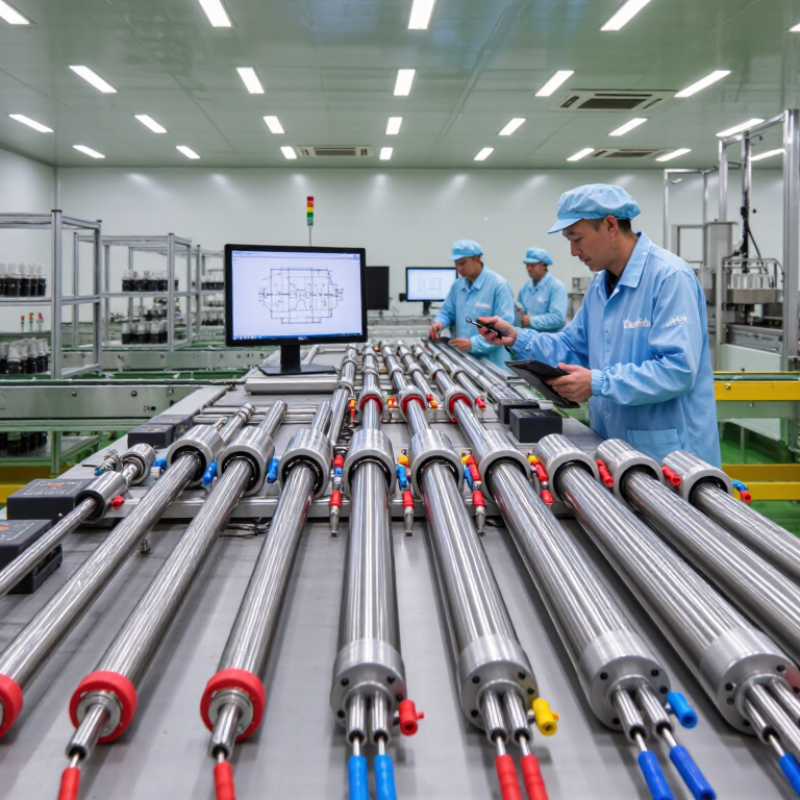
Rod heaters are electric resistance elements built to transfer heat directly to nearby metal, liquid, or air. The term can describe cartridge-style rods inserted into drilled holes, or tubular elements mounted inside equipment. In a mold, a close-fitting heater warms the tool from within. In a tank, a protected element can heat liquid while a thermostat controls temperature. The details matter. Poor contact can create hot spots, shorten element life, or leave the workpiece unevenly heated.
They are used in plastic processing, packaging machinery, laboratory equipment, food-production systems, and industrial ovens. IEA’s Energy Efficiency 2023 report estimates that industry used about 37% of global energy in 2022; it does not isolate rod heaters, but shows why efficient process heating matters. The U.S. Department of Energy also identifies process heating as a substantial part of manufacturing energy demand. For a real installation, engineers check watt density, sheath material, operating temperature, clearances, and control response. A heater that fits physically may still be undersized—or too powerful. That part is easy to miss. A small test run can reveal temperature gradients before full production, though it cannot replace proper instrumentation.

China’s rod heater industry is built from several connected layers, not one uniform factory network. Material suppliers provide resistance wire, metal tubing, insulation powder, terminals, and temperature sensors. Specialist manufacturers turn these inputs into heating elements with different diameters, lengths, and power ratings. Small changes matter. A loose terminal or unevenly packed insulation can affect performance.
Some factories focus on custom production, while others make standard elements in larger batches. Assembly may include winding resistance wire, filling and compacting insulation, sealing the tube, and fitting electrical connections. Testing commonly checks resistance, insulation strength, dimensions, and operation under specified conditions. These steps are useful, but quality systems vary between producers. A polished sample does not always represent every production run.
The wider structure also includes component workshops, testing services, trading companies, and export-focused suppliers. Buyers may deal directly with a factory or through an intermediary, so the supply chain can be less obvious than it appears. It varies. Asking for material specifications, inspection records, and a sample from the intended production process helps clarify who controls each stage. Even then, specifications need careful review; terms such as “high temperature” can mean different things without a stated operating range.
In China, the rod heater market is led less by household names than by specialized manufacturers serving industrial equipment makers. Strong suppliers commonly produce stainless-steel or alloy-sheathed elements for ovens, molds, packaging lines, and liquid-heating systems. Their advantage is practical: they can adapt diameter, length, wattage, and terminal design to a customer’s equipment. A catalog alone tells little.
Experienced manufacturers usually ask about operating temperature, installation space, heat-up time, and the material being heated. That matters. A well-made rod should heat evenly, resist insulation breakdown, and fit without forcing the assembly. Look closely. Ask for dimensional drawings, material specifications, and test records for the exact product, not a similar sample. Stable production and clear technical support are useful signs of market strength.
There is no single public ranking that reliably identifies China’s leading producers. Some capable factories focus on custom orders and publish little information, while polished sales pages may reveal less than expected. Not always. Buyers can compare sample consistency, lead times, defect handling, and whether engineers explain design limits plainly. I would also check how each supplier controls wattage tolerance and insulation resistance. Those details are easy to overlook, and supplier documentation can be uneven.
Leading Chinese rod-heater manufacturers differ less by catalog size than by control over design and production. Some offer standard cartridge and tubular heaters; others handle custom diameters, lengths, watt densities, and lead configurations. A wide range is useful, but it does not prove consistent quality. Check material specifications, dimensional tolerances, and stated operating limits.
Manufacturing capability shows in process control and testing. Ask how suppliers inspect insulation, resistance, and finished dimensions, and whether they can provide batch records or sample test reports. Compare their engineering support, minimum order quantities, and delivery estimates too. One caution: a polished datasheet can still leave practical gaps. Request a sample that matches your intended voltage, temperature, and installation conditions before placing a larger order.
Tips: Compare evidence, not just claims. Ask for test results, tolerances, and a sample. Details matter. If specifications are unclear, pause and ask for clarification.
| Manufacturer Profile | Common Rod Heater Products | Typical Design Options | Materials and Construction | Customization and Engineering | Quality Checks to Look For | Best-Suited Applications |
|---|---|---|---|---|---|---|
| General-purpose tubular heating element producer | Straight and formed tubular elements; air, liquid, and surface-heating elements | Different lengths, diameters, wattages, terminal styles, and bending shapes, subject to the supplier’s tooling and design limits | Metal sheath selected for the operating environment; resistance wire insulated from the sheath with compacted electrical insulation | Often suited to standard specifications and repeat production; confirm minimum order quantities and drawing review procedures | Request insulation-resistance, dielectric-strength, resistance, and visual inspection records for the specified product | Commercial equipment, appliances, packaging machinery, and general industrial heating |
| Industrial immersion-heater specialist | Rod-type immersion elements, screw-plug assemblies, and flange-mounted heater assemblies | Wetted length, mounting arrangement, terminal enclosure, and sheath material can be selected for the application | Sheath alloy and sealing details should be matched to the liquid, temperature, pressure, and corrosion conditions | May offer application review for liquid properties, heater loading, and installation requirements; provide full process details when requesting a quotation | Check electrical test results, leak or sealing checks where applicable, and documentation for materials and assembly | Water and compatible process liquids, tanks, and industrial vessels |
| High-temperature heating element producer | High-temperature tubular elements and specialized rod-style elements for elevated-temperature equipment | Element geometry, sheath selection, wattage, and terminal arrangement depend on the design and operating conditions | Material selection must account for temperature, atmosphere, oxidation, and thermal cycling; no single alloy is suitable for every condition | Engineering capability is best assessed through design calculations, temperature limits, and documented application references | Review dimensional inspection, electrical tests, material traceability if required, and stated operating limits | Industrial ovens, drying systems, and process equipment operating at elevated temperatures |
| Custom heating assembly manufacturer | Tubular elements integrated into heater assemblies, including brackets, supports, wiring, and temperature-control components | Assembly dimensions, connection layout, mounting features, and control components can be specified for the equipment | Element materials and enclosure construction vary with the intended environment and electrical requirements | Useful when the buyer needs a complete assembly rather than a standalone element; confirm responsibility for controls and system integration | Request an agreed inspection plan covering the element and the finished assembly, with acceptance criteria defined before production | OEM machinery, process skids, and equipment requiring application-specific heater assemblies |
| Export-oriented heating element supplier | Standard and custom tubular elements, with product documentation prepared for international shipments | Product configuration depends on the order specification; confirm voltage, power, dimensions, connections, and destination requirements | Construction should be verified against the buyer’s technical specification rather than inferred from a catalog description | Assess communication, drawing control, sample approval, packaging, and ability to maintain consistent repeat orders | Ask for relevant test reports and certificates for the exact product and shipment; verify that any claimed certification applies to the model | International OEM procurement and distributors sourcing heating elements for defined specifications |
| Application-focused OEM supplier | Rod heaters designed around a particular machine, process, or equipment family | Geometry, power, mounting, terminals, and operating conditions are developed from the equipment requirements | Material and insulation choices should be justified by the application’s temperature, medium, and duty cycle | Compare the supplier’s ability to review drawings, produce samples, manage revisions, and support repeat production | Use a written specification, approved sample, and measurable incoming-inspection criteria for production orders | Specialized machinery and repeat OEM programs with stable technical requirements |
| Selection note: This is a comparison of common supplier profiles and capabilities, not a verified ranking of named companies. Actual product ranges, certifications, production capacity, and test procedures vary by manufacturer and model. Confirm current specifications and supporting documents directly with each supplier before purchase. | ||||||
Choosing a rod heater manufacturer requires more than comparing prices. Check whether the supplier can explain how heater length, watt density, sheath material, and operating temperature fit your application. Ask for drawings, material specifications, and inspection records. Small details matter. A polished brochure alone proves little.
Review how each unit is tested. For example, temperature readings along a heated metal block can reveal uneven output that a basic continuity test will miss. Ask whether the manufacturer checks insulation resistance, dimensions, and performance before shipment. Compare documented results with your required conditions, not just a general product rating. One sample is useful, but it cannot show every production variation.
Engineering support matters when installation space is tight or heat distribution must stay consistent. Ask how design changes are reviewed and how defects are traced to a production batch. No factory is flawless; the useful question is how it records and corrects variation. A responsive supplier should discuss limitations plainly, including lead times, tolerances, and the conditions that may shorten heater life.