Top Flotation Equipment for Optimal Mineral Processing Solutions?
Flotation Equipment plays a crucial role in the mineral processing industry. It allows for the efficient separation of valuable minerals from waste material. Selecting the right flotation equipment can significantly enhance recovery rates. This selection process requires expertise and a deep understanding of mineral characteristics.
Many companies struggle with choosing the best equipment. This choice often depends on the mineral type and the specific process conditions. Not all flotation systems perform equally well in every scenario. Some might find that their current equipment does not yield optimal results. This inconsistency highlights the necessity for thorough evaluation.
When investing in flotation equipment, consider efficiency, durability, and ease of maintenance. The most effective solutions combine advanced technology with proven techniques. Industry leaders share their experiences to guide the selection process. Their insights offer a roadmap but do not guarantee flawless results. The path to optimal mineral processing is complex, requiring ongoing reflection and adaptation.
Key Types of Flotation Equipment Used in Mineral Processing
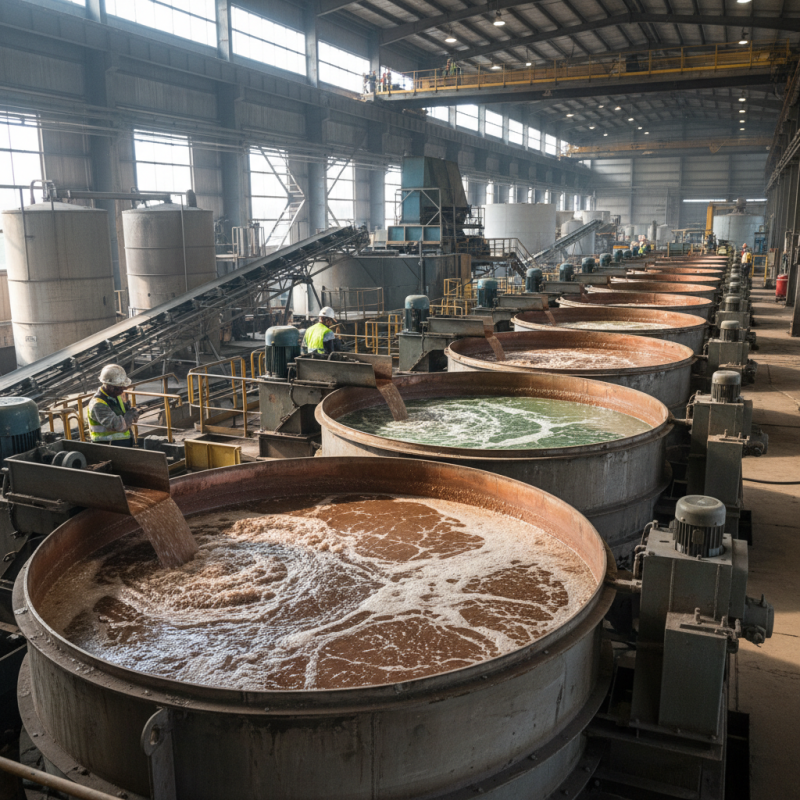
The mineral processing industry relies heavily on various flotation equipment to separate valuable minerals from ore. Key types of flotation equipment include mechanical floaters, column flotation cells, and Flotation Machines. Reports indicate that mechanical flotation cells account for nearly 65% of the total flotation market. These machines create bubbles that attach to mineral particles, ensuring effective separation.
Column flotation cells have gained popularity for their efficiency in recovering fine particles. A recent study showed that these cells could increase recovery rates by up to 10%. Their ability to create a counter-current flow of air and slurry improves mineral yield significantly. However, the design complexity and operational challenges require careful consideration.
Flotation machines are vital for specific applications, especially in separating complex ores. Yet, they may not always yield optimal results due to issues such as bubble size or residual froth. Understanding the limitations of each type of flotation equipment is essential for achieving the best mineral processing outcomes. Diversifying equipment choices and adapting to unique ore characteristics can significantly enhance overall recovery rates.
Principles of Flotation in Mineral Processing Applications
Flotation is a crucial process in mineral processing. It separates valuable minerals from waste. Understanding the principles behind flotation can lead to better recovery rates and efficiencies in mining operations.
In flotation, air bubbles rise through a slurry. These bubbles attach to specific mineral particles, making them float. The minerals are then skimmed off the surface. Factors like particle size and chemical reagents significantly influence this process. Operating at the right temperature can also enhance flotation efficiency.
Tips: Ensure proper mixing of the reagents. An even distribution helps optimize bubble formation. Monitor pH levels closely, as they affect mineral attachment to bubbles. Regular testing can identify potential issues early. Evaluation of flotation cell performance is essential. It might reveal areas for improvement that you hadn’t considered. Reflect on past operations to enhance future outcomes in your flotation processes.
Factors Influencing Flotation Efficiency and Performance
Flotation efficiency is critical for mineral processing. Several factors significantly influence this performance. Understanding these factors can lead to improved recovery rates and optimized operations.
One major factor is the properties of the mineral particles. Particle size, shape, and surface chemistry all play a role. Studies show that particles between 10 and 100 microns are often the most effective for flotation. This size range maximizes the interaction with flotation bubbles. Furthermore, particle hydrophobicity can enhance attachment to bubbles, boosting recovery rates. Research indicates that increasing hydrophobic characteristics can improve flotation performance by up to 30%.
Another influencing factor is the design of flotation equipment. The aeration rate and pulp density directly impact the separation process. An optimal aeration rate is crucial for creating stable bubbles. Too few bubbles reduce recovery, while too many can hinder particle attachment. Experts suggest regular calibration of equipment to maintain these parameters. Regular maintenance is also essential. Equipment inefficiencies can arise from wear and tear, impacting overall performance.
Additionally, the reagent selection is vital. Collectors, frothers, and modifiers need to be compatible with the specific mineralogy. A well-designed reagent scheme can enhance selectivity and recovery rates. An analysis of flotation reagent effectiveness shows that certain combinations can increase recovery by as much as 20%. This highlights the importance of continual testing and adaptation in flotation processes.
Top Flotation Equipment for Optimal Mineral Processing Solutions
This bar chart illustrates the flotation efficiency of various types of flotation equipment based on different factors such as aeration rate, bubble size, and reagent concentration. The data represents typical performance metrics observed in mineral processing.
Innovative Technologies in Flotation Equipment Design
The landscape of flotation equipment is evolving rapidly, driven by innovative technologies. Recent reports highlight that approximately 60% of mineral processing plants are now adopting advanced flotation systems. These systems enhance recovery rates and concentrate quality significantly.
Modern designs incorporate features like self-aspirating mechanisms, improving aeration efficiency. For instance, researchers noted that these mechanisms can boost air recovery by up to 30%. However, even with these advancements, operational challenges remain. Some plants report difficulties in maintaining optimal flotation conditions due to changes in ore characteristics.
Surprisingly, simulation technologies are gaining traction. They allow for real-time adjustments, which can improve the flotation process. Innovative monitoring solutions provide instant feedback on equipment performance. Despite these enhancements, operators often struggle with data interpretation. This indicates that while technology is advancing, the human element in mineral processing still needs development.
Top Flotation Equipment for Optimal Mineral Processing Solutions
| Equipment Type | Capacity (t/h) | Power Consumption (kW) | Recovery Rate (%) | Innovative Feature |
| Column Flotation Cell | 30 | 50 | 92 | Enhanced Bubble Generation |
| Mechanical Flotation Cell | 50 | 75 | 85 | Automated Air Control |
| Hybrid Flotation Cell | 40 | 65 | 90 | Dual-Mode Operation |
| Reagent Addition System | N/A | 20 | N/A | Real-time Monitoring |
| Pilot Plant Flotation Cell | 10 | 35 | 88 | Scalable Design |
Optimal Selection Criteria for Flotation Systems in Mining Operations
Choosing the right flotation system is essential in mineral processing. Effective flotation equipment can significantly enhance recovery rates. For instance, data from the International Council on Mining and Metals shows that optimized flotation systems can boost mineral recovery by up to 20%. This substantial increase can be attributed to the precise selection of equipment types and configurations.
When assessing flotation systems, several criteria demand attention. First, understanding mineral characteristics is crucial. Particle size, density, and hydrophobicity influence equipment choice. Furthermore, energy consumption is another key factor. Systems with lower energy use not only minimize costs but also lessen environmental impacts. Industry reports indicate that energy-efficient flotation systems can reduce overall operational expenses by approximately 15%.
Another often-overlooked aspect is maintenance needs. Equipment with complex maintenance can lead to unexpected downtimes. Regular assessments and historical performance data help foresee issues. However, many operations underestimate the importance of this analysis, resulting in costly delays and inefficiencies. Selecting a flotation system requires more than just initial cost analysis; it demands a holistic view encompassing long-term performance and implications for the environment.

