Top 10 Automation Solutions That Can Transform Your Business Efficiency
In today's fast-paced business environment, efficiency has become a cornerstone of success. Companies are constantly seeking innovative ways to optimize their operations, reduce costs, and enhance productivity. One of the most effective strategies to achieve these goals is the implementation of automation solutions. As automation solutions evolve, they provide organizations with the tools to streamline processes, minimize human error, and improve overall performance.
This article explores the top 10 automation solutions that can significantly transform business efficiency. From automating repetitive tasks to integrating advanced technologies, these solutions empower businesses to focus on strategic initiatives, foster innovation, and ultimately drive growth. By embracing automation, companies can not only enhance their operational capabilities but also create a more agile and responsive organizational culture, ready to adapt to the ever-changing market demands. As we delve into these transformative solutions, the potential for enhanced productivity and efficiency will become increasingly evident.

Overview of Automation Solutions in Business Efficiency
Automation solutions have become essential in enhancing business efficiency across various industries. By streamlining processes, automating repetitive tasks, and minimizing human error, these solutions allow organizations to allocate their resources more effectively. This not only improves speed and accuracy but also empowers employees to focus on more strategic and value-added activities, ultimately leading to increased productivity.
Moreover, the integration of automation technologies can provide real-time insights and analytics, enabling businesses to make informed decisions quickly. Whether through robotic process automation (RPA) or advanced data analytics, organizations can gain a better understanding of their operations and customer behaviors. This insight facilitates a more agile response to market changes and customer demands, ensuring that businesses remain competitive and responsive in a fast-paced environment. As such, embracing automation solutions is essential for companies looking to thrive in an ever-evolving business landscape.
Key Benefits of Implementing Automation in Your Organization
Implementing automation in your organization can lead to significant improvements in operational efficiency and productivity. One of the key benefits of automation is the reduction of manual tasks, which minimizes human error and speeds up processes. By automating repetitive tasks, employees can focus on more strategic initiatives that contribute to business growth. Moreover, automation can enhance data accuracy, providing businesses with reliable insights for informed decision-making.
**Tips:** To get started with automation, identify the most time-consuming tasks within your organization. Look for processes that have clear, repeatable steps suitable for automation. Start small, implementing automation in one or two areas before scaling up.
Another critical advantage of automation is cost savings. By streamlining operations and reducing the need for constant oversight, organizations can lower labor costs and increase throughput. Additionally, automation tools can help manage resources more efficiently, ensuring that projects remain on schedule and within budget. This can free up capital that can be reinvested into further innovations.
**Tips:** Consider conducting a cost-benefit analysis to evaluate the potential return on investment from automation initiatives. Engaging employees in the process can also facilitate a smoother transition, as they can provide valuable insights into which areas would benefit most from automation.
Top 10 Automation Solutions That Can Transform Your Business Efficiency
| Automation Solution |
Key Benefits |
Efficiency Gain (%) |
Implementation Time (Months) |
Cost Savings (% of Budget) |
| Process Automation |
Reduces manual errors, increases speed |
30% |
6 |
25% |
| Customer Relationship Management (CRM) |
Improves customer engagement |
40% |
4 |
20% |
| Inventory Management |
Optimizes stock levels to reduce waste |
35% |
5 |
15% |
| Email Marketing Automation |
Enhances targeted campaigns and engagement |
50% |
2 |
30% |
| Document Management |
Streamlines documentation processes |
25% |
3 |
10% |
| HR Process Automation |
Improves recruitment and onboarding |
45% |
4 |
35% |
| Sales Process Automation |
Increases sales team productivity |
55% |
3 |
40% |
| Workflow Management |
Enhances collaboration and task tracking |
30% |
5 |
20% |
| Reporting and Analytics Automation |
Improves decision-making with real-time data |
60% |
4 |
50% |
| IT Operations Automation |
Reduces downtime and enhances performance |
70% |
6 |
45% |
Top Types of Automation Technologies for Business Transformation
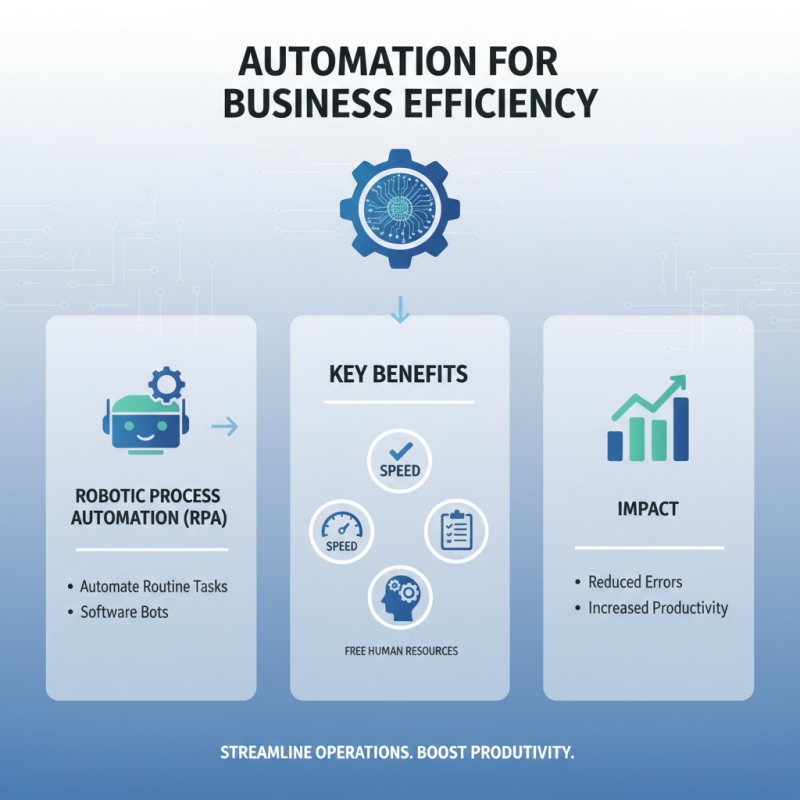
Automation technologies have emerged as essential tools for businesses seeking to enhance efficiency and streamline operations. One of the prominent types of automation is Robotic Process Automation (RPA), which allows organizations to automate routine tasks by using software robots. These bots can handle repetitive tasks such as data entry and invoice processing, freeing up valuable human resources for more complex activities. By implementing RPA, businesses can significantly reduce errors and enhance speed, leading to improved productivity.
Another crucial category of automation technology is Business Process Automation (BPA). This approach focuses on optimizing end-to-end business processes by integrating various systems and automating workflows. BPA eliminates manual intervention, reduces bottlenecks, and ensures a smoother flow of information across departments. Moreover, it fosters better collaboration within teams and enhances decision-making capabilities through improved data access and insights. By leveraging BPA, companies can achieve a cohesive operation that drives overall performance and adaptability in an ever-changing business environment.
Case Studies: Successful Automation Implementation in Various Industries
In the pursuit of enhanced operational efficiency, many organizations have successfully implemented automation solutions tailored to their specific needs, resulting in remarkable transformations across various industries. For instance, in the manufacturing sector, a company adopted robotic process automation to streamline its assembly line. By automating repetitive tasks, the organization not only increased production speed but also reduced error rates, leading to significant cost savings and improved product quality. The data collected from automated processes provided insights that further optimized workflows, enhancing decision-making capabilities.
Similarly, the healthcare industry has experienced revolutionary changes with the integration of automation. A hospital system implemented automated patient scheduling and record management systems, which drastically cut down waiting times for patients. This transition allowed healthcare professionals to focus more on patient care rather than administrative tasks. Additionally, the automation of data entry and billing processes enabled the organization to minimize errors and improve revenue cycles. Case studies reveal that hospitals adopting these technologies observed increased patient satisfaction and operational efficiency, showcasing the potential for automation to redefine industry standards.
Top 10 Automation Solutions That Can Transform Your Business Efficiency
This bar chart represents the efficiency improvements measured in percentage after implementing various automation solutions in different industries. The data showcases how automation can lead to significant enhancements in productivity and operational efficiency.
Future Trends in Business Automation and Their Impact on Efficiency
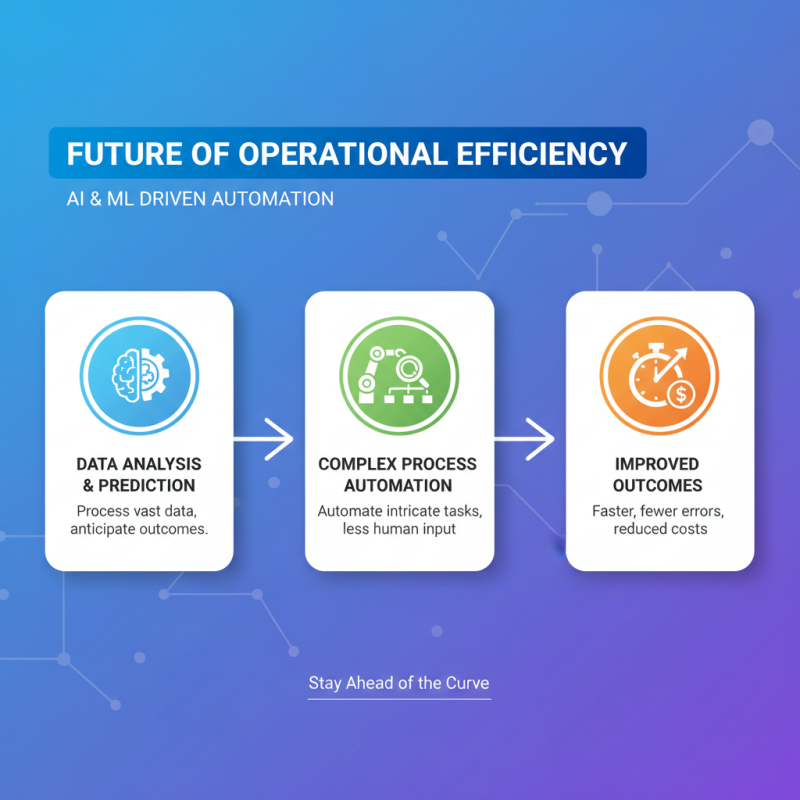
As businesses increasingly adopt automation, it's essential to stay ahead of future trends that can significantly enhance operational efficiency. One notable trend is the integration of artificial intelligence (AI) and machine learning (ML) into automation solutions. These technologies enable businesses to analyze vast amounts of data, predict outcomes, and automate complex processes with minimal human intervention. This shift not only speeds up operations but also reduces errors and costs associated with manual tasks.
Tips: Consider starting with small automation projects that incorporate AI to test its effectiveness in your organization. This allows for manageable implementation and helps in understanding the best practices for scaling up in the future.
Another emerging trend is the rise of collaborative automation, where humans and machines work seamlessly together. This approach not only leverages the strengths of both entities—machines excel at repetitive tasks, while humans are better at creative problem-solving—but it also fosters a new work culture focused on innovation and efficiency. As roles evolve, organizations should invest in training their workforce to adapt to new technologies.
Tips: Regular training sessions can better equip your employees to work alongside automation tools, increasing overall productivity while minimizing resistance to change. Consider organizing workshops to educate staff about the benefits of collaborative automation and how they can contribute to its success.