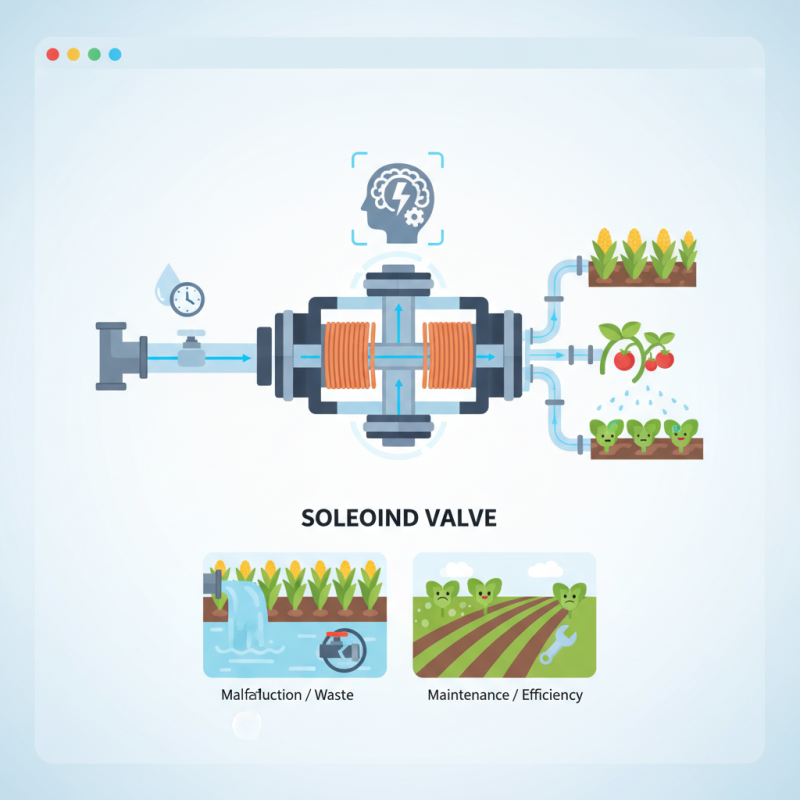
What is a Solenoid Valve in an Irrigation System?
A Solenoid Valve In Irrigation System plays a crucial role in modern agriculture. This device controls the flow of water, ensuring that crops receive the right amount. It operates electrically, making irrigation efficient and precise.
Farmers benefit significantly from using solenoid valves. They can program watering schedules to suit various crops. This technology reduces waste and promotes sustainable practices. However, challenges remain. Solenoid valves can malfunction, leading to overwatering or underwatering. Regular maintenance is essential to avoid these issues.
Understanding the significance of a Solenoid Valve in Irrigation System is vital. It can enhance productivity but requires attention. Farmers must stay informed about the latest technologies and maintenance practices to maximize the benefits.
Definition and Function of a Solenoid Valve in Irrigation Systems
A solenoid valve is a key component in irrigation systems. It controls the flow of water through pipes. This valve uses an electromagnetic coil to open or close the water passage. When energized, the coil creates a magnetic field. This pulls a metal plunger, allowing water to flow. When deactivated, the plunger seals the opening, stopping the water.
Understanding the function of a solenoid valve is crucial for any system design. It allows for automated control of watering schedules. This can save water and reduce labor. However, problems can occur. Sometimes, debris can clog the valve. Regular maintenance can help prevent this issue.
Tips: Check your solenoid valves regularly. Inspect them for wear and tear. Clean any debris that may obstruct flow. Also, consider the location of your valves. They should be easily accessible for maintenance.
Components of a Solenoid Valve and Their Roles in Irrigation
A solenoid valve is essential in irrigation systems. It controls water flow automatically. Understanding its components helps optimize irrigation efficiency. The main parts include the solenoid coil, plunger, and valve body.
The solenoid coil generates a magnetic field when energized. This force pulls the plunger upward, opening the valve. The valve body contains the fluid, directing flow as needed. Each component plays a specific role. If the coil malfunctions, the entire system could fail. Plunger issues can lead to leaks or inconsistent flow.
Maintenance is crucial. Corrosion can affect function over time. Regular checks can prevent larger problems. Despite simplicity, solenoid valves require attention. They may fail unexpectedly, causing water waste. Proper installation and care can extend their life. Consider these aspects for a sustainable irrigation system.
How Solenoid Valves Operate: Electrical and Mechanical Principles
In an irrigation system, solenoid valves play a crucial role. They control the flow of water using both electrical and mechanical principles. When electricity flows through the solenoid, it creates a magnetic field. This magnetism pulls a plunger, opening the valve. Water can then flow through the system. A simple concept, yet it requires precision in design and operation.
The mechanics of solenoid valves can fail if not maintained properly. For instance, dirt can clog the valve, causing it to malfunction. This blockage prevents water from reaching its destination, which can damage plants. Additionally, electrical issues can arise. If the power supply is inconsistent, the valve may not operate when needed. These practicalities highlight the importance of regular checks.
Moreover, solenoid valves used in irrigation are often exposed to outdoor elements. Temperature changes can affect performance. Sometimes they freeze in cold weather, leading to operational challenges. Understanding these intricacies is vital for effective irrigation.
Regular maintenance can reduce failures and improve efficiency. It’s important to reflect on these aspects for a well-functioning irrigation system.
Applications of Solenoid Valves in Modern Irrigation Practices
Solenoid valves play a crucial role in modern irrigation systems. They automate water flow, providing precise control over irrigation schedules. This aids in efficient water usage. With solenoid valves, users can program their watering systems to operate at specific times. This not only saves time but also conserves water. For instance, in arid regions, using these valves reduces the risk of overwatering.
Farmers can easily adjust the parameters of their irrigation systems. They can control the amount of water each zone receives. However, improper setup can lead to uneven coverage. Sometimes, users may overlook maintenance. Clogged filters or faulty valves can disrupt the flow. Regular checks are essential for optimal performance. The convenience of automation should not overshadow the need for vigilance.
In landscaping, solenoid valves also find various applications. They allow for targeted watering in gardens or lawns. This technique supports healthy plant growth without wastage. However, not all systems are foolproof. Over time, soil conditions can change, affecting how much water is needed. Users should continuously evaluate their irrigation practices to ensure effectiveness.
Applications of Solenoid Valves in Modern Irrigation Practices
Advantages of Using Solenoid Valves in Irrigation Systems
A solenoid valve is a vital component in modern irrigation systems. It plays a key role in controlling water flow. By using electricity to open and close valves, these devices enhance irrigation efficiency. This results in precise water delivery to plants.
Advantages are clear. Solenoid valves help save water. With automated control, they reduce overwatering risks. Plants receive an optimal amount of moisture. This promotes healthier growth. Time savings are significant too. Farmers and gardeners do not need to monitor systems constantly. Automated schedules take care of watering needs.
Tip: Regular maintenance is essential to keep these valves functioning well. Check for debris or clogs. Clean them periodically to prevent malfunctions.
Another benefit is their reliability. Solenoid valves can withstand harsh weather. They are durable in different conditions. Yet, like any technology, they can fail. It’s wise to have backups or manual options. This ensures continuity in irrigation, especially during critical growth periods.