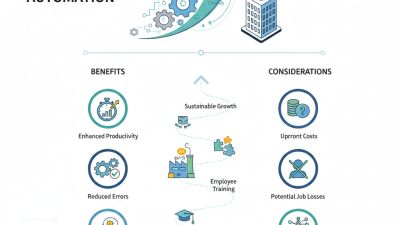
How to Find Effective Solutions to Automation Challenges?

Automation is revolutionizing industries. Yet, businesses face numerous challenges. Identifying effective solutions to automation can feel daunting. Market dynamics, technology integration, and workforce adaptation are just a few hurdles.

Organizations must assess their specific needs. Not every automation tool suits every business. Tailored solutions to automation can enhance productivity and drive growth. Companies should consider real-world examples and case studies to gain insight.

Moreover, reflection is key. Challenges may lead to failures but can highlight areas for improvement. Embracing a mindset of trial and error helps in pinpointing effective strategies. Automation is not a one-size-fits-all solution but a journey that requires thoughtful exploration and adaptation.

How to Find Effective Solutions to Automation Challenges?

Identifying Common Automation Challenges in Various Industries

Identifying common automation challenges can significantly benefit various industries. Many organizations face difficulties in integrating automation solutions into existing workflows. Issues such as data silos, incompatible systems, and lack of employee training frequently arise. These challenges create inefficiencies that inhibit business growth.

Tips for overcoming these hurdles include starting with clear goals. Define what success looks like for your automation project early on. This vision helps ensure that efforts stay aligned and focused. Additionally, prioritize employee training and engagement. Teams should understand how automation tools work and how they enhance daily tasks.

Another common challenge is resistance to change. Employees may fear that automation threatens their roles. Open communication is key here. Address concerns and involve staff in the transition process. This approach fosters a supportive environment and encourages acceptance of new technologies. Regular feedback can also guide adjustments and improvements, making the transition smoother. Aim for a flexible approach to keep up with evolving industry needs.


Common Automation Challenges Across Industries

This bar chart illustrates the common automation challenges faced by various industries, highlighting the frequencies and impact of these challenges.

Assessing the Impact of Automation on Workforce and Operations

Automation is reshaping industries, but its impact on the workforce and operations is complex. A study by McKinsey reports that 60% of jobs could see significant changes due to automation by 2030. This potential shift raises concerns about job displacement and the need for reskilling. Many employees may find themselves unprepared for new roles that require advanced technology skills.

Moreover, organizations face challenges in integrating automation smoothly. A survey from Deloitte highlights that 90% of companies struggle with workforce transition during automation implementation. Employees often feel anxious about their job security, leading to decreased morale. It is essential to prioritize ongoing training and clear communication to manage these changes effectively.

As automation continues, it is crucial to monitor its effectiveness. Research from PwC suggests that while automation can increase productivity by 30%, it may also lead to skill gaps among the workforce. Companies should assess their strategies regularly. Effective solutions will not only address technological integration but also support employee transitions, ensuring a balance between innovation and human capital.

Exploring Tools and Technologies for Effective Automation Solutions

In the pursuit of effective automation solutions, understanding the right tools and technologies plays a crucial role. According to a recent industry report, organizations that adopt automation can achieve productivity increases of up to 30%. This statistic highlights the impact of selecting appropriate automation technologies to address specific challenges. Machine learning and robotic process automation (RPA) are among the leading tools reshaping industries. These technologies allow businesses to streamline repetitive tasks and reduce human error.

Tips: Evaluate your current processes. Identify which tasks are time-consuming and prone to errors. This evaluation will guide you in selecting the most beneficial automation tools.

Moreover, integrating cloud-based automation solutions can enhance collaboration and scalability. A survey indicates that 70% of companies leveraging cloud technologies report improved flexibility. While cloud tools offer advantages, they also require a robust cybersecurity strategy. Organizations must continuously monitor their systems to avoid potential risks associated with data breaches and vulnerabilities.

Tips: Always prioritize security. Use encryption and multi-factor authentication to protect sensitive data when implementing automation solutions. Regular audits can also help detect potential weaknesses.

In the quest for automation, remember that not all solutions fit every problem. The effectiveness of tools varies across different industries and contexts. Continuous learning and adaptability are essential to optimizing automation strategies. Organizations should remain open to reviewing and refining their automation approaches regularly.

How to Find Effective Solutions to Automation Challenges?

Dimension Description Tools/Technologies Challenges Addressed
Process Automation Streamlining repetitive tasks to enhance efficiency. Robotic Process Automation (RPA), Workflow Automation Software Manual errors, time consumption
Data Management Improving data accuracy and accessibility. Database Management Systems, Data Integration Tools Data silos, data inconsistency
Cloud Automation Utilizing cloud services for scalability and flexibility. Cloud Management Platforms, Serverless Computing Infrastructure management, scaling issues
AI and Machine Learning Implementing intelligent systems for decision-making. Machine Learning Libraries, AI Platforms Decision delay, prediction accuracy
Testing Automation Automating software testing processes. Automated Testing Tools, CI/CD Pipelines Testing inefficiencies, extended release cycles

Developing a Strategic Plan for Implementing Automation Systems

In developing a strategic plan for automating systems, understanding the specific challenges is crucial. A report by McKinsey indicates that 49% of companies cite inadequate training as a significant barrier to successful automation. Addressing this gap means investing time in worker training and resource allocation. Automation should enhance capabilities rather than replace existing staff.

Another key challenge is identifying suitable technologies. Research by Deloitte shows that 58% of businesses struggle with technology selection. This uncertainty can lead to costly mistakes. Organizations should assess their unique operational needs before selecting automation tools. Engaging interdisciplinary teams can foster well-rounded decision-making.

Moreover, measuring success is often overlooked. Establishing clear KPIs can guide efforts. A study from PwC found that 80% of companies don’t track automation ROI effectively. Without proper metrics, it’s challenging to recognize successes or areas for improvement. Developing a framework for continuous feedback allows better adjustments. Reflecting on these aspects can lead to more effective automation strategies.

Measuring Success and Continuous Improvement in Automation Initiatives

Measuring success in automation initiatives requires clear metrics. Organizations must define what success looks like for each project. Is it increased efficiency, reduced costs, or improved quality? Identifying specific, measurable goals helps track progress. Using tools like dashboards can visualize these metrics effectively. This approach enables teams to spot trends and areas that require adjustment in real-time.

Continuous improvement is a journey rather than a destination. Teams should schedule regular reviews of automation processes. Reflecting on performance offers insight into what works and what doesn’t. Engaging employees in this reflection process encourages diverse viewpoints. Not all automation projects hit their targets initially. Learning from failures is crucial for future success. Gathering feedback and iterating on solutions fosters a culture of innovation. Remember, the goal is not perfection but progression.