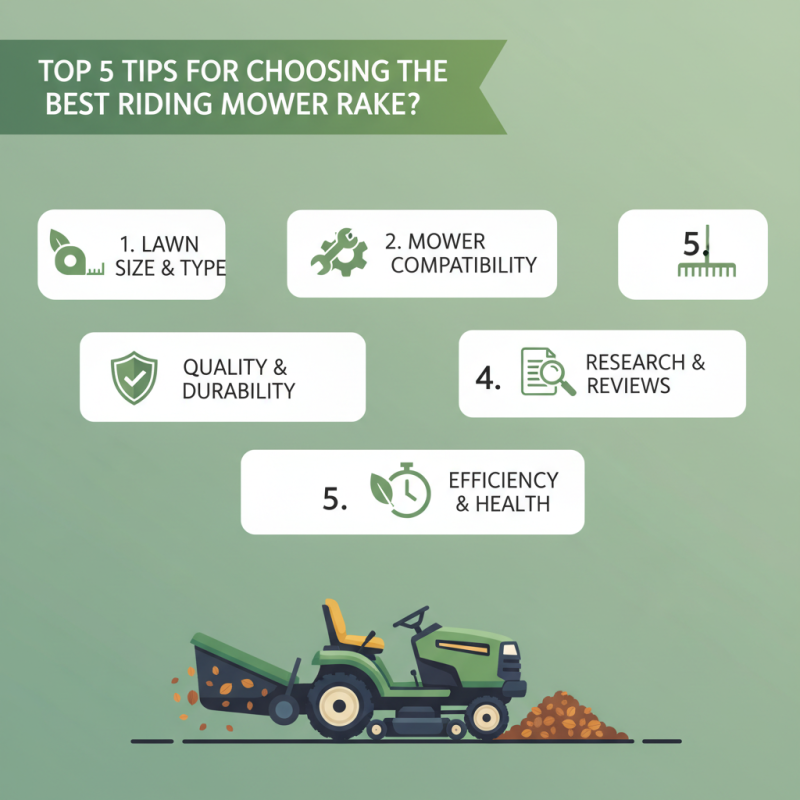
Top 5 Tips for Choosing the Best Riding Mower Rake?
Choosing the right Riding Mower Rake can significantly enhance your lawn care experience. With various options available, it may feel overwhelming. However, an informed decision can lead to better results. A riding mower rake efficiently collects leaves and debris, making maintenance easier.
When selecting a rake, consider your lawn size and type. The rake should fit your mower for optimal performance. Different rakes offer varying features, and not all may suit your needs. Some may struggle with tough terrain. It's important to research and compare models to find the best fit.
Quality matters when it comes to durability and efficiency. Reading reviews can provide insights into others' experiences. Trustworthy reviews can help you assess which rake stands out. Ultimately, a reliable riding mower rake can save time and improve the overall health of your lawn. Taking the time to choose wisely pays off in the long run.
Understanding Different Types of Riding Mower Rakes
Understanding the different types of riding mower rakes can greatly enhance your lawn care routine. There are several styles available, each designed for specific tasks. The standard rake is perfect for gathering leaves and debris. It is simple and effective, ideal for homeowners looking for a straightforward solution.
For those who require a bit more versatility, the adjustable rake is worth considering. It allows users to change its width, adapting to various terrains. This flexibility makes it suitable for properties with intricate landscaping. There are also specialized rakes designed for thatching, which focus on removing dead grass. This can lead to healthier lawns.
When selecting a rake, consider the terrain of your property and your specific needs. A heavy-duty rake can be overkill for a small yard, while a lightweight model may struggle on uneven ground. Understand that material construction also matters; metal rakes tend to be more durable, while plastic models are easier to handle but may not withstand tough conditions. Reflect on the features that matter most to you before making a decision.
Evaluating Rake Size and Capacity for Your Lawn
Choosing the right rake size and capacity is essential for effective lawn care. It's important to match the rake with the size of your lawn. For instance, large properties usually require rakes with wider widths, enabling efficient debris collection. According to industry data, a rake width of 48 to 54 inches is ideal for lawns larger than half an acre. This allows users to cover more ground in less time.
Capacity also plays a crucial role. Rakes with larger collection bins can hold more material, reducing the frequency of emptying. Most rakes have a capacity ranging from 8 to 12 cubic feet. For every cubic foot, you can typically expect to clear about 100 square feet of lawn. However, a common mistake is underestimating the amount of debris. If not considered, homeowners might end up needing a second rake or more trips to the compost pile.
It's also vital to consider the terrain of your lawn. Steep slopes or uneven grounds may require a more agile rake. As reported by lawn care experts, rakes designed for hilly areas often have adjustable heights. This flexibility makes it easier to maneuver and prevents damage to the grass. Picking the right rake involves more than just size; it requires understanding your specific lawn conditions and needs.
Considering Material Durability and Construction Quality
When choosing a riding mower rake, material durability is crucial. Opt for rakes made of high-strength steel or heavy-duty plastic. Steel offers long-lasting durability, resisting bends and breaks. It handles rough terrain better than lighter options. However, heavier rakes can be cumbersome for some users. Assess your yard's layout before deciding.
Construction quality goes hand in hand with material choice. Look for rakes with reinforced joints and solid welds. Weak points often lead to premature wear. A rake may look sturdy but can fail under pressure. Pay attention to user reviews, highlighting any common issues. Ensure the rake feels comfortable when in use. Your hands should easily grip the handle without strain.
Consider the rake's weight too. A heavier model may promise durability but could tire you out quickly. Lightweight options might not withstand heavy use, leading to frequent replacements. Each material and construction choice has trade-offs, so weigh them against your specific needs. It’s essential to make an informed choice based on your lawn care requirements.
Top 5 Tips for Choosing the Best Riding Mower Rake
Assessing Compatibility with Your Riding Mower Model
When selecting a rake for your riding mower, compatibility is crucial. Different mower models have specific attachment requirements. A rake that fits one model may not function well with another. Always check the specifications of your mower beforehand. This ensures the rake performs optimally.
Consider the attachment type. Some rakes require a three-point hitch, while others might utilize pins or clamps. Understand your mower's connection system to choose the right rake. Without this knowledge, you risk inefficiency or damage during use.
Weight and size matter too. Ensure the rake's dimensions align with your mower's capabilities. A heavy rake might strain your mower's engine. Conversely, an incompatible size can hinder maneuverability. Reflecting on your needs will guide you toward a suitable choice. Make the right decisions to enhance your mowing experience.
Top 5 Tips for Choosing the Best Riding Mower Rake
| Tip Number | Tip Description | Compatibility Assessment | Key Features to Consider |
| 1 | Check Size Compatibility | Verify the rake's width matches your mower's specifications. | Rake width, cutting path |
| 2 | Evaluate Material Quality | Ensure the rake is made from durable materials compatible with your mower. | Steel, plastic, durability |
| 3 | Consider Rake Height | Ensure the rake height works effectively with your mower's deck height. | Height adjustability, rake angle |
| 4 | Check Attachment Methods | Ensure the rake can be easily attached and detached from the mower. | Quick attach/detach systems, compatibility mounts |
| 5 | Research User Reviews | Check feedback from other users with the same mower model. | User ratings, reviews, reliability |
Budgeting and Comparing Prices for Value-Rich Options
When budgeting for a riding mower rake, it's essential to analyze price ranges. Typically, these tools vary widely, from economical options to higher-end models. Set a realistic budget that considers not just the initial purchase, but also ongoing maintenance costs. Think about your lawn size and how often you'll use the rake. This can help you pinpoint what’s worth spending more on.
Next, comparing prices can be tricky. Don't just look at the sticker price. Read online reviews to gauge the value. Check user feedback on durability and efficiency. Sometimes, a slightly more expensive rake can save you money on replacements later. Find sources that provide unbiased insights into various options. This can enhance your purchasing confidence, ensuring you get a rake that meets your needs without breaking the bank.
Be aware of sales and discounts. Manufacturers may offer promotions that can help stretch your budget. However, don’t be too quick to buy just because of a deal. Consider performance over price. Sometimes, lower-cost options underperform, leading to disappointment. Reflect on how your choices align with your long-term lawn care goals. Each option comes with its pros and cons, so take the time to choose wisely.