What Is Automation Equipment and How Does It Work?
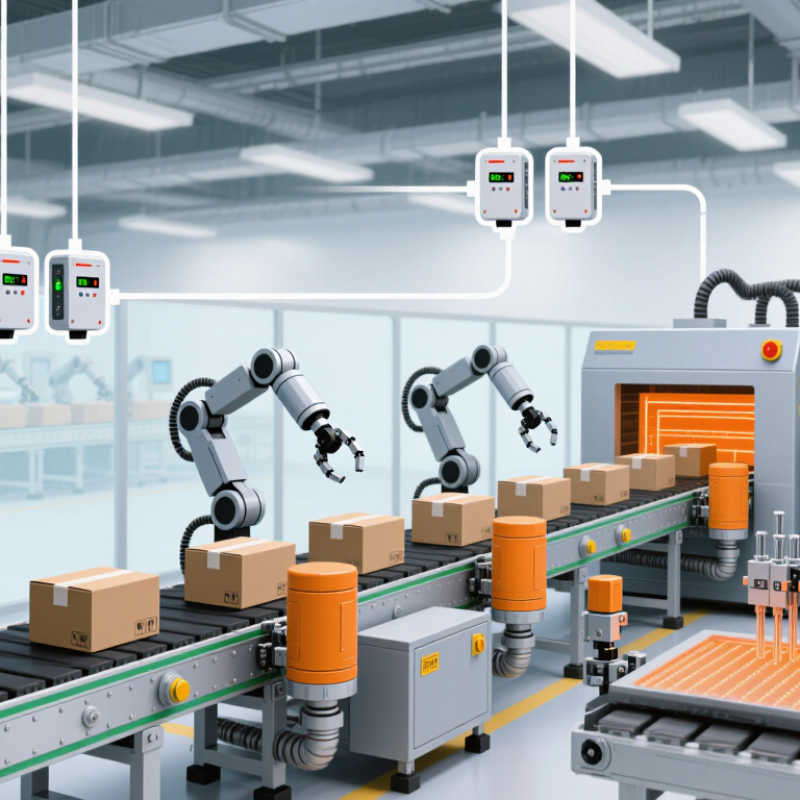
Automation equipment refers to machines and control systems that perform repeatable tasks with limited human intervention. It may sort parcels, fill bottles, weld components, or inspect printed circuit boards. A typical system combines sensors, actuators, controllers, software, and safety devices. Sensors detect position, temperature, pressure, or product defects. The controller interprets those signals. Actuators then move, clamp, heat, or release materials according to programmed instructions.
The process often begins with a defined production step. A photoelectric sensor detects a box on a conveyor. The controller checks its location and sends a signal to a pneumatic cylinder. The cylinder pushes the box into the correct lane. This cycle can repeat thousands of times, provided the equipment receives stable power, accurate settings, and regular maintenance. Small errors matter. A misaligned sensor may stop an entire line or damage products. Skilled technicians therefore verify calibration, guarding, emergency stops, and software settings before operation.
Good automation design is not simply about replacing people with machines. It should improve consistency, reduce hazardous exposure, and support measurable productivity. However, automation equipment is not automatically efficient. Poorly chosen hardware can increase downtime, training costs, and energy use. Real-world performance depends on the product, workplace conditions, operator experience, and maintenance quality. Some explanations also make automation sound effortless. It is not. Careful testing reveals weaknesses that specifications may overlook. This article examines how these systems work, where they deliver value, and which practical limits businesses should consider before investing.
Definition and Core Purpose of Automation Equipment
Automation equipment is a system that performs repeated industrial tasks with limited manual control. Its core purpose is to improve consistency, safety, speed, and measurable output. It does not simply replace people. It supports people by handling predictable work, such as conveying parts, filling containers, tightening fasteners, or checking dimensions.
A typical system combines sensors, a controller, mechanical devices, and an operator interface. Sensors detect position, temperature, pressure, or movement. The controller compares these signals with programmed conditions. It then directs motors, valves, grippers, or other actuators. For example, a packaging machine may detect an empty container, release a measured quantity, and stop when the target level is reached. Each action follows a defined sequence.
The process looks simple. Real operation is less perfect. Dust can weaken a sensor signal, while vibration can shift a mechanical alignment. During equipment checks, technicians inspect wiring, test emergency stops, and compare actual readings with approved limits. Regular calibration helps maintain reliable results. Human oversight remains important when materials change or unusual faults appear. A poorly adjusted system may work quickly but produce repeated errors. Good automation design therefore includes clear alarms, guarded moving parts, accessible maintenance areas, and records of inspections. In practice, the best system is not always the fastest one. It is the one workers can understand, monitor, and safely correct.
Main Components and Technologies Used in Automated Systems
Automation equipment combines mechanical devices, sensors, controllers, and software to perform repeatable industrial tasks. It may move parts, inspect surfaces, control temperature, or package products. The International Federation of Robotics reported 541,302 industrial robots were installed worldwide in 2023. That figure shows how quickly automated systems are entering production environments.
The physical structure usually begins with actuators, such as electric motors, pneumatic cylinders, and servo drives. Sensors measure position, force, speed, temperature, or product presence. A programmable logic controller processes these signals and sends commands through input-output modules. Industrial communication networks connect each device. Human-machine interfaces then display alarms, operating values, and maintenance instructions. Small details matter. A loose cable can stop an entire line.
Modern systems also use machine vision, edge computing, and predictive analytics. Vision cameras can detect missing components within milliseconds. Edge devices process selected data near the machine, reducing delays and network traffic. The World Economic Forum’s Future of Jobs Report 2023 found that 85% of surveyed organizations expected technology adoption to transform their operations. However, automation is not automatically intelligent. Poor sensor placement, unclear data, or weak maintenance planning can produce confident but incorrect decisions. Engineers sometimes overdesign systems, while operators receive too little training. That gap deserves more attention. Reliability improves when equipment includes safe access, clear diagnostics, and practical human oversight.
How Automation Equipment Operates Step by Step
Automation equipment combines sensors, controllers, actuators, and software to complete repeatable production tasks. Its operation usually begins with sensing. A photoelectric sensor detects a part entering a station, while a pressure sensor checks whether it is seated correctly. The controller then compares these signals with programmed limits. If the measurements match, it sends commands to motors, valves, or robotic mechanisms. The International Federation of Robotics reported 541,302 industrial robot installations worldwide in 2023, showing how widely this step-based architecture is being adopted.
The next stage is controlled movement. A servo motor may rotate a fixture to a defined angle, while an actuator presses, sorts, or transfers the part. Feedback follows immediately. Encoders report position, and sensors confirm force, speed, or completion. If a value falls outside tolerance, the controller can pause the cycle and trigger an inspection request. This matters because automation is not simply “set and forget.” Sensors can drift. Parts can arrive misaligned. Small errors become expensive when repeated thousands of times.
Safety circuits operate alongside the production sequence. They monitor guards, emergency stops, light curtains, and abnormal motion. The International Federation of Robotics recorded more than four million industrial robots operating globally in 2023, making reliable risk control essential. Data from each cycle can also be stored for traceability, maintenance, and process review. Yet data alone does not guarantee quality. Engineers still need to question unusual readings, test recovery procedures, and observe the equipment during real shifts. Some failures appear only after hours of vibration and heat.
Common Types and Industrial Applications of Automation Equipment
Automation equipment combines sensors, controllers, software, and mechanical devices to perform repeatable industrial tasks. A sensor detects position, temperature, or pressure. The controller processes that signal. An actuator then moves a valve, motor, gripper, or conveyor. In a packaging line, this cycle can repeat every few seconds with consistent timing.
Common types include programmable logic controllers, industrial robots, machine-vision systems, automated storage equipment, and autonomous mobile platforms. Robots handle welding, palletizing, and precise assembly. Vision systems inspect labels, dimensions, and surface defects. Conveyors and storage systems move materials between workstations. According to the International Federation of Robotics’ World Robotics 2024 report, factories installed 541,302 industrial robots in 2023. Their global operational stock exceeded 4.2 million units, showing how widely robotic automation is used.
Industrial applications vary by risk, speed, and product complexity. Automotive plants use robots for body assembly and coating. Food facilities use automated filling, sealing, and inspection equipment. Pharmaceutical production relies on controlled dispensing and traceable handling. Logistics centers use scanners, conveyors, and mobile systems to sort orders. However, automation is not automatically efficient. Poor sensor placement can create false rejects. Weak data links can stop an entire line. The International Society of Automation notes that integration, safety, and lifecycle maintenance remain central engineering concerns. A practical design must include guarded motion, emergency controls, operator training, and regular validation. Small pilot tests often reveal problems that drawings miss.
What Is Automation Equipment and How Does It Work?
Automation equipment uses sensors, controllers, software, and mechanical systems to perform production tasks with limited manual intervention. Common examples include industrial robots, conveyor systems, machine-vision equipment, programmable logic controllers, and automated guided vehicles.
The chart shows approximate global industrial robot installations by application sector in 2023. Values are rounded and presented in thousands of units. Source: International Federation of Robotics, World Robotics 2024.
Benefits, Limitations, and Maintenance Requirements
What Is Automation Equipment and How Does It Work?
Automation equipment uses sensors, controllers, motors, and software to perform repeatable tasks with limited human input. A sensor detects an object or condition. The controller processes that signal. An actuator then moves, sorts, fills, seals, or adjusts equipment. In a working facility, this cycle may repeat hundreds of times each hour.
The main benefit is consistency. Automated systems can reduce repetitive labor, improve production speed, and limit mistakes caused by fatigue. They also collect useful operating data. Managers can identify delays, uneven output, or unusual energy use. However, automation is not a perfect solution. Poorly calibrated sensors can stop a line. A complicated system may require expensive training and specialized repairs. It can also struggle with irregular materials or sudden changes in product design. In my experience, a faster machine is not always a better investment. A simple, reliable process may serve a small operation more effectively.
Tips: Clean sensors regularly, inspect cables, and check moving parts for unusual noise. Keep maintenance records with dates, readings, and replaced components. Test safety controls before production begins. Train operators to report small changes early. Waiting for a complete breakdown usually costs more. Maintenance schedules should follow actual operating conditions, not only the equipment manual. Humidity, dust, vibration, and heavy workloads can shorten service intervals. Leave room for review, because the original maintenance plan may be wrong.