2026 Best Stainless Steel Spoon Fork Set for Global Buyers
Choosing the right Stainless Steel Spoon Fork set in 2026 requires more than comparing polished surfaces and low prices. Global buyers must examine material grade, production quality, comfort, packaging, and supplier reliability. A set may look bright in a product photograph but feel thin, sharp, or unbalanced at the table.
Markus Moll, Executive Director of worldstainless, has described stainless steel as “a material for the future.” That view applies strongly to everyday dining tools. Stainless steel can offer corrosion resistance, durability, and easier maintenance when manufacturers use suitable grades and controlled finishing processes. For buyers, 18/10 stainless steel often signals a higher nickel content, while 18/0 options may provide a more budget-conscious choice. These numbers still need verification.
Details matter.
A dependable spoon should have a smooth bowl, consistent thickness, and no rough edge near the handle. A fork should hold its shape without excessive flexing. Welds, polishing marks, carton strength, and food-contact documentation also deserve close attention. Experienced importers should request samples before placing large orders. Factory audits and batch inspections can reveal problems that catalog images hide.
This guide compares the 2026 Best Stainless Steel Spoon Fork options for restaurants, retailers, hospitality groups, and household distributors. It considers practical use, visual appeal, supplier communication, and long-term value. However, no single set suits every market. A luxury hotel may prefer heavier handles, while a high-volume cafeteria may prioritize replacement cost. That is where buyers must think critically. A flawless ranking is unrealistic, because local budgets, customer habits, and import requirements differ.
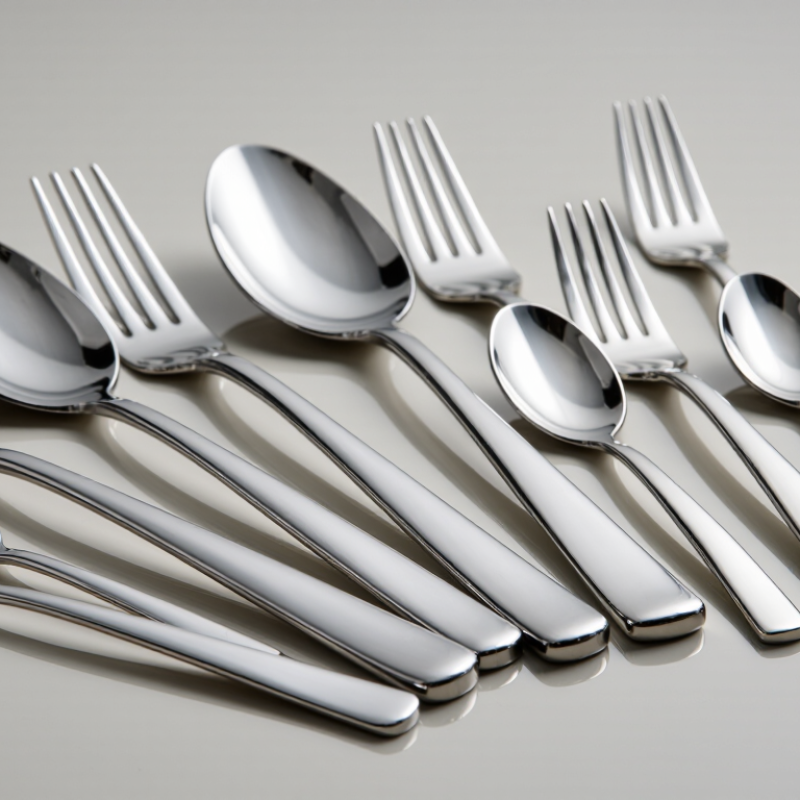
What Defines a Stainless Steel Spoon and Fork Set?
A stainless steel spoon and fork set is defined by more than a polished surface. It combines alloy quality, forming accuracy, balance, and hygienic finishing. The International Stainless Steel Forum reported global crude stainless steel production at about 58.4 million tonnes in 2023. This scale reflects stainless steel’s broad use, but production volume does not prove cutlery quality.
Material selection matters. Austenitic grades, such as 18/8 or 18/10, usually offer strong corrosion resistance and a stable, neutral surface. The numbers describe approximate chromium and nickel content. They are useful indicators, not complete guarantees. A supplier should provide material documentation and follow relevant cutlery requirements, including ISO 8442 guidance where applicable.
Spoon bowls should feel smooth around the rim. Fork tines should align evenly, without sharp burrs. Handles need enough thickness for a steady grip, yet should not feel heavy during daily meals.
Finish also defines the set. A mirror polish shows fingerprints quickly. A satin finish hides small marks better. Real testing should include repeated washing, acidic foods, and moisture exposure. Laboratory data helps, but practical inspection still matters.
I once considered a bright finish superior; that judgment was too simple. Some attractive surfaces reveal scratches earlier than expected. Buyers should check nickel sensitivity claims carefully and request testing evidence, not rely on catalog language alone.
How Stainless Steel Grades Affect Strength and Corrosion Resistance
2026 Best Stainless Steel Spoon Fork Set for Global Buyers
How Stainless Steel Grades Affect Strength and Corrosion Resistance
Choosing a spoon and fork set starts with the steel grade, not the mirror finish. In regular kitchen use, 304 stainless steel offers strong corrosion resistance against water, food acids, and daily washing. It also keeps a clean surface after repeated handling. I have found it reliable for home dining and food-service samples. Still, quality depends on thickness, polishing, and manufacturing control.
316 stainless steel contains molybdenum, which improves resistance to salt and chloride exposure. It suits coastal kitchens, catering operations, and frequent contact with salty foods. The improvement is useful, but not magic. Poor cleaning can still leave stains, especially around stamped edges or scratches. Buyers should inspect the fork tips, spoon bowls, and handle joints closely.
430 stainless steel is magnetic and often costs less. Its strength can be practical, but its corrosion resistance is usually lower than 304 or 316. It may perform well in dry indoor settings with careful washing. A grade label alone is not a complete guarantee. Thickness matters too. A thin 304 fork may bend sooner than a thicker 430 fork, which makes simple comparisons imperfect. Ask for material certificates, salt-spray results, and sample testing before placing a large order. Small details matter.
Which Designs and Finishes Suit Different Dining Environments?
Stainless steel spoon and fork sets should match the dining environment, not only the table color. In hotels and banquet halls, mirror-polished surfaces create a formal, brighter appearance. They also show fingerprints quickly. That is a practical weakness.
Brushed or satin finishes suit cafés, workplace dining rooms, and busy family restaurants. Fine scratches become less visible, while the softer reflection feels less ceremonial. According to World Stainless, global stainless steel production reached about 58.4 million tonnes in 2023. This scale supports stable material availability for international purchasing. However, steel grade still matters. Food-contact cutlery should meet recognized requirements, such as ISO 8442-2, while manufacturers should provide grade and testing information.
For outdoor dining, heavier handles and rounded edges improve control around uneven tables. A simple shape also reduces residue around decorative joints. In luxury dining rooms, slim profiles and balanced weight create a more precise hand feel. Yet very thin handles may feel cold and fragile during repeated service. Grand View Research identifies foodservice demand as an important influence on the global flatware market, but market figures vary by research method and product definition. Buyers should question impressive growth claims.
A small sample test helps. Check staining, polishing, dishwasher marks, and handle comfort after repeated washing. Five minutes can expose more than a catalogue.
How to Evaluate Safety, Durability, Comfort, and Maintenance
2026 Best Stainless Steel Spoon Fork Set for Global Buyers
A reliable spoon and fork set begins with verified food-contact stainless steel. Ask suppliers for material certificates and independent test reports. Common grades include 304 stainless steel, but the grade alone does not prove quality. Inspect the surface for pits, peeling, sharp edges, and uneven polishing. Check every joint by hand. A smooth finish should not scratch skin or trap food. Local compliance requirements may differ, so buyers should confirm documentation for each destination market.
Durability depends on more than shine. During sample inspections, gently bend the handles and examine their recovery. Excessive flexibility may suggest thin material. Review welds, handle thickness, and resistance after repeated dishwasher cycles. A heavier set can feel durable, but excessive weight causes fatigue during long meals. Balance matters. The fork should rest naturally between the fingers, while the spoon bowl should hold soup without scraping the lips. Small details matter.
Maintenance should remain simple. A smooth, polished surface usually releases food more easily. Still, water spots may appear after air-drying. Mild detergent and prompt drying often help. Avoid harsh chlorine cleaners unless the supplier confirms compatibility. Packaging also deserves attention. Moisture trapped inside sealed cartons can create stains before delivery. I would request production samples, not only catalog photos. Photos hide rough edges. A practical review should include repeated washing, handling with wet hands, and inspection under bright light. Mistakes happen, especially when buyers trust appearance too quickly.
2026 Best Stainless Steel Spoon Fork Set for Global Buyers
Evaluation priorities for safety, durability, comfort, and maintenance
The chart uses a transparent 100-point buyer evaluation framework: food-contact safety receives the highest weighting, followed by long-term durability, everyday comfort, and ease of maintenance. Buyers should verify food-contact compliance, stainless steel grade, corrosion resistance, edge quality, balance, and dishwasher-care instructions before purchase.
What Global Buyers Should Check Before Placing an Order
2026 Best Stainless Steel Spoon Fork Set for Global Buyers
What Global Buyers Should Check Before Placing an Order
A reliable spoon and fork set begins with verified stainless steel content. Ask for the exact grade, such as 304 or 18/8, and request supporting test documents. Marketing language is not enough. Check the spoon’s bowl thickness, fork tine alignment, handle balance, and surface finish. These details affect comfort and long-term durability. Run your fingers across the edges. They should feel smooth, without sharp corners, pits, or visible polishing marks.
Tips: Order samples before approving mass production. Compare weight, dimensions, color, and packaging against the approved sample. Ask whether the supplier controls metal thickness and polishing quality during production. Confirm food-contact documentation for your destination market, because requirements can differ by region. Also review carton strength, inner protection, labeling space, minimum order quantity, and replacement terms for defective pieces.
Do not judge quality from photographs alone. A bright finish can hide uneven grinding or weak weld points. Forks may look identical but sit differently in the hand. That small difference matters in daily use. Request a pre-shipment inspection with random carton checks. Include measurable tolerances in the purchase specification. I have seen buyers focus heavily on price, then discover that packaging damage erased the savings. This is easy to overlook. A sample can also mislead if it receives extra polishing, so production samples deserve another review.

